

Building in Stanley
Tasmania's most distinctive peninsula town — a 595-person fishing port beneath a 143-metre basalt volcanic plug, founded in 1826, and still one of the most photographed addresses in the state.
A Fishing Port Under a Volcanic Plug
Stanley is a town that looks like no other in Tasmania. It occupies a narrow peninsula that juts into Bass Strait at the top of the state's north-west coast, dominated from above by The Nut — a flat-topped basalt volcanic plug, 143 metres high, formed from basanite dated to 12.5–8.5 million years old. The Geological Society of Australia classifies it as a State Geological Monument. You can walk to the top in about 20 minutes, or take the chairlift — in both cases, the views across the strait are extraordinary.
The town was founded in 1826 by employees of the Van Diemen's Land Company, one of the earliest corporate land grants in Australian colonial history. Named in 1833 after Lord Stanley — then Colonial Secretary, later British Prime Minister — it became an official town in 1842. The colonial streetscape that survives is distinctive enough to warrant Local Historic Precinct designation under the Tasmanian Planning Scheme: heritage buildings, a working wharf, and a scale of settlement that has changed remarkably little in over a century.
With 595 permanent residents (ABS 2021) and a median age of 51, Stanley is a small, stable, and predominantly older community. Its economy combines commercial fishing — Stanley remains Tasmania's primary commercial fishing port on the north-west coast, with active crayfish, abalone, and fin-fish operations — with a significant tourism economy built around the heritage, seafood, and the scenery. Highfield Historic Site, built between 1832 and 1835 as the residence of the Van Diemen's Land Company's chief agent and now managed by Parks & Wildlife Service Tasmania, is one of the best-preserved examples of Regency-period colonial architecture in Australia.
Building in Stanley is not for every project, and not for every builder. The heritage planning overlays, coastal hazard codes, scenic protection provisions, and constrained peninsula geography mean that new builds here require careful, considered design and an experienced hand through the planning process. For the right project, it is one of the most compelling addresses in Tasmania.
What Makes Stanley Distinctive
The Nut State Reserve
A 143-metre basalt volcanic plug classified as a State Geological Monument — one of Tasmania's most recognisable natural landmarks. The chairlift or walking trail to the summit delivers 360-degree views across Bass Strait and the Circular Head coast.
Highfield Historic Site
Built 1832–35 as the residence of the Van Diemen's Land Company's Chief Agent, Highfield is one of the finest Regency-period colonial buildings in Australia. Managed by Parks & Wildlife Service Tasmania, it anchors Stanley's heritage identity.
Working Fishing Port
Stanley is Tasmania's primary commercial fishing port on the north-west coast. Active crayfish, abalone, and fin-fish operations give the town a working waterfront character that sets it apart from purely tourist-oriented heritage towns.
Little Penguin Colony
A colony of Little (Fairy) Penguins nests at Godfreys Beach, managed by the Friends of Stanley Penguins with a free public viewing platform accessible from September to April. No entry fee; best at dusk.
Coastal Peninsula Position
Stanley occupies a narrow peninsula on Bass Strait — water on three sides, The Nut on the fourth. The coastal position and dramatic topography create a visual drama that is rare in any community, anywhere in Australia.
Heritage Character
The Local Historic Precinct overlay preserves a colonial streetscape that has changed remarkably little in 180 years. For buyers seeking a genuine heritage address with architectural integrity, Stanley has no equivalent on the north-west coast.
What to Know About Building in Stanley
Stanley falls under Circular Head Council's jurisdiction, operating under the Tasmanian Planning Scheme — Circular Head Local Provisions Schedule, which commenced 26 May 2021. Building here involves multiple layered planning overlays that require careful navigation:
- Stanley is designated as a Local Historic Precinct within the Circular Head LPS. Development within the precinct is assessed against heritage character standards, and the Tasmanian Heritage Council is a referral agency for many applications. Individual properties may also carry Local Heritage listings. Early engagement with council via pre-application guidance is strongly recommended.
- A Scenic Protection overlay was approved and took effect on 15 July 2024, covering high-scenic-value areas across the Circular Head municipality. Stanley's peninsula, The Nut surrounds, and the Highfield area are among the highest-value landscapes identified in the 2022 Scenic Value Assessment. Development in these areas is now assessed against scenic protection standards.
- Stanley's peninsula position on Bass Strait means coastal inundation hazard codes apply to properties at or near sea level. Check the specific lot via PlanBuild Tasmania's enquiry service before purchase — coastal overlay bands vary by property.
- Smithton is the administrative centre of Circular Head Council. Permitted development applications are typically assessed within 28 days. Council is generally accessible for pre-application enquiries — a step we strongly recommend for Stanley given the overlay complexity.
- The peninsula geography limits new development to existing allotments. This is a replacement and renovation market rather than a greenfield one. Available sites are limited, and many of the most interesting opportunities involve working with existing heritage buildings.
Our Sheffield base is approximately two hours south-east of Stanley via Wynyard and the Bass Highway. We undertake selective projects in the Circular Head region and have the planning knowledge and design capability to navigate Stanley's overlay environment. Contact us early — the planning assessment phase is where good Stanley projects start.
Davies Projects in the Region
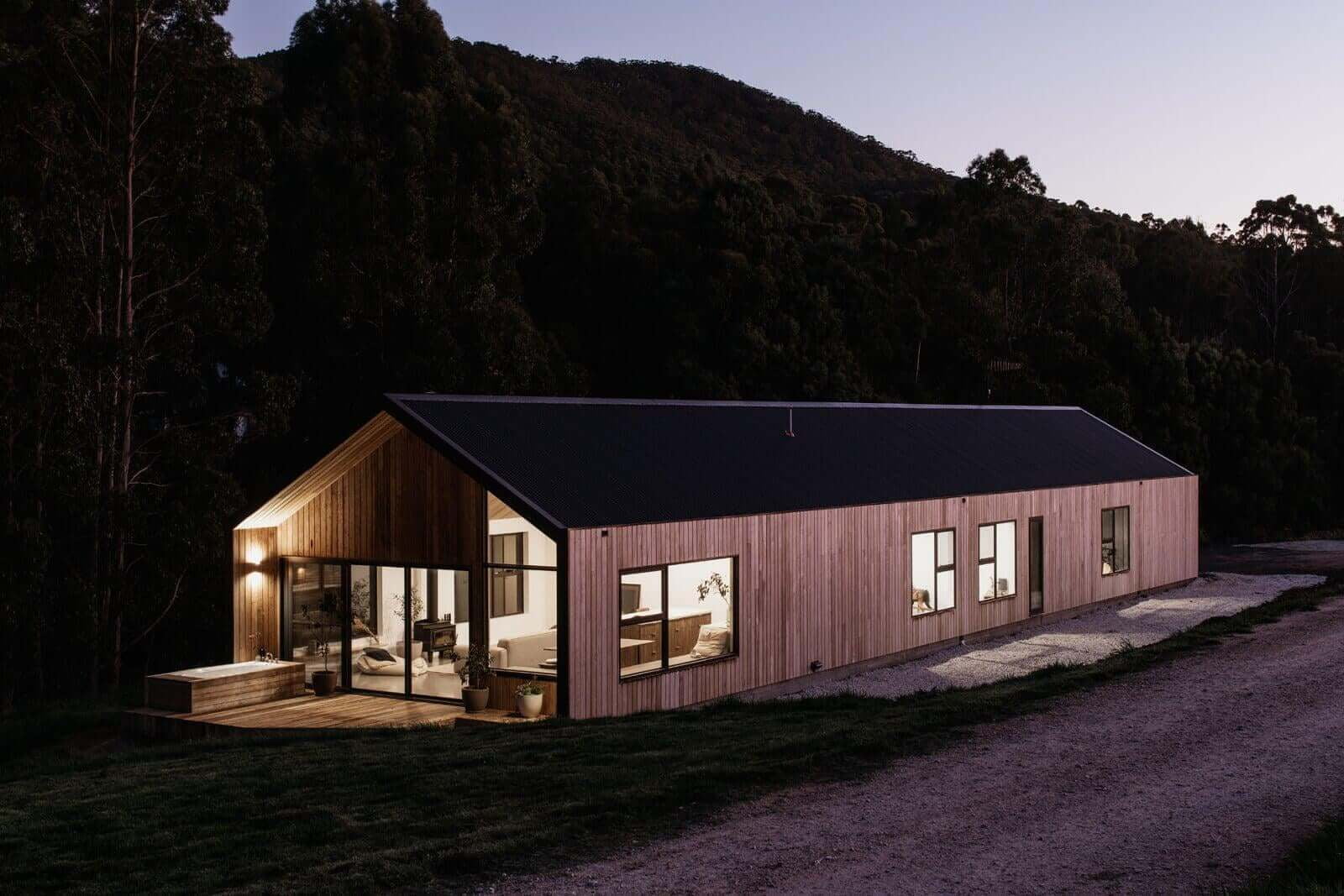
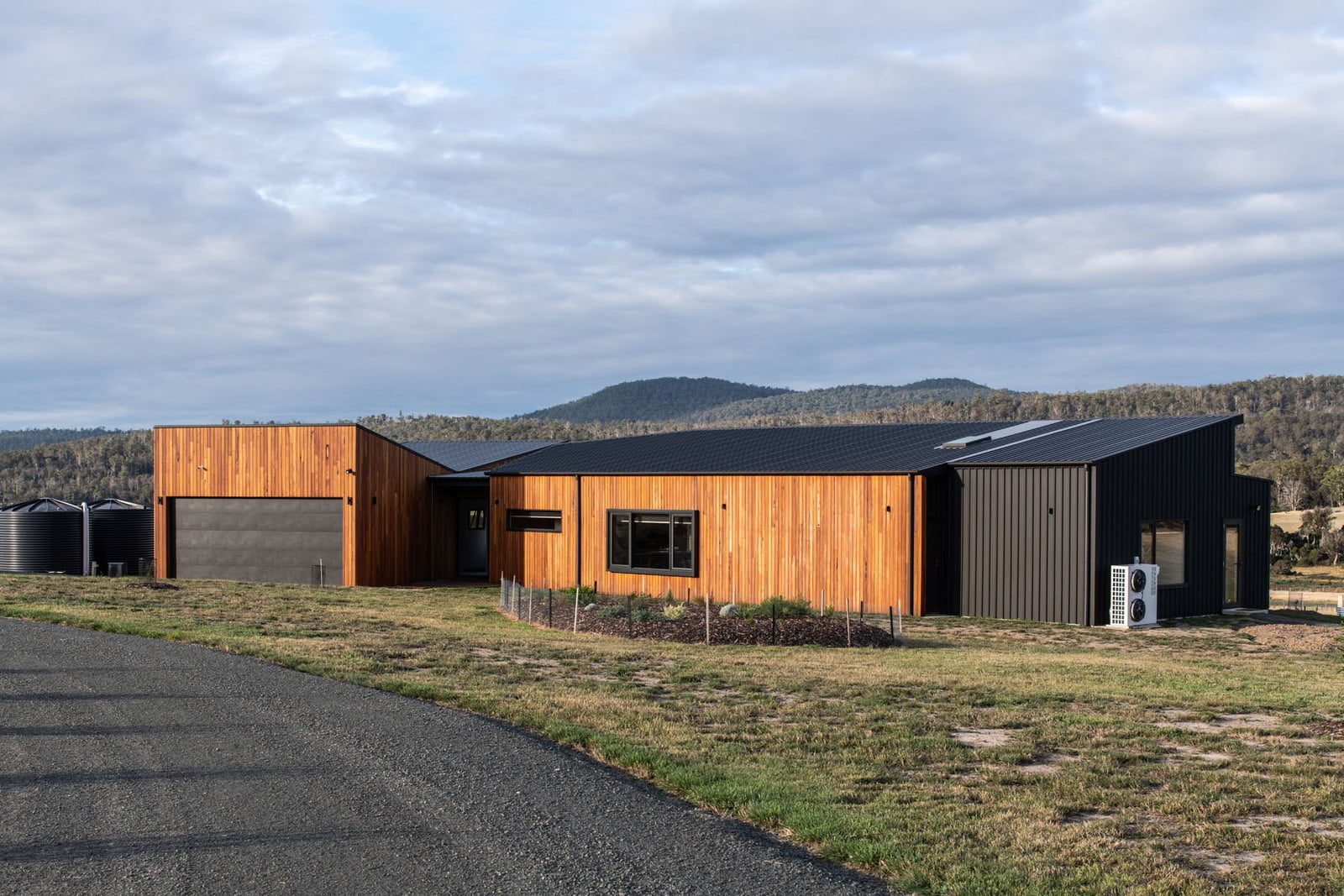
Our portfolio includes exceptional homes across the north-west coast — each one a demonstration of what's possible when design responds to a distinctive Tasmanian landscape.
Stanley Building FAQ
How much does it cost to build in Stanley?+
Does Davies Construction build in Stanley?+
What are the planning requirements for building in Stanley?+
What makes Stanley a distinctive address?+
Also building in
North-West Coast & Hinterland
Tamar Valley & Launceston
Midlands & East Coast
Southern Tasmania