

Building in St Helens
Tasmania's east coast jewel — the Bay of Fires on the doorstep, Georges Bay at your feet, and some of the state's finest sunshine and sea-change lifestyle.
Tasmania's East Coast Gateway
St Helens is the largest town on Tasmania's north-east coast — a town of around 2,200 people that serves as the commercial hub of the Break O'Day region and the gateway to some of Australia's most spectacular coastal wilderness. It sits on Georges Bay, a large sheltered estuary that gives the town its distinctive character: boats at anchor, fishermen at the jetty, kayakers crossing the glassy morning water.
To the north lies the Bay of Fires Conservation Area, one of Australia's most photographed coastal landscapes — a sweep of white sand beaches, lichen-covered granite boulders glowing orange in the afternoon light, and water of improbable clarity. The area is under active management review as Tasmania Parks and Wildlife and Break O'Day Council balance conservation with growing visitor demand.
The town's economy rests on tourism, fishing, and timber. St Helens is Tasmania's game fishing capital — marlin, bluefin tuna, and shark are pursued offshore by anglers from across Australia. The region's oysters have an exceptional reputation. Diving is world-class. For those seeking a permanent sea change or a holiday home with genuine natural spectacle, St Helens is one of the most compelling locations in Tasmania.
The east coast receives more sunshine and less rainfall than the north-west — a meaningful lifestyle difference that manifests in the quality of outdoor living, the length of the outdoor entertaining season, and the character of everyday life. Remote work has accelerated permanent population growth in the region as mainland Australians discover that east coast Tasmania is accessible, beautiful, and affordable.
Why People Choose St Helens
Bay of Fires on the Doorstep
The Bay of Fires Conservation Area is directly north of St Helens — one of Australia's most celebrated coastal landscapes. White beaches, orange lichen boulders, and extraordinary water clarity make it a world-class natural neighbour.
East Coast Sunshine
Tasmania's east coast receives significantly more sunshine and less rainfall than the north-west coast. The outdoor entertaining season is longer, gardens are more reliably productive, and daily life has a brighter, warmer quality.
Game Fishing Capital
St Helens is Tasmania's premier game fishing destination — marlin, bluefin tuna, and shark are pursued from the town's harbour. It's also known for world-class diving, oysters, and Georges Bay's sheltered water sports.
Strong Holiday Rental Returns
Bay of Fires tourism drives an exceptional short-stay rental market in St Helens. Well-designed homes with good privacy, views, and outdoor living can achieve premium nightly rates from interstate and international visitors.
Sea Change Growth
Remote work has made St Helens increasingly attractive to permanent residents from the mainland. The town is growing as people discover that east coast Tasmania offers the lifestyle they want at a price they can afford.
Full Service Hub
St Helens provides all the essentials for everyday life — supermarkets, medical services, schools, and a hospital — while serving as the hub for the broader Break O'Day region. Launceston is two hours west for specialist needs.
What to Know About Building in St Helens
St Helens sits within Break O'Day Council's jurisdiction, operating under the Tasmanian Planning Scheme. Applications are lodged with and assessed by the council, while PlanBuild Tasmania is the state portal for checking a property's planning rules and overlays. Several specific considerations apply in this region:
- Proximity to the Bay of Fires Conservation Area carries significant environmental overlay provisions. Any land adjacent to or near the reserve should be carefully assessed for conservation covenants, buffer zones, and restricted vegetation clearing before purchase.
- Coastal and near-coastal sites carry overlay provisions for flood risk and coastal hazard management. Georges Bay's estuary edge and some oceanfront sites require detailed flood modelling at the design stage.
- Bushfire Attack Level (BAL) ratings apply to some properties adjacent to native vegetation. Our team assesses BAL risk as a standard part of feasibility — it's better to know early than to design without it.
- Salt air and UV exposure on the east coast require careful material specification, particularly for cladding, roofing, windows, and hardware. We specify for coastal durability as standard.
- Trade and materials travel from Launceston (approximately two hours west) adds to project logistics. We factor this into trade scheduling, materials ordering, and construction programme planning from the outset.
- St Helens has a strong short-stay rental market. If investment return is part of your brief, we can help optimise your design for holiday rental performance — privacy, multiple bathrooms, outdoor living, and durable finishes.
St Helens is one of the more logistically complex locations we build in — but the results, set against the Bay of Fires and Georges Bay, are exceptional. Our team manages the complexity so you can focus on the destination.
Davies Coastal Projects
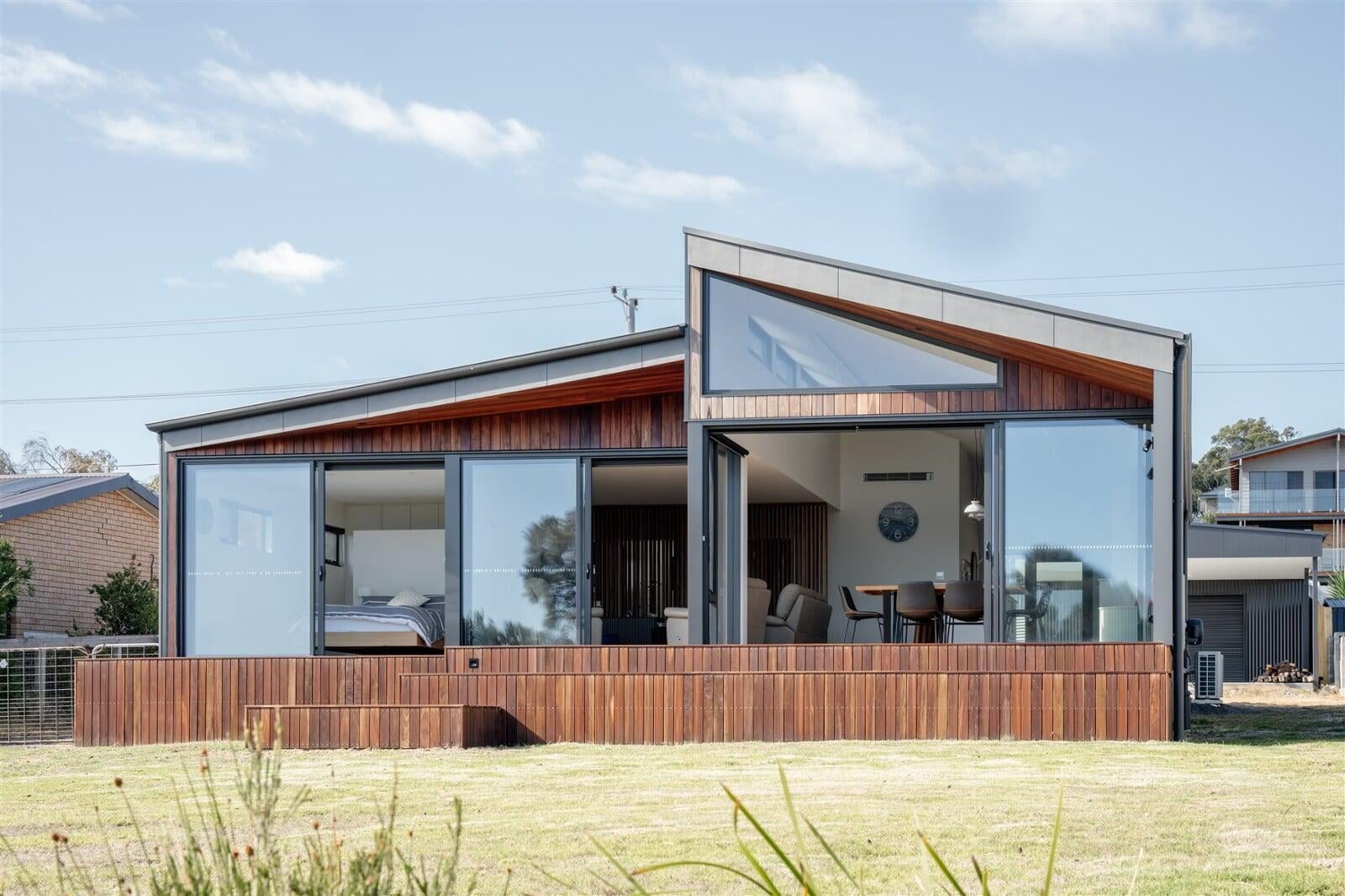
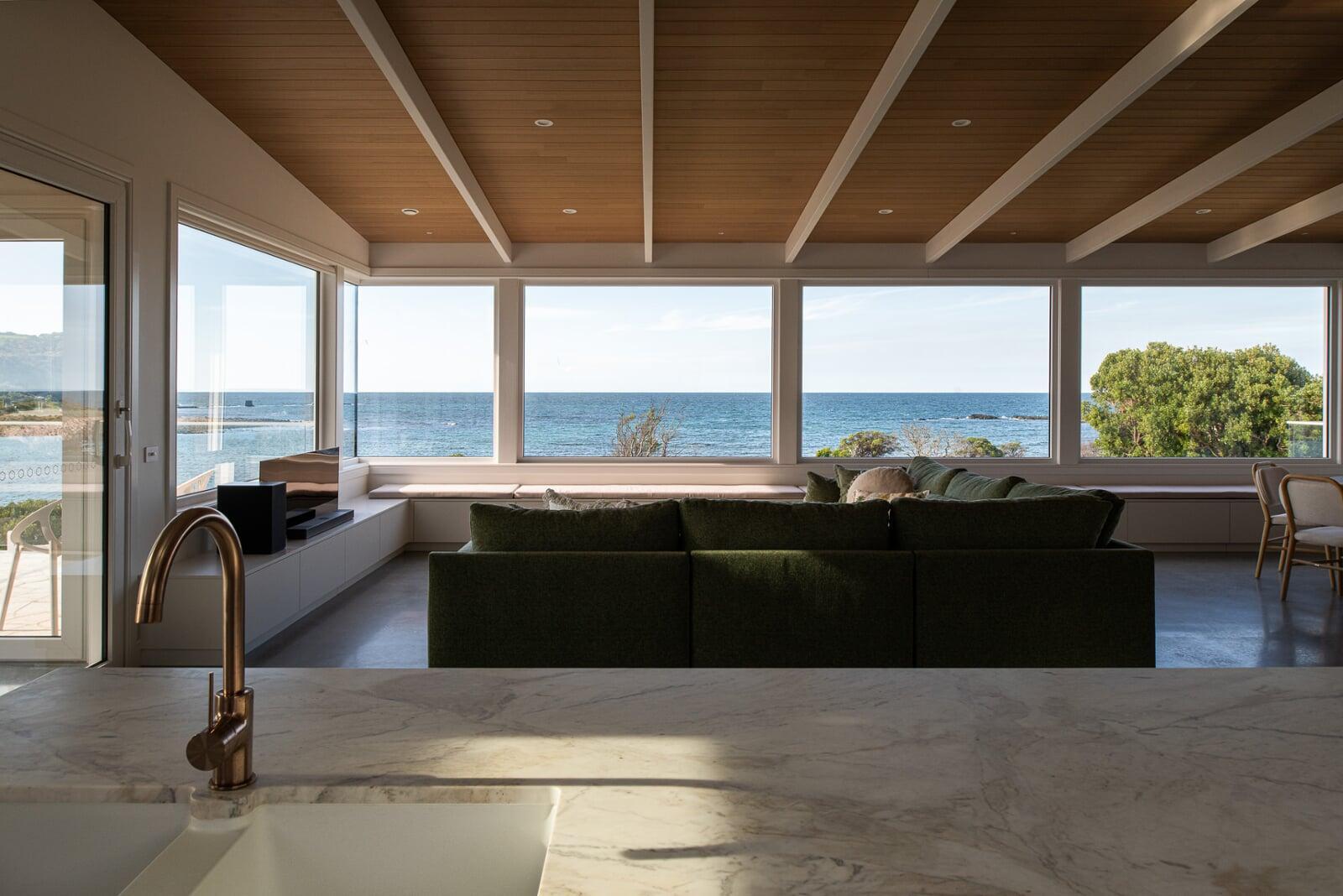
Our portfolio of coastal and rural Tasmanian homes shows the range of what's possible — from beach shacks reimagined to high-performance coastal homes designed for the long term.
St Helens Building FAQ
What is St Helens like to live in?+
How much does it cost to build in St Helens?+
What should I know about building near the Bay of Fires?+
Does Davies Construction build in St Helens?+
Is St Helens a good place for a holiday home or investment build?+
Also building in
North-West Coast & Hinterland
Tamar Valley & Launceston
Midlands & East Coast
Southern Tasmania