

Building in Ross
One of Australia's finest Georgian heritage villages — a Northern Midlands township of 410 residents, shaped by convict history, centred on the 1836 Ross Bridge.
Georgia in the Midlands
Ross sits at the heart of Tasmania's Midlands Highway, roughly equidistant between Launceston (78 km north) and Hobart. At its centre stands the 1836 Ross Bridge — designed by architect John Lee Archer and built by convict stonemasons Daniel Herbert and James Colbeck — which carries 186 intricately carved sandstone panels depicting classical motifs, convict life, soldiers, and colonial officials. It is the third-oldest bridge still in use in Australia, and one of the finest examples of convict stonework anywhere in the country.
The bridge is the centrepiece of a broader Georgian townscape. With a population of around 410, Ross has remained one of Tasmania's most intact colonial villages — listed on the National Estate — because it has never experienced significant development pressure. St John's Anglican Church, the Old Female Factory (1847–1854, open to the public), and a collection of fine 19th-century buildings line the historic street grid. The Heritage Highway tourist route passes directly through.
For home builders, Ross presents a very specific proposition: building in a place of genuine national heritage significance, with the overlay obligations that entails, and in exchange for a landscape and townscape that no subdivision estate can replicate. The broad Midlands pastoral country — open, cool-climate, distinctly Tasmanian — surrounds the village on all sides.
Ross is at the outer edge of our service area — approximately 1.5 hours from Sheffield. We're honest about that. We build in Ross selectively, when the project is right and the site has merit. If that describes your situation, Davies Design & Construction would welcome the conversation.
Why People Choose Ross
The 1836 Ross Bridge
Australia's third-oldest bridge still in use is Ross's defining landmark — 186 carved sandstone panels, convict-built under architect John Lee Archer, spanning the Macquarie River. Living in Ross means daily proximity to one of Australia's most significant pieces of heritage engineering.
Intact Georgian Townscape
The historic grid of streets, the National Estate listing, the collection of Georgian buildings along the main thoroughfare — Ross has not been absorbed into suburbia. That intact townscape is what people come to Ross for, and the deliberate absence of significant development pressure is why it persists.
Broad Midlands Pastoral Landscape
The Midlands Highway corridor through Ross is classic Tasmanian grazing country: broad open valleys, cool-climate skies, dry-stone walls, and the distinctive muted palette of the central plateau. It is a landscape that rewards looking at — every view is a painting.
Midpoint on the Heritage Highway
Ross is an hour from Launceston and 1.5 hours from Hobart — genuinely midway. The Heritage Highway (Midlands Highway tourist route) passes through, bringing visitors year-round. The town's shops, the famous Ross Village Bakery, and its heritage accommodation make it a working community, not a ghost town.
Heritage Tourism Infrastructure
The Tasmanian Wool Centre, the Old Female Factory (1847–1854), St John's Anglican Church, and the bridge itself give Ross a visitor infrastructure that exceeds its population size. The town is genuinely experienced as a destination by both Tasmanians and interstate and international visitors.
Considered, Not Convenient
Building in Ross is not the path of least resistance — the heritage context is real, the distance from major services is real, and the obligations on design are real. Those who choose Ross choose it deliberately. That considered approach, applied to the right brief, produces homes of rare character.
What to Know About Building in Ross
Ross falls under Northern Midlands Council, which administers the Tasmanian Planning Scheme — Northern Midlands Local Provisions Schedule (effective 9 November 2022). Applications are lodged with and assessed by the council. Here is what prospective builders need to understand:
- Heritage obligations are significant in Ross. The town is listed on the National Estate, and heritage overlays apply broadly across the historic streetscape. Any development on or near heritage-registered properties, or within the heritage precinct, requires heritage assessment by Heritage Tasmania and council approval. This is not a bureaucratic hurdle to be minimised — it is the mechanism that has kept Ross intact, and the builder you choose needs to understand how to work within it.
- The Midlands climate is cool and semi-arid compared to coastal Tasmania: colder winters, frosts from roughly April to October, lower annual rainfall (~509 mm), warm dry summers. High-performance thermal envelopes — super-insulated, airtight, north-facing passive solar — deliver genuine thermal comfort in this climate with significantly lower running costs. Davies's approach to building science is well-matched to Midlands conditions.
- Ross is approximately 1.5 hours from our Sheffield base. We're transparent about this: distance affects the economics of a project, particularly for a builder who controls their own team. We discuss travel and logistics costs as part of feasibility, and we only commit to projects where the brief and site genuinely suit what we do.
- Northern Midlands Council has a defined development area for Ross. The planning scheme establishes urban zoning limits; greenfield development beyond the existing town boundary is heavily restricted. Any significant site-specific questions — heritage overlays, zoning, setbacks, servicing — should be put to council's planning team before purchase.
- Check every allotment via PlanBuild Tasmania's enquiry service. PlanBuild lets you look up any property state-wide to see its planning zones, codes, and overlays — useful for a first-pass assessment before commissioning a full planning report.
Building in a heritage village is not the same as building in a new estate. The design conversations are different, the approval pathway is different, and the build requires a contractor who understands how to execute at a level that justifies the setting. If that is what you are looking for, we would welcome the conversation.
Davies Projects in the Region
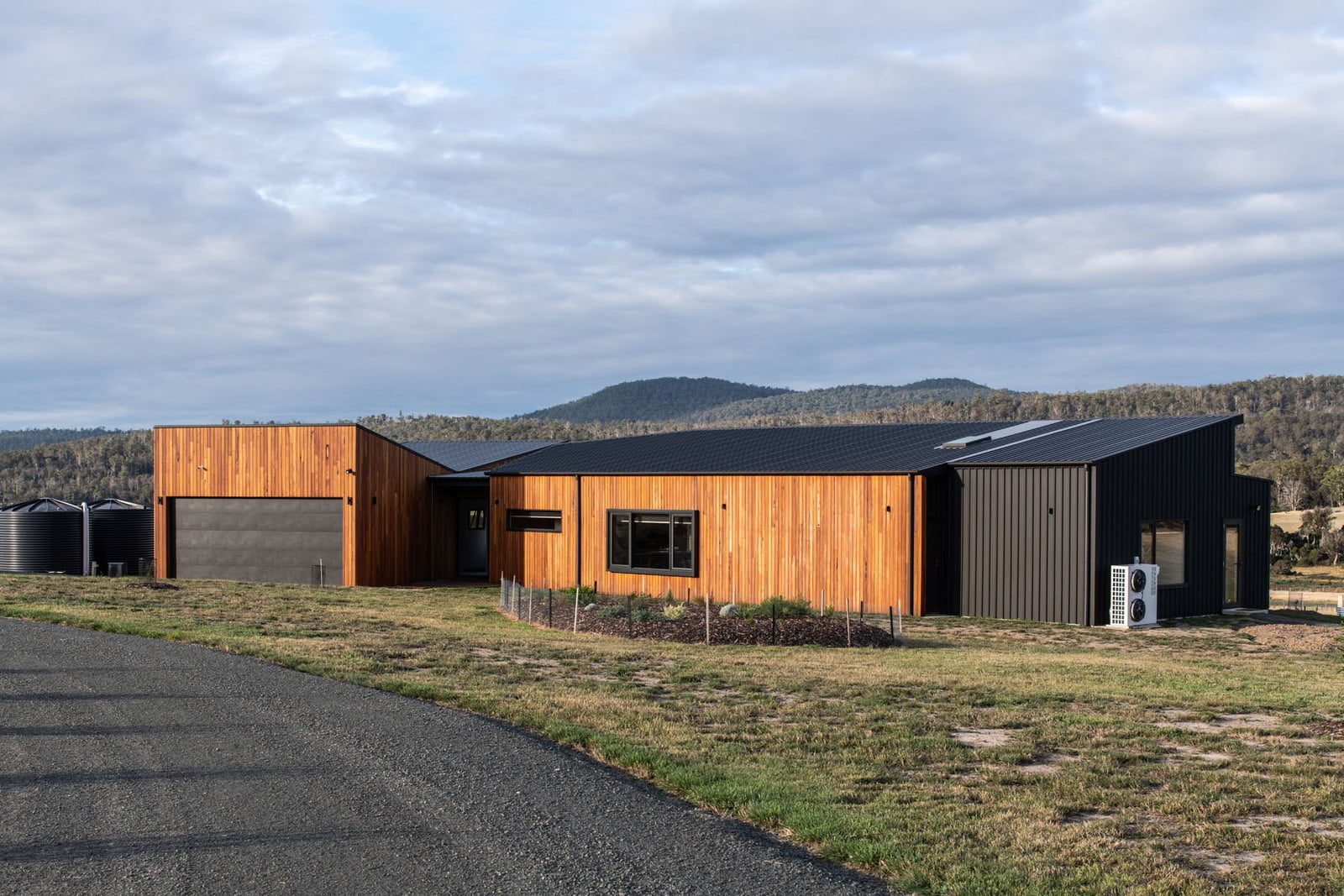
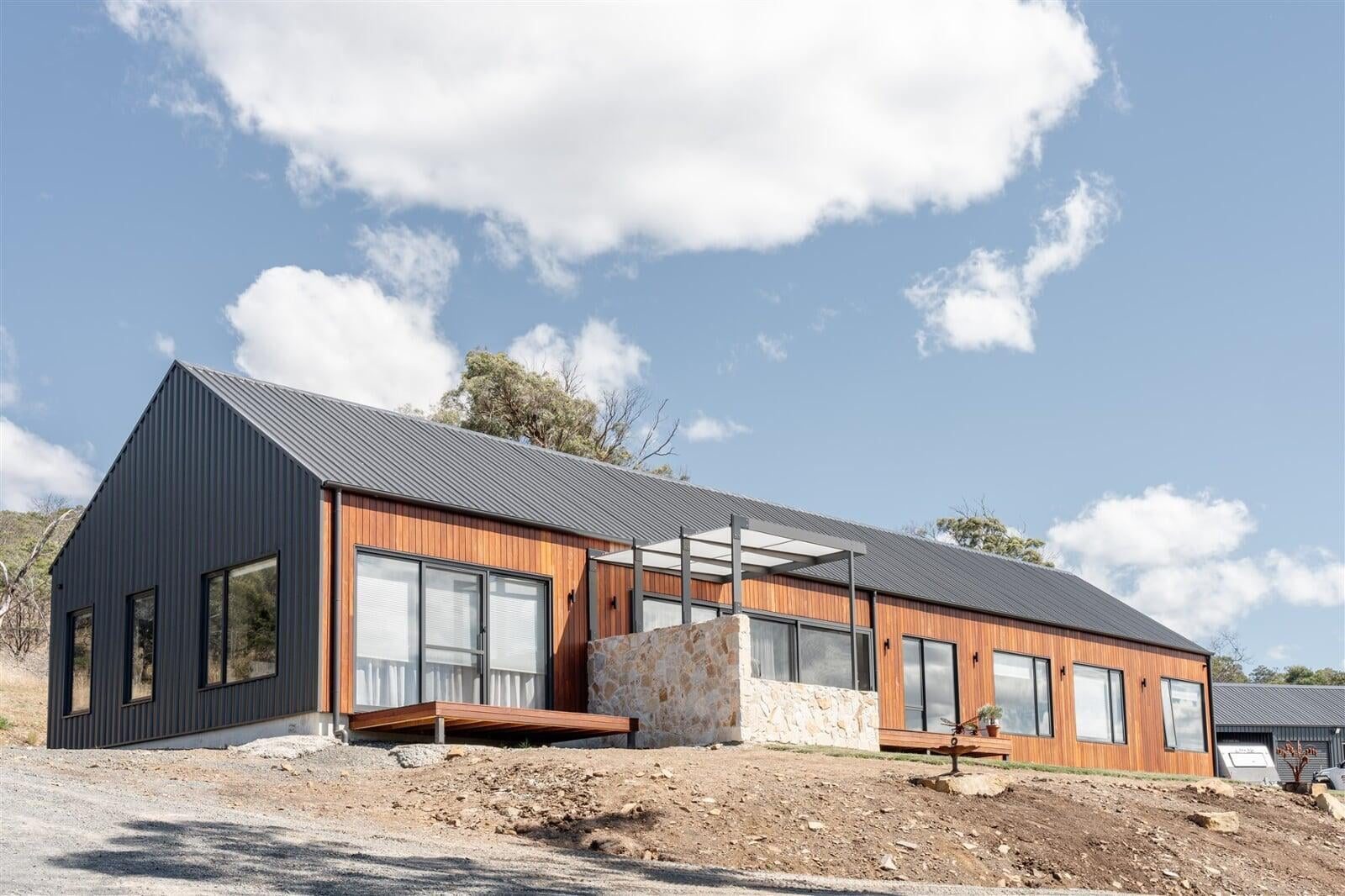
Our portfolio spans the northern Midlands and the wider north of Tasmania — each project a demonstration of what deliberate design and rigorous construction can achieve in rural and heritage contexts.
Ross Building FAQ
What is Ross, Tasmania like to live in?+
How much does it cost to build in Ross?+
What are the planning requirements for building in Ross?+
Does Davies Construction build in Ross?+
Also building in
North-West Coast & Hinterland
Tamar Valley & Launceston
Midlands & East Coast
Southern Tasmania