

Building in Smithton
Tasmania's far north-west — a working farming heartland where affordable land meets wilderness access and a genuine community spirit.
Tasmania's Agricultural Heartland
Smithton sits at the top of the Tasmanian map — 135 kilometres west of Devonport, 84 kilometres west of Burnie — as the administrative centre of the Circular Head Council district. With a population of around 3,900, it's a working town: dairy, beef, aquaculture, timber, and fishing are the backbone of the local economy, and have been for generations.
The Circular Head district is the largest dairying and prime beef producing area in Tasmania. The land is green and productive, the pace is unhurried, and the community is real. This isn't a suburb that grew up around a motorway — it's a town built by people who came here to work the land and stayed because they loved it.
In November 2025, Circular Head Council adopted a new Town Centre Plan for Smithton — a long-overdue revitalisation initiative aimed at attracting investment, improving amenity, and setting the town up for the next generation. A new Child and Family Learning Centre is also underway, a signal that young families are arriving and the community is investing in its future.
Stanley — 22 kilometres to the north — adds a remarkable drawcard: one of Tasmania's most photogenic fishing villages, dominated by The Nut (a flat-topped volcanic formation rising 143 metres above sea level) and home to some of the state's finest historic streetscapes. And beyond Stanley, the Arthur Pieman Conservation Area stretches 100,000 hectares of wild coastline — among the most remote and spectacular in Australia.
Why People Choose Smithton
Exceptional Land Affordability
Smithton consistently offers some of Tasmania's most affordable residential land. The result: you can invest significantly more in the quality of the build itself — insulation, glazing, joinery, materials — and still arrive at a total project cost that would be impossible in larger towns.
Wilderness on Your Doorstep
The Arthur Pieman Conservation Area — 100,000 hectares of wild beach, dunes, and rainforest — begins near the edge of town. Stanley and The Nut are 22 kilometres north. For those who chose Tasmania for its natural character, Smithton delivers the undiluted version.
Stanley and the North-West Coast
Stanley is among Tasmania's most beloved towns — historic, beautiful, and unpretentious. Its fishing port, The Nut summit walk, and pioneering heritage make it a remarkable neighbour for any home in the Smithton area.
Aquaculture and Industry
The Circular Head region is home to significant aquaculture and fishing operations alongside dairy and beef farming. For those with professional ties to primary industries, Smithton offers both proximity to work and the lifestyle that makes the north-west worth choosing.
Cool, Clean Climate
Smithton's climate is cool and reliably green year-round — a product of the north-west coast's steady rainfall and westerly airflow. This environment rewards high-performance building design, where airtight, well-insulated construction pays dividends in comfort and running costs through every season.
Town Revitalisation
The 2025 Town Centre Plan and the new Child and Family Learning Centre signal community investment in Smithton's future. Those arriving now can be part of a town finding its next chapter — with the affordability of early movers and the energy of genuine renewal.
What to Know About Building in Smithton
Building in Smithton falls under the Circular Head Council's planning jurisdiction within the Tasmanian Planning Scheme, with applications lodged with and assessed by the council. The council is approachable and responsive for residential development enquiries. Here's what's important to understand before you start:
- Permitted development applications are typically assessed within 28 days by the council — a clear, manageable timeline for planning your build schedule.
- Smithton's cool, wet climate — with reliable westerly airflow from Bass Strait — makes thermal performance critical. Our high-performance building envelopes (super-insulated, airtight, triple-glazed where needed) are particularly well-suited to this environment.
- Coastal proximity and westerly exposure require careful cladding and hardware specification for any build within range of the coast or prevailing winds. We specify marine-grade materials as standard for all coastal and near-coastal builds.
- The distance from Devonport and Burnie means trade logistics require early planning. Davies has established north-west coast trade networks and manages the full project from Sheffield — no gaps in local knowledge.
- Rural land in the Circular Head region may have additional planning considerations. If you're looking at acreage or lifestyle blocks, early pre-application advice from council is strongly recommended — our team can support this process.
- Smithton is within a high-rainfall zone. Site drainage and moisture management need to be addressed at design stage, not as an afterthought — something our building science approach handles systematically.
Our Sheffield base is approximately 90 minutes south-east of Smithton. We've been building across the north-west coast since 2009 and have a deep understanding of this region's climate, councils, and trade environment.
Davies Projects in the Region
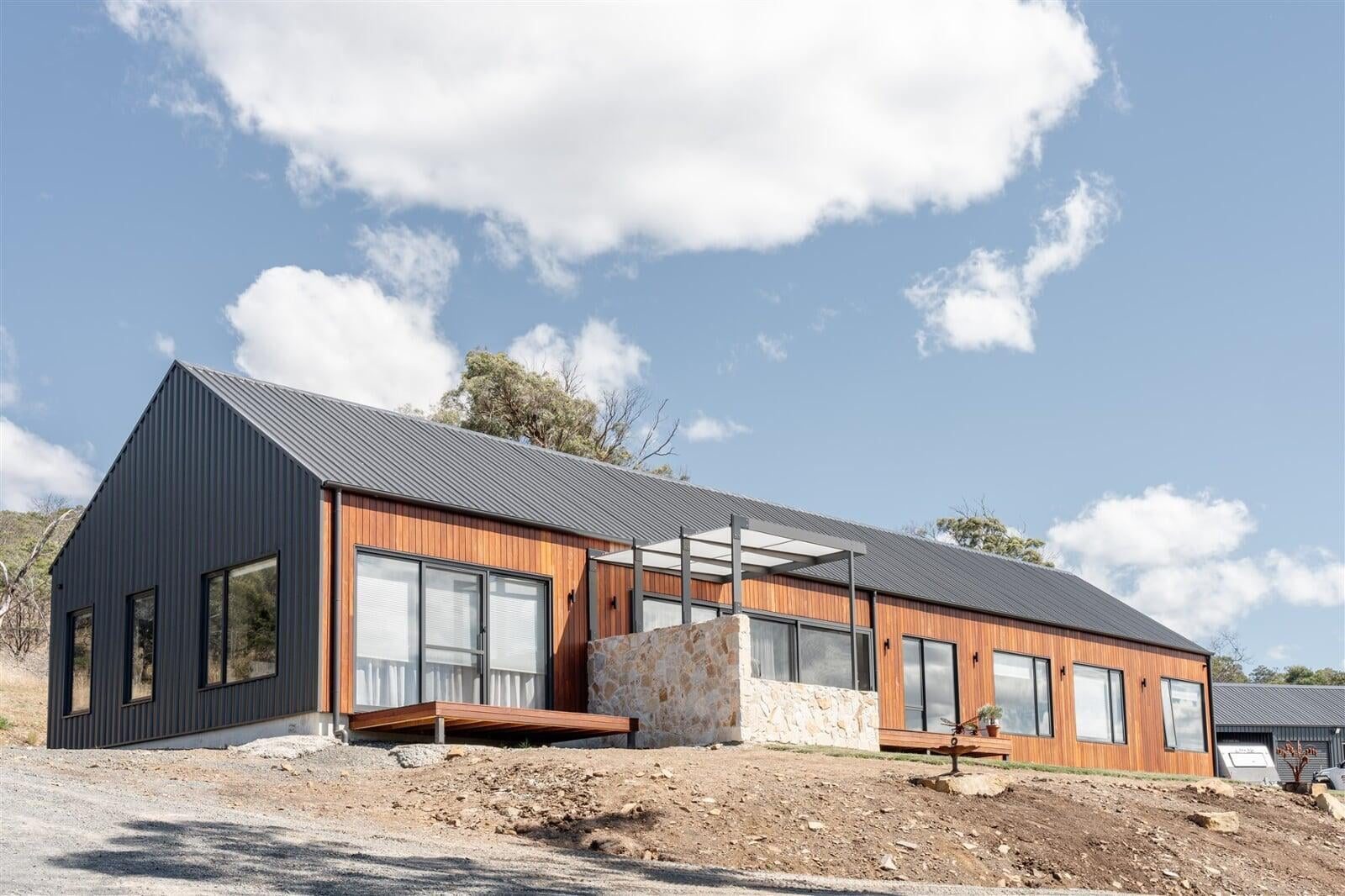
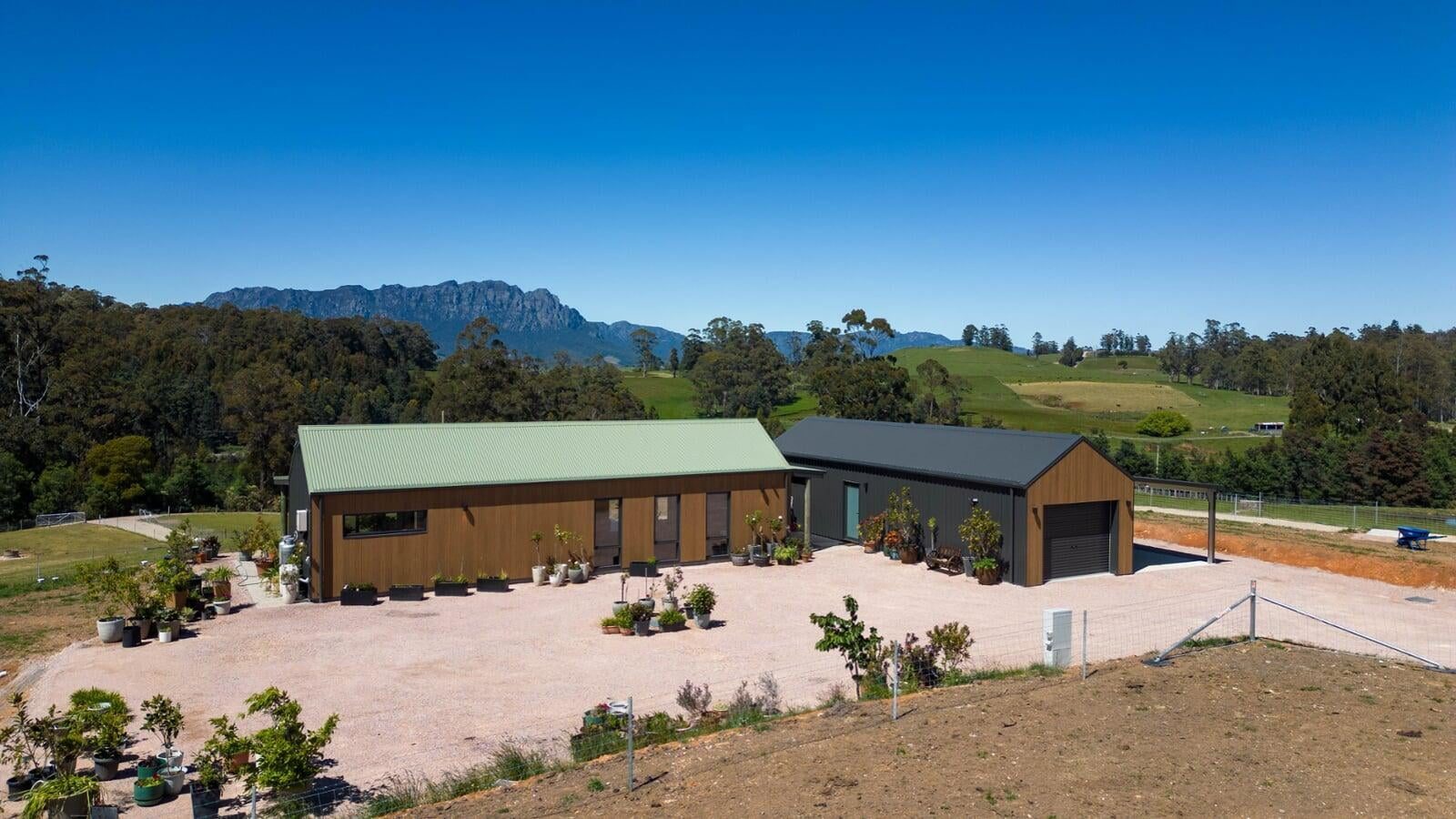
Our portfolio includes homes built across north-west Tasmania — each one proof that exceptional design is possible in every corner of the state.
Smithton Building FAQ
What is Smithton like to live in?+
How much does it cost to build in Smithton?+
What should I know about building in Smithton?+
Does Davies Construction build in Smithton?+
Also building in
North-West Coast & Hinterland
Tamar Valley & Launceston
Midlands & East Coast
Southern Tasmania