Passivhaus — The Gold Standard
A plain-English guide to the world's leading building performance standard — and why Davies builds to it.
Last reviewed: July 2026
What Is Passivhaus?
Passivhaus (pronounced "pass-eev-house") is the world's leading energy performance standard for buildings. Developed in Germany in the early 1990s, it's now used in over 60 countries and has been applied to tens of thousands of buildings — from single houses to apartment blocks, schools, and hospitals.
The name comes from the concept of "passive" heating and cooling. Instead of relying on large mechanical systems to heat and cool your home, a Passivhaus uses the building itself — its insulation, airtightness, windows, and ventilation — to maintain comfortable temperatures year-round with minimal energy input.
In plain English: a Passivhaus home stays warm in winter and cool in summer without traditional heating or air conditioning. The tiny amount of energy it does need can often be covered by a small heat pump and a modest solar array.
It's not a brand, a product, or a style. It's a rigorous, physics-based building standard verified by independent certification. When a building achieves Passivhaus certification, you know — not hope, not assume — know it performs.
The Five Principles of Passivhaus
Passivhaus isn't one magic trick — it's five principles working together as a system. Remove one, and the whole thing underperforms. Get all five right, and the result is extraordinary.
Super-Insulated Envelope
The walls, roof, and floor are wrapped in a continuous layer of insulation far thicker than standard builds. Think of it like a high-quality sleeping bag for your house — heat stays in during winter and out during summer, with no gaps or cold spots.
Airtight Construction
Every joint, junction, and penetration is carefully sealed to prevent uncontrolled air leakage. This doesn't mean the house can't breathe — it means you control exactly how it breathes. No drafts, no wasted energy, no dust or pollen sneaking in through gaps.
Thermal Bridge-Free Design
A thermal bridge is like a shortcut for heat to escape — think of a steel beam running from inside to outside. Passivhaus design eliminates these weak points so the entire building envelope performs consistently. No cold corners, no condensation patches.
High-Performance Windows & Doors
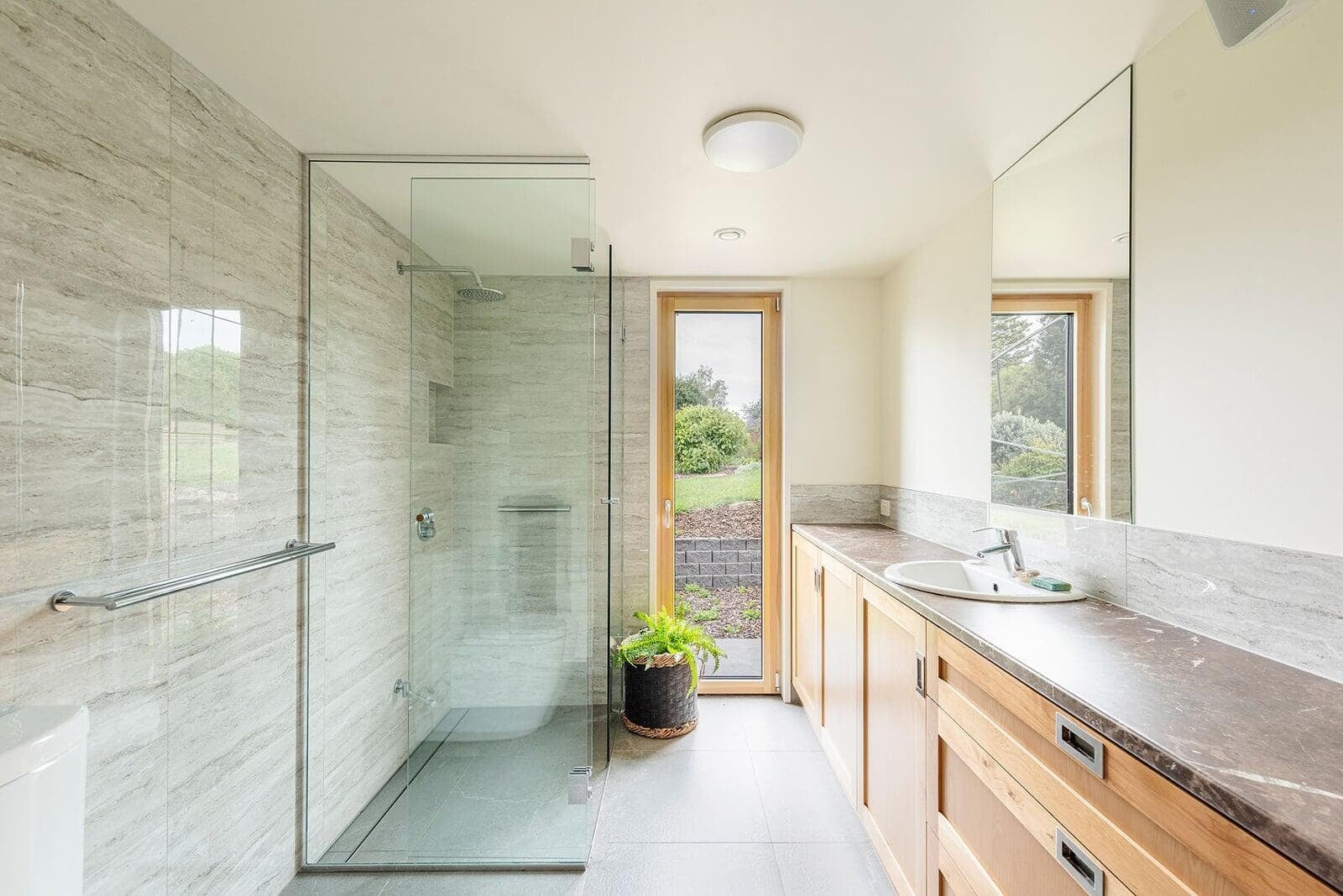
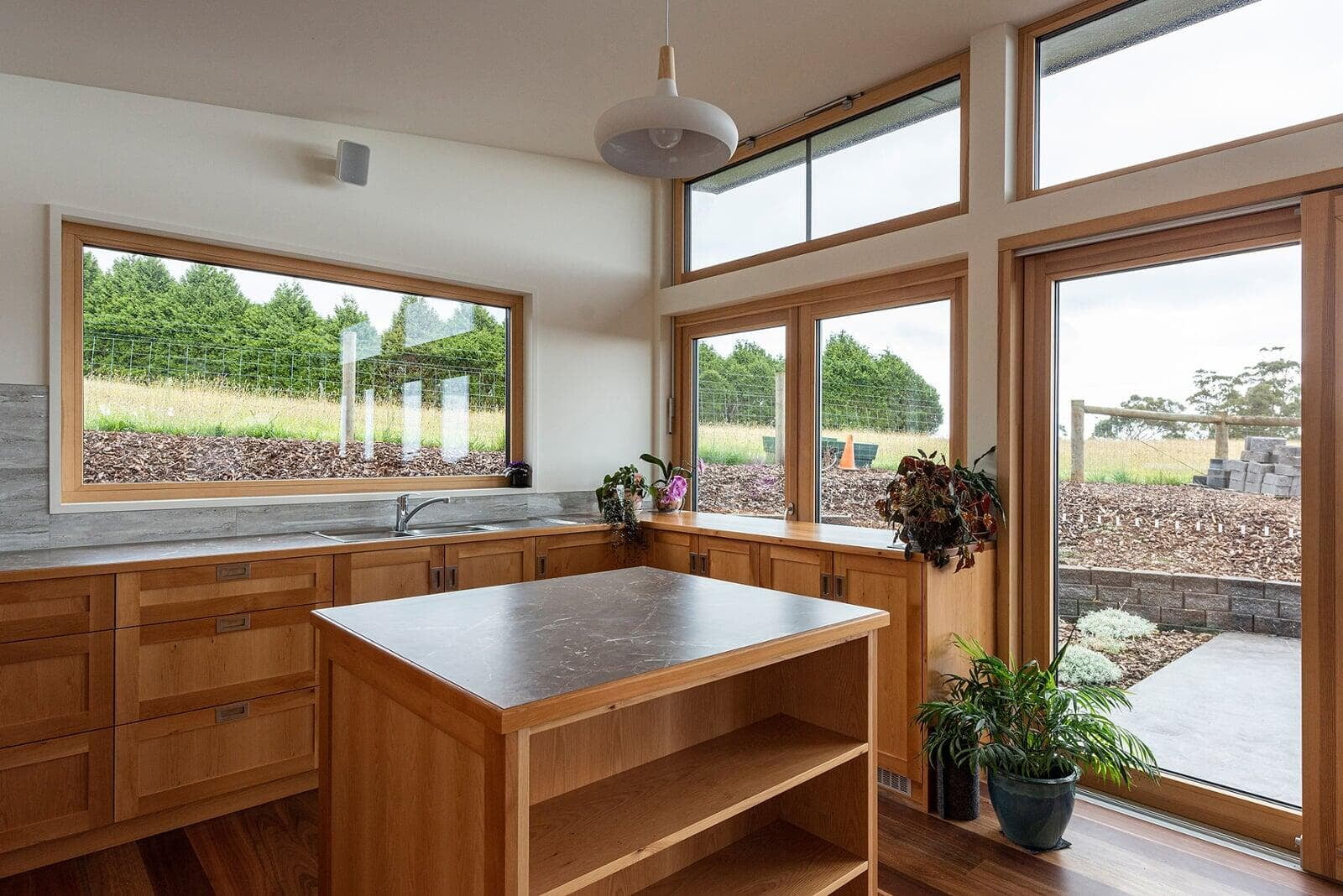
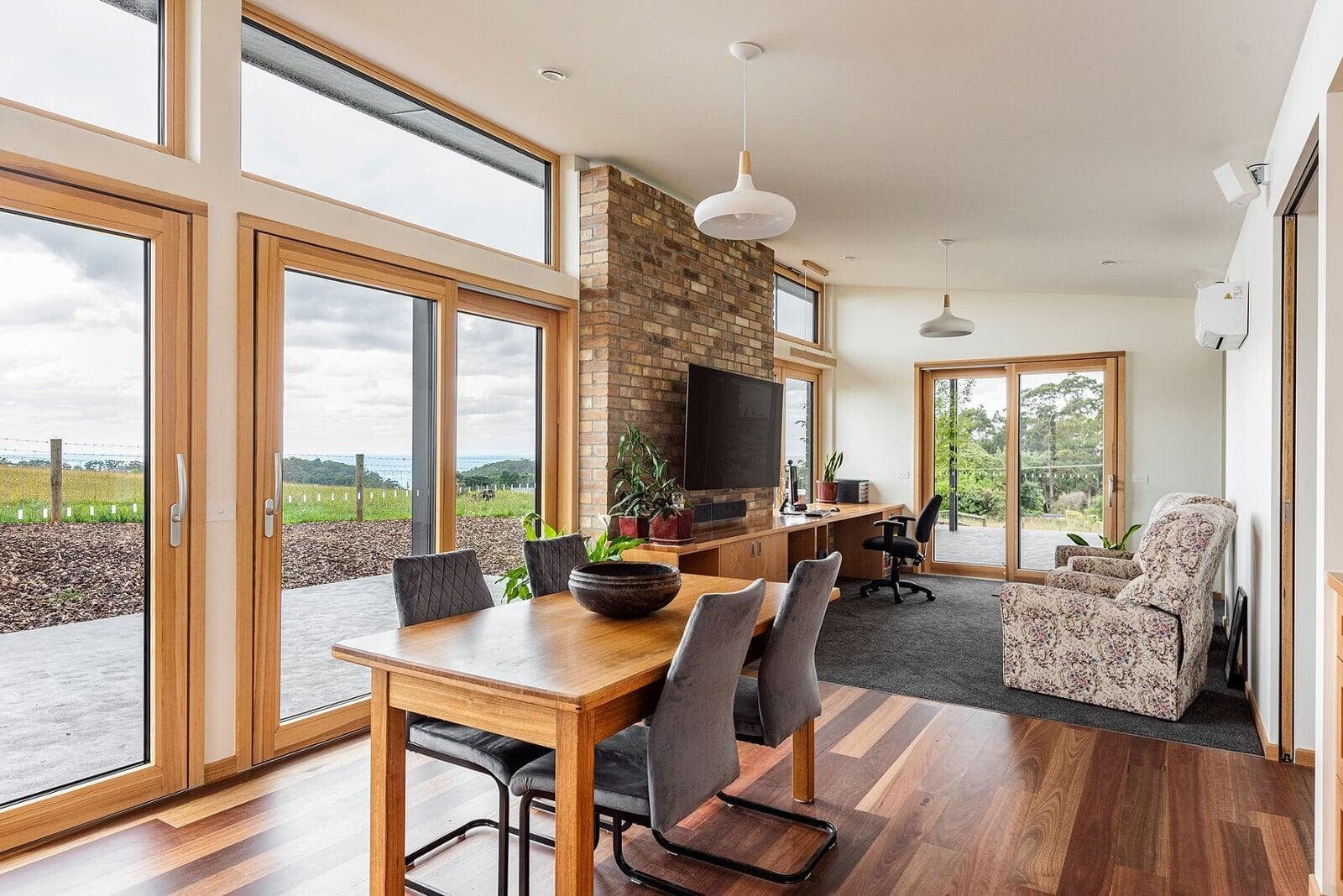
Double or triple-glazed windows with insulated frames are carefully sized and positioned to maximise winter sun while minimising summer overheating. They're not just openings — they're precision-engineered components of the thermal envelope.
Mechanical Ventilation with Heat Recovery (MVHR)
A quiet, continuous ventilation system extracts stale air from bathrooms and kitchens, recovers up to 90% of its heat, and uses it to warm fresh, filtered air supplied to living areas and bedrooms. You get constant fresh air without opening windows or losing heat.
Why Passivhaus in Tasmania?
Tasmania is arguably the best place in Australia to build a Passivhaus. Here's why:
- Tasmania's climate is highly variable — mild but with cold snaps, coastal winds, and high humidity. Passivhaus handles all of it.
- Energy costs in Tasmania are among the highest in Australia. A 75–90% reduction in heating demand makes a real financial difference.
- Tasmania's clean air is wasted if your house is full of mould, dust, and stale air. MVHR ensures you're breathing the best air possible.
- Building to Passivhaus standard future-proofs your investment. As energy codes tighten, your home is already decades ahead.
Passivhaus vs. a Standard Australian Home
| Feature | Standard Home (6-Star NatHERS) | Passivhaus |
|---|---|---|
| Heating demand | ~120 kWh/m²/year | ≤15 kWh/m²/year |
| Airtightness | Not tested (typically 15+ ACH@50Pa) | ≤0.6 ACH@50Pa (tested & verified) |
| Ventilation | Open windows / exhaust fans | MVHR with 90% heat recovery |
| Thermal bridges | Common (steel lintels, concrete slabs) | Designed out entirely |
| Windows | Single or double glazed, aluminium frames | Double/triple glazed, thermally broken frames |
| Comfort | Variable — depends on heating/cooling use | Consistent 20–25°C year-round |
Common Passivhaus Myths — Debunked
Myth: "Passivhaus homes are ugly boxes"
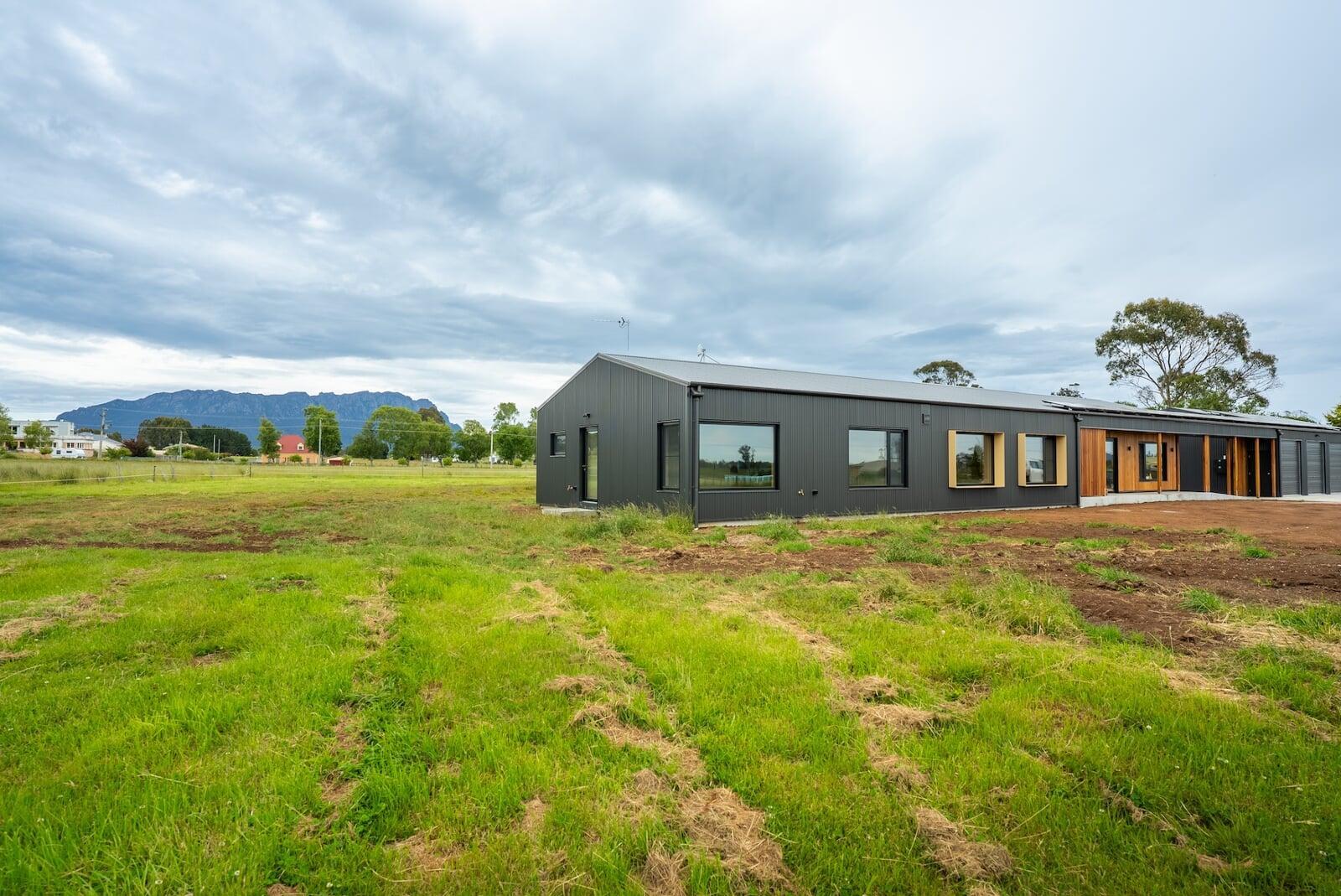
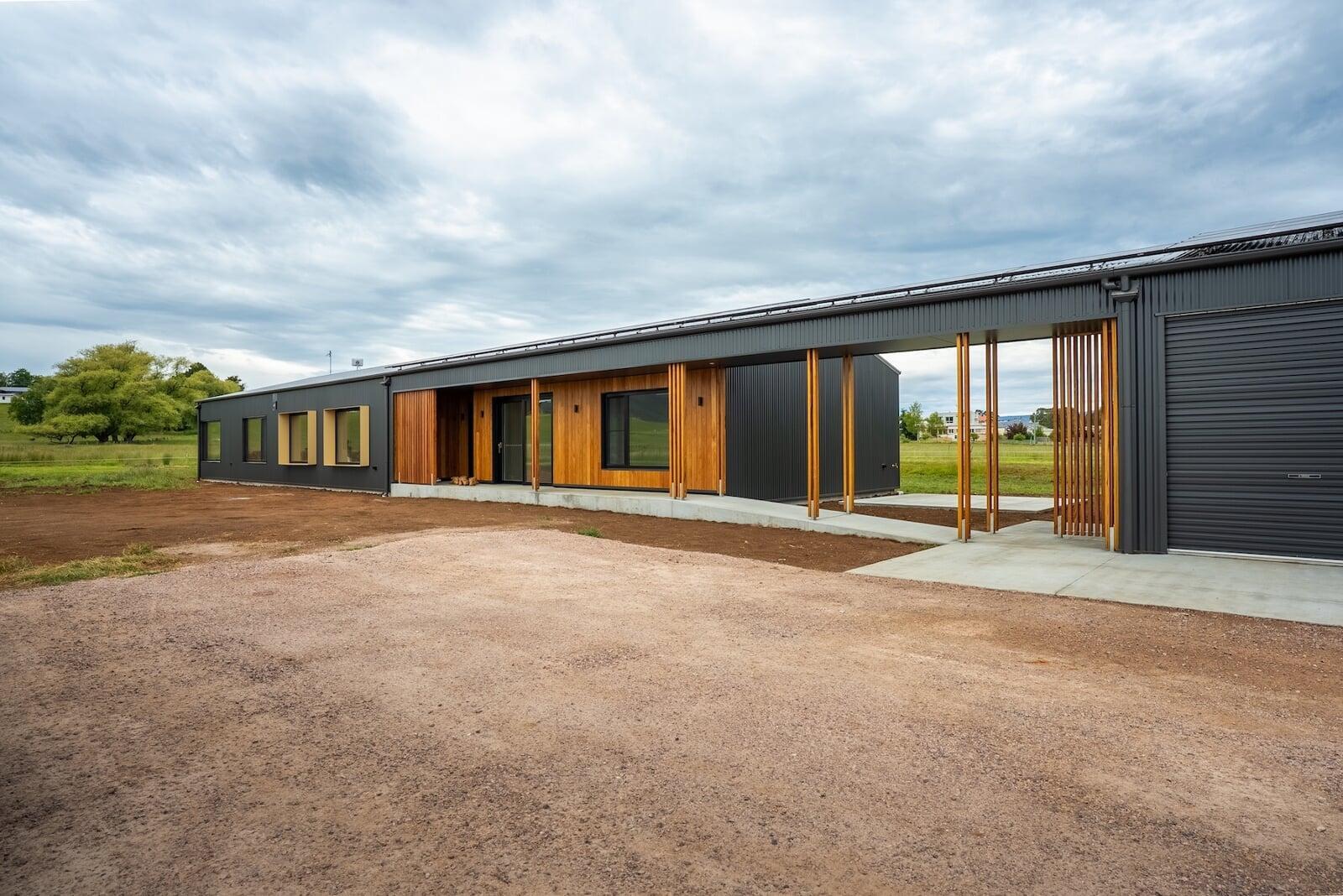
Reality: Passivhaus is a performance standard, not a style. You can build any architectural style — contemporary, heritage, barn, coastal — as long as the physics are right. Our projects prove that beautiful design and exceptional performance go hand in hand.
Myth: "You can't open the windows"
Reality: Of course you can! Passivhaus homes have openable windows. The MVHR system means you don't need to open them for ventilation, but on a beautiful Tasmanian day, throw them open and enjoy the breeze.
Myth: "It's too expensive"
Reality: A Passivhaus home typically costs 10–15% more to build than a standard home. But with energy savings of 75–90%, the payback period is surprisingly short — and you get dramatically better comfort from day one. Think of it as buying a quality asset, not paying a premium.
Myth: "It's only for cold climates"
Reality: Passivhaus works in every climate. In Tasmania's mild but variable conditions, it's particularly effective — keeping homes warm in winter without heating and cool in summer without air conditioning.
Myth: "Any builder can do it"
Reality: Passivhaus requires specialist knowledge, precision detailing, and rigorous quality assurance. It's not just about specification — it's about execution. That's why we've invested in certified Passivhaus training and apply building science expertise to every project.
Why Davies Builds to Passivhaus Standards
We believe every family deserves a home that's genuinely comfortable, healthy, and efficient — not just one that meets the minimum code requirements. That's why we've invested in Passivhaus training through the Australian Passivhaus Association and apply building science principles to every project.
Not every Davies home is certified Passivhaus — certification is a choice that depends on the project's goals and budget. But every home we build benefits from Passivhaus thinking: meticulous attention to the thermal envelope, airtightness testing, thermal bridge-free detailing, and high-quality ventilation.
For us, Passivhaus isn't a marketing label. It's a framework that makes our homes measurably better. And when you can measure it, you can guarantee it.