Huntsman
The Vision
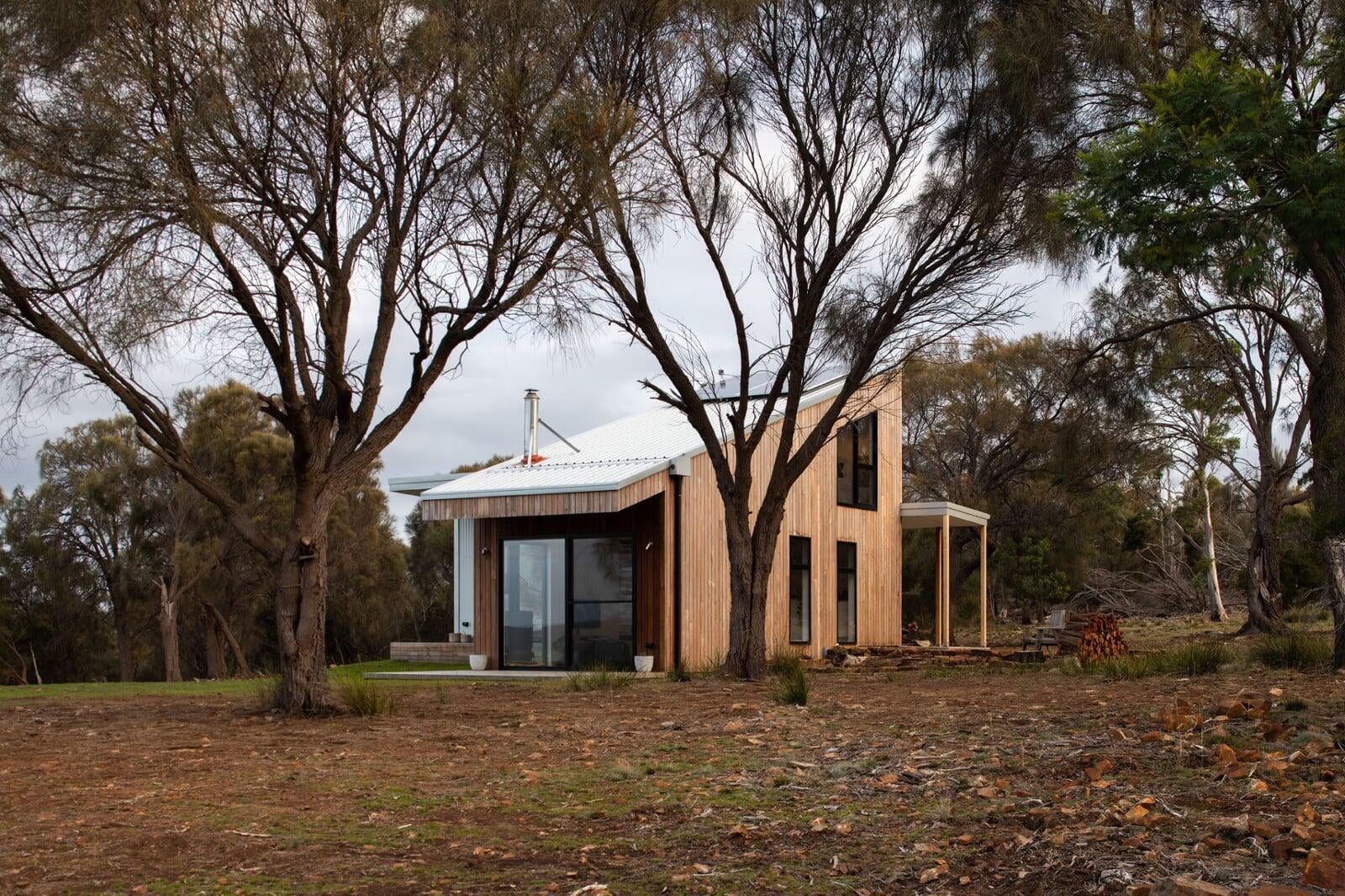
Huntsman began with the simplest and most powerful of briefs: build us a place to disappear. Our clients, successful professionals with demanding careers, wanted an escape — not a holiday house or a weekender, but a genuine retreat from the noise and pace of modern life. A place where mobile phones have no signal, where the nearest neighbour is invisible, and where the only sounds are wind through eucalyptus and the occasional call of a wedge-tailed eagle.
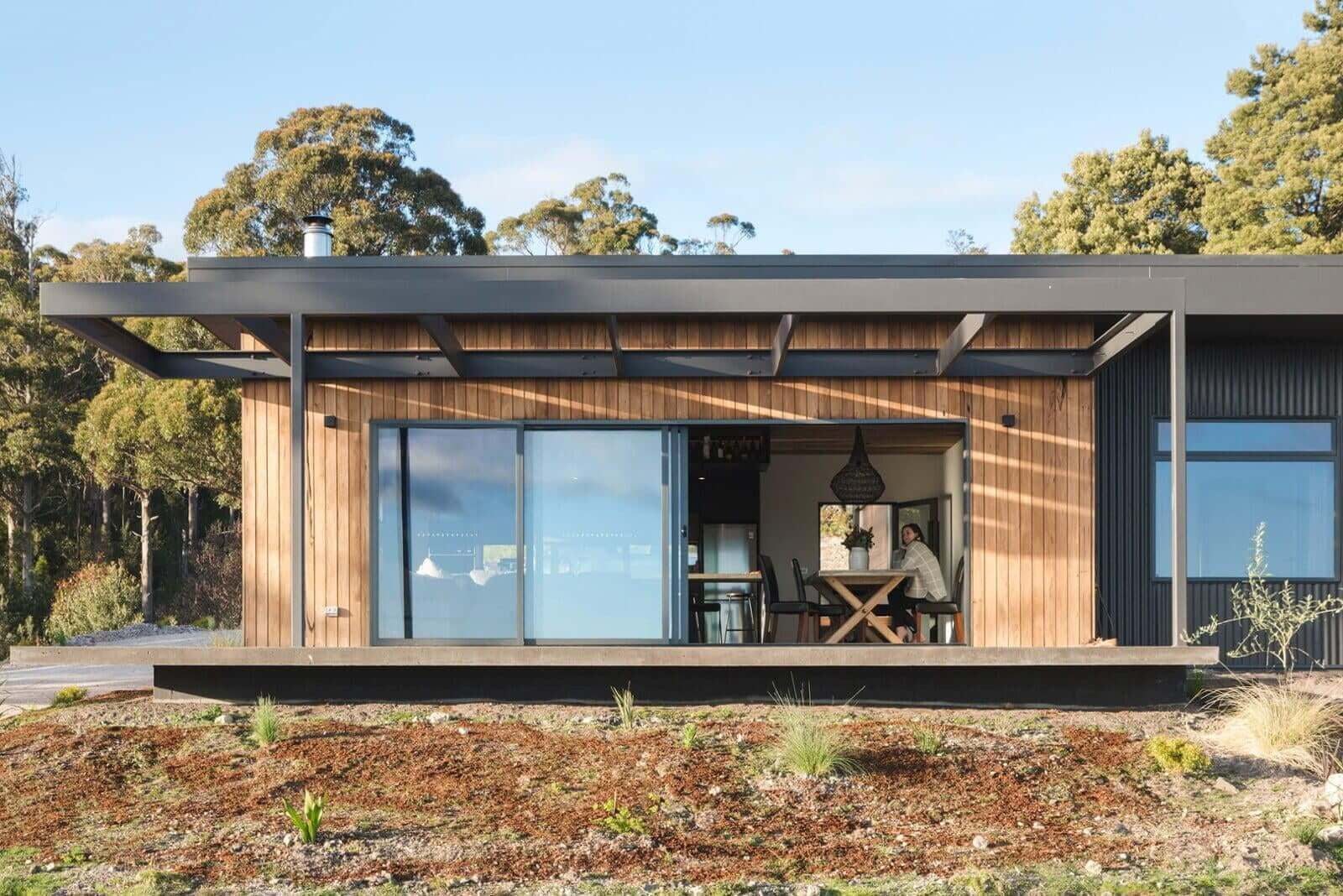
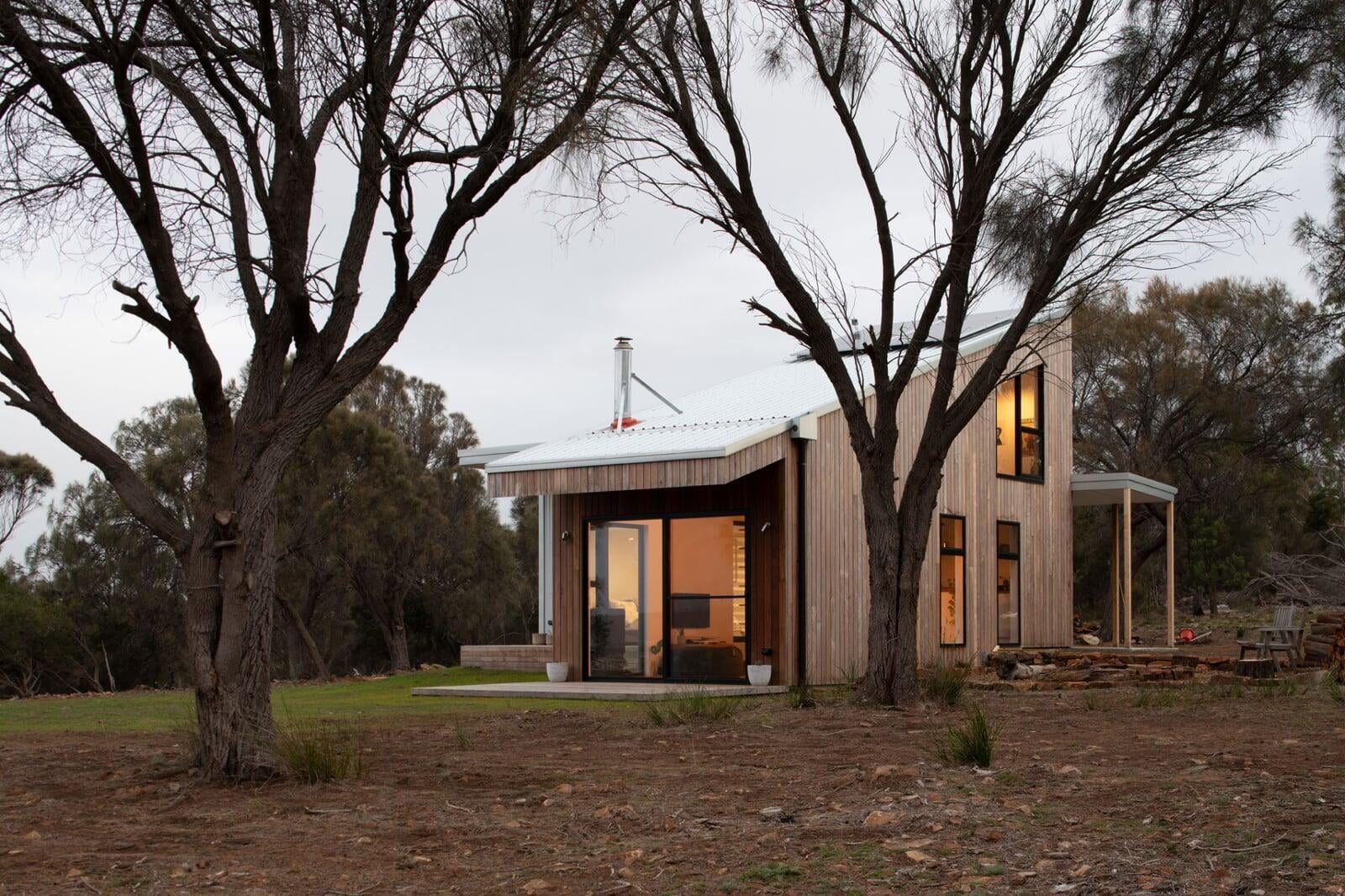
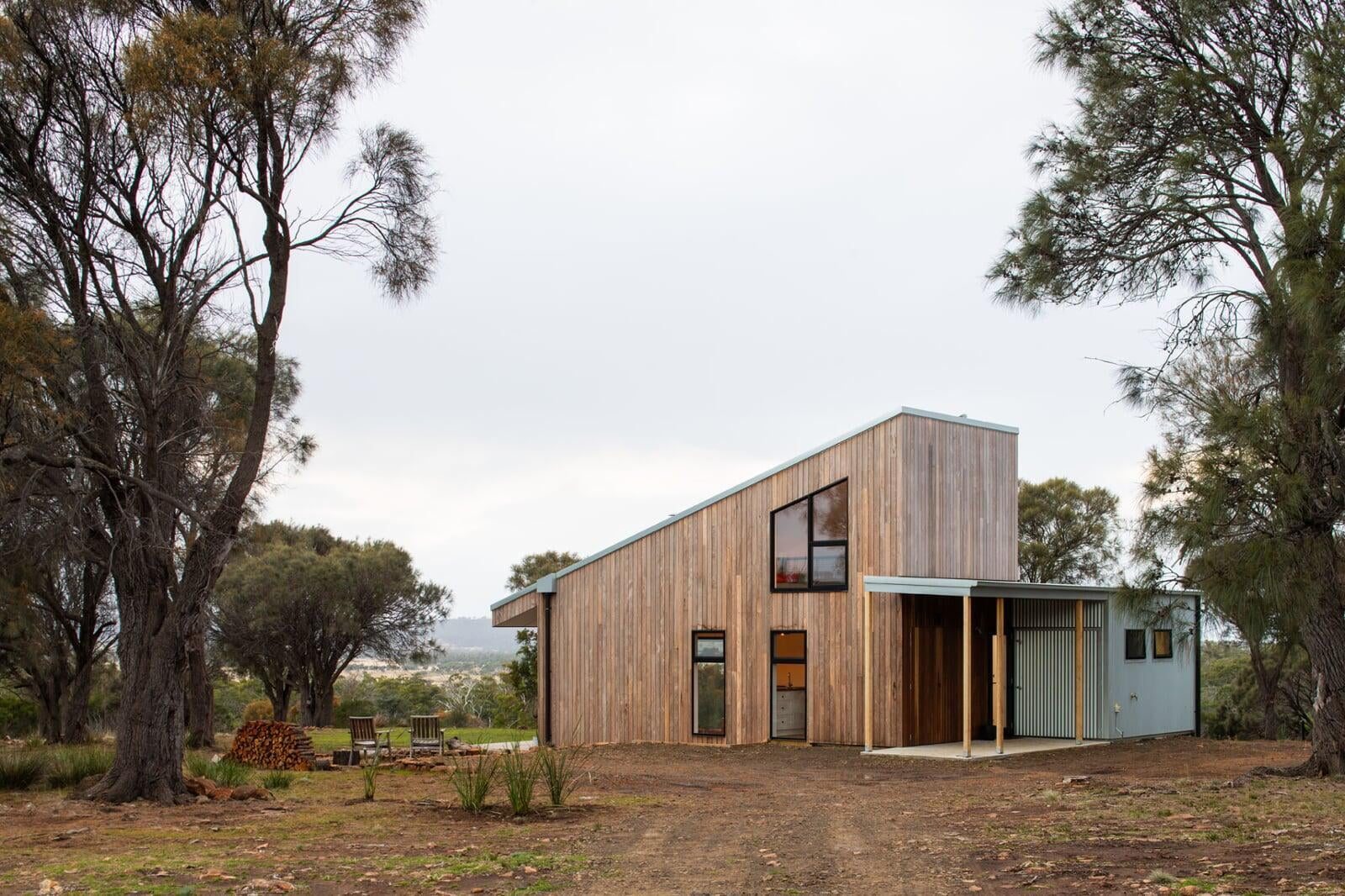
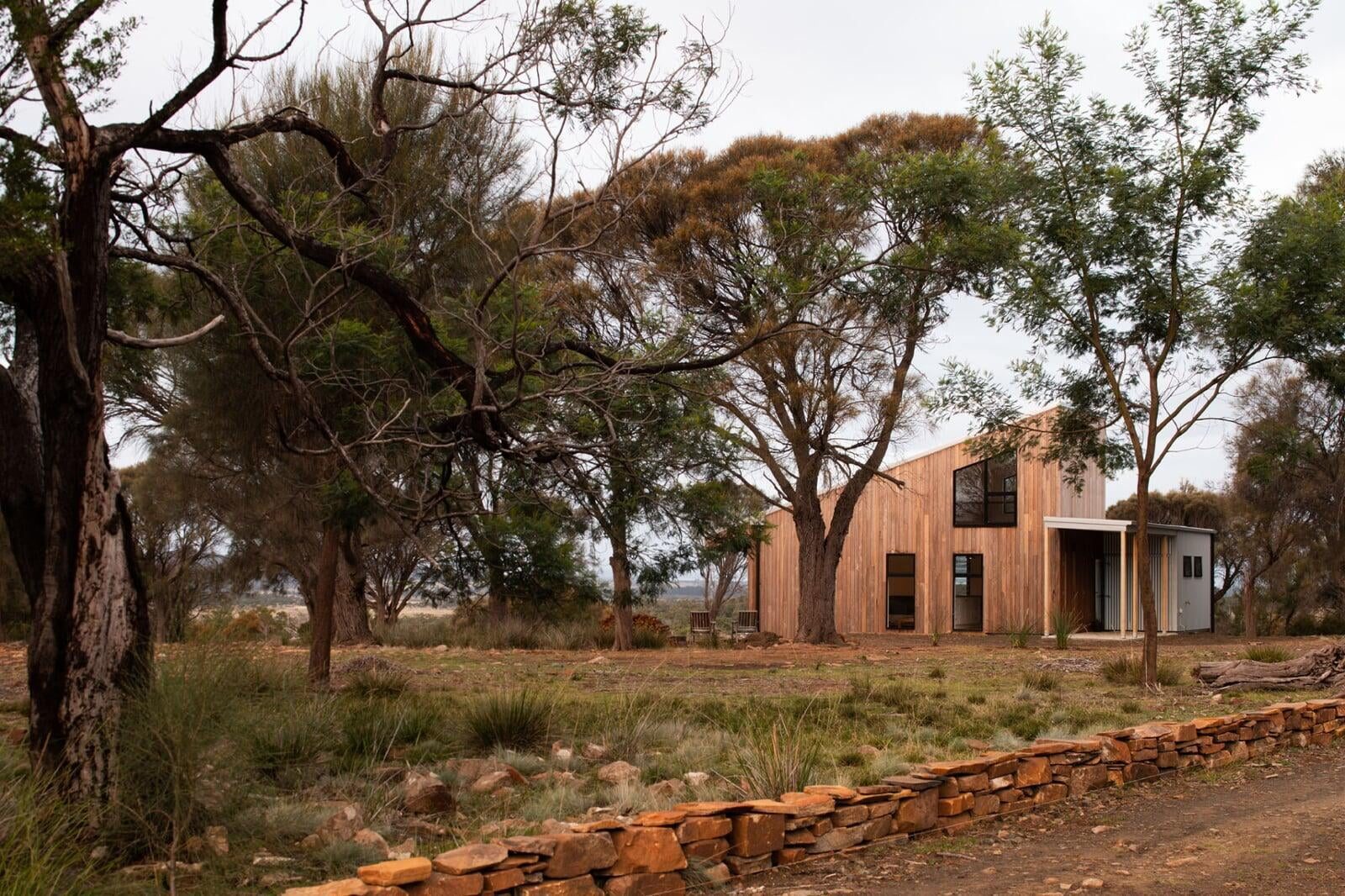
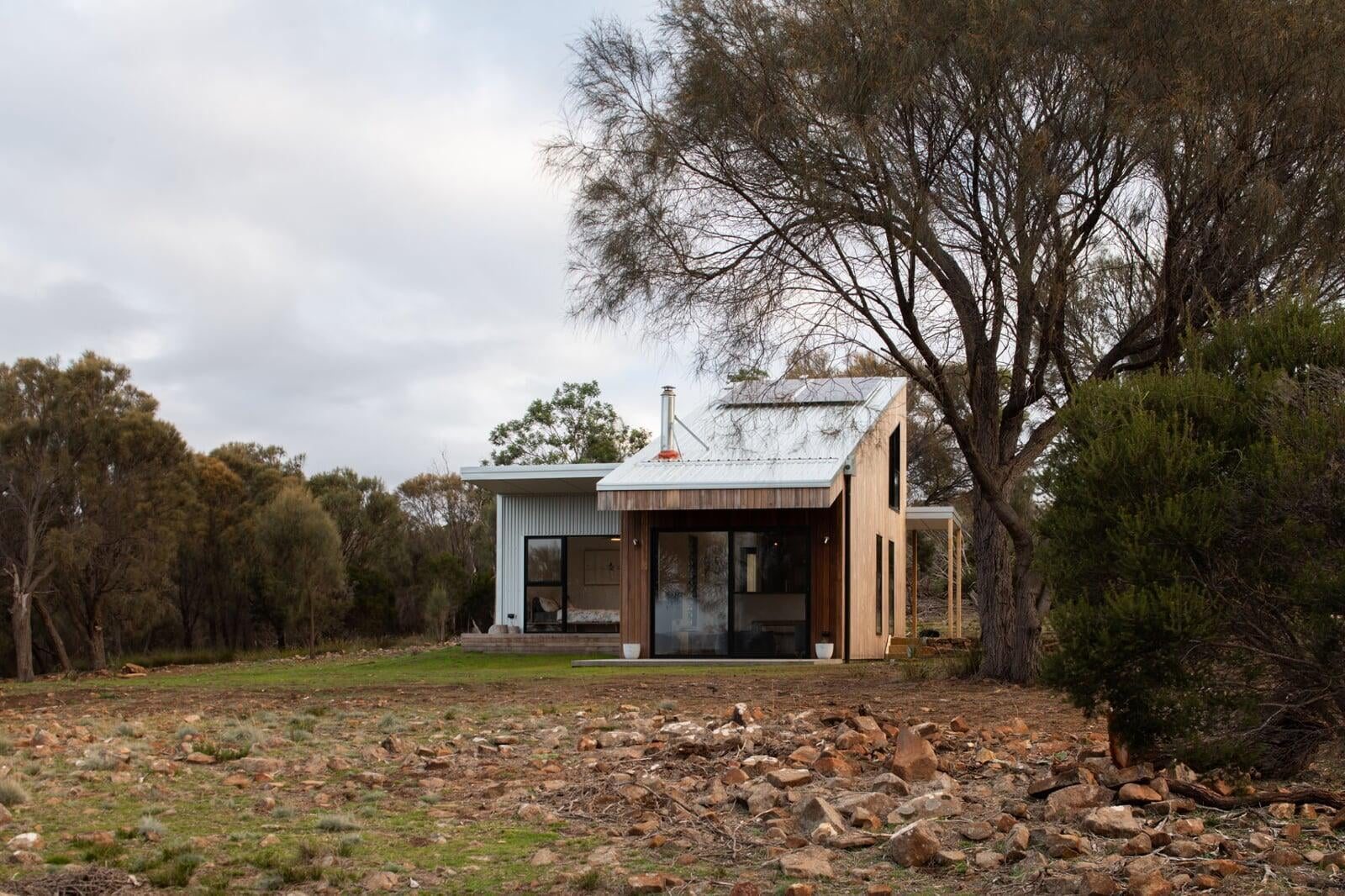
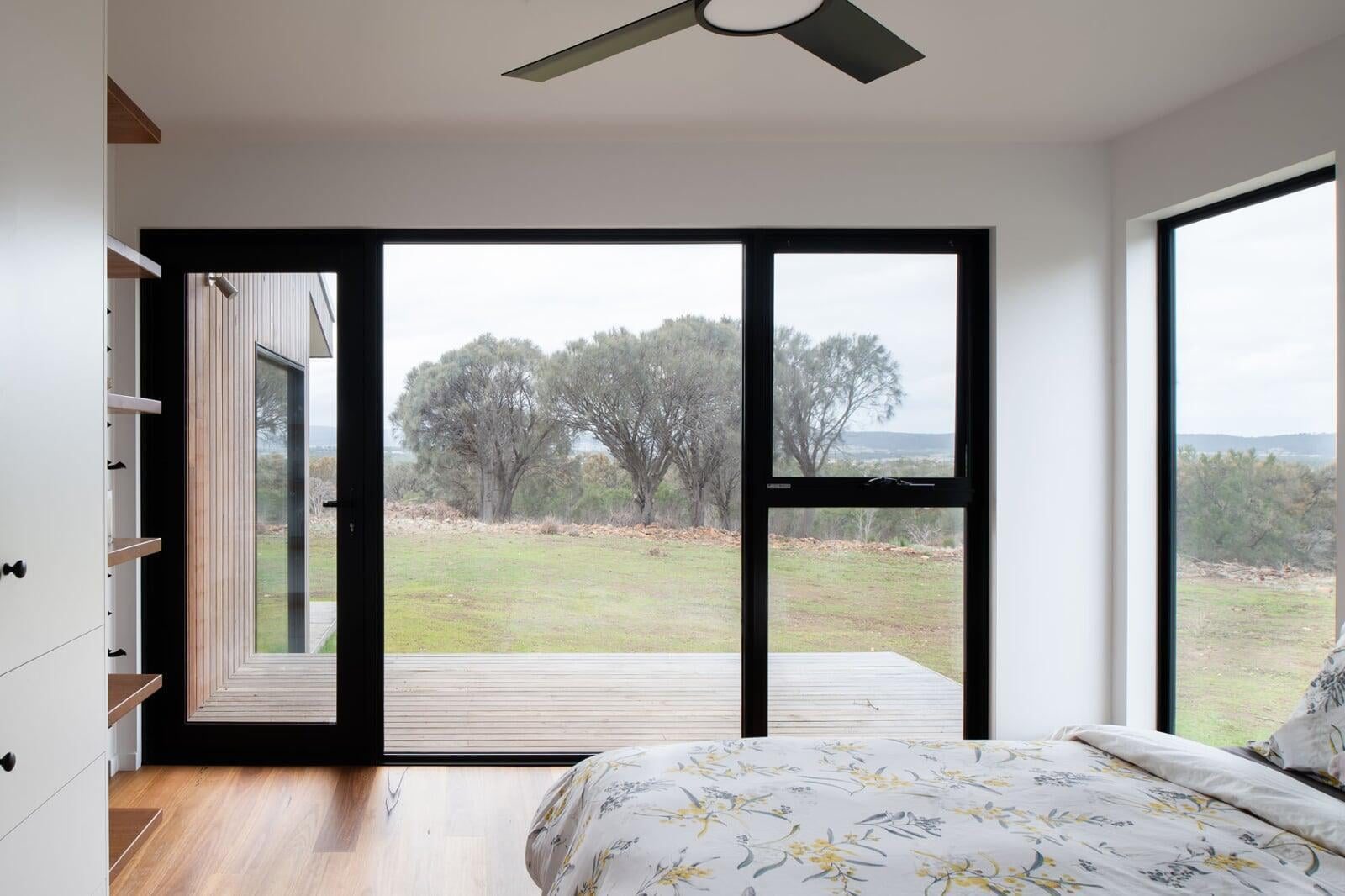
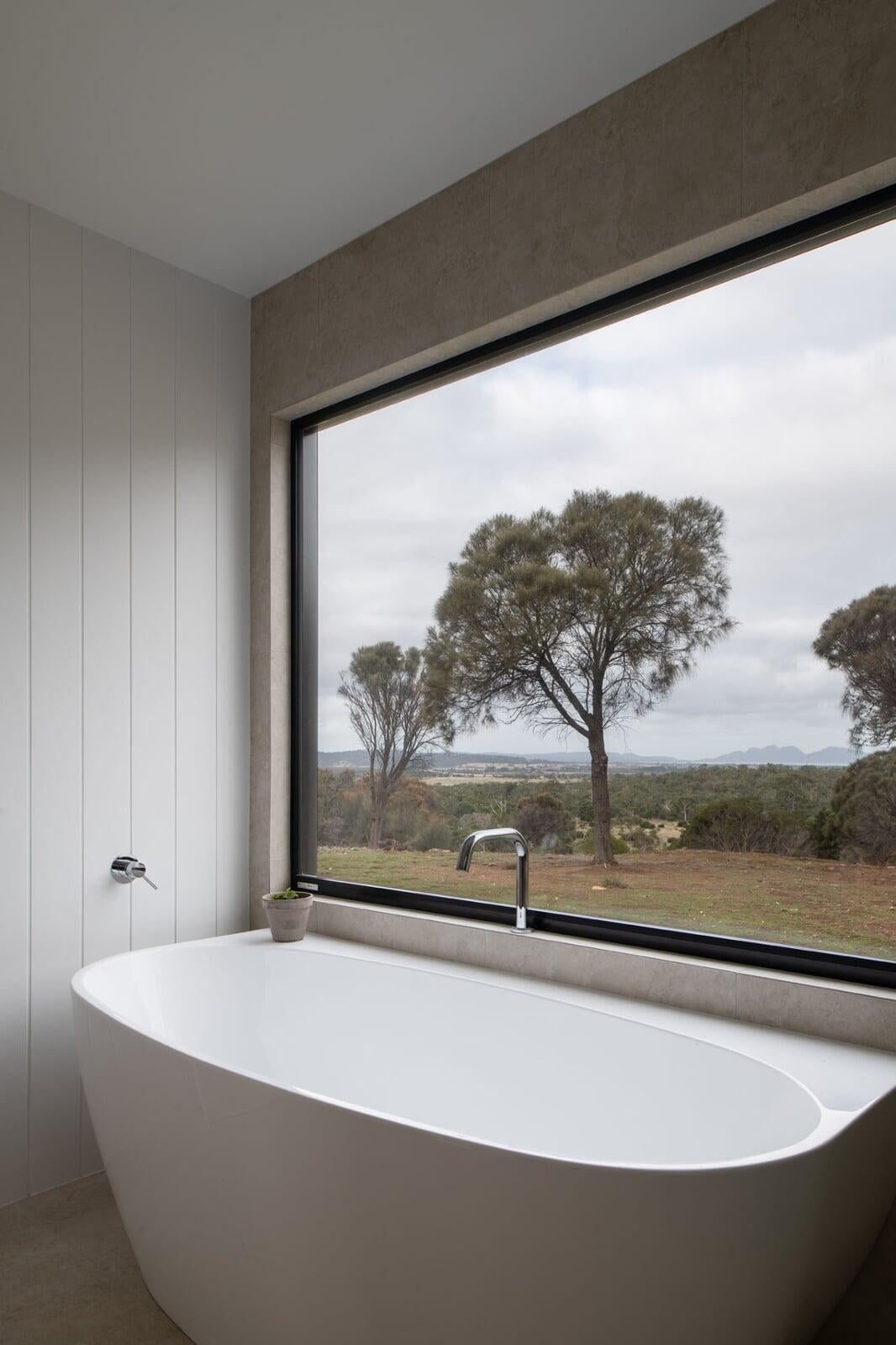
From the very start, it was evident that the site possessed a perfect view of the hazards and the bay in the distance. We positioned the cabin to maximise this view while keeping the building oriented for the sun — a dual imperative that required careful siting on the bush block. The cabin needed to sit lightly on the land, its presence felt as a complement to the landscape rather than an imposition upon it.
The design emerged from our in-house team at Davies Design. We conceived a compact, single-bedroom hunting cabin that would provide everything needed for rejuvenation and nothing more. Every square metre serves a purpose. There is no wasted space, no unnecessary complexity. The cabin is a study in essentialism — a reminder that luxury is not about excess but about the quality of what remains when everything superfluous has been stripped away.
The fully off-grid specification was non-negotiable from the outset. Our clients wanted to live, even temporarily, in a way that acknowledges the finite nature of resources. They wanted to feel the weather, to be conscious of their energy use, to be participants in their environment rather than mere observers of it. This philosophy informed every design and construction decision, from the building's orientation to its material palette.
Design & Construction
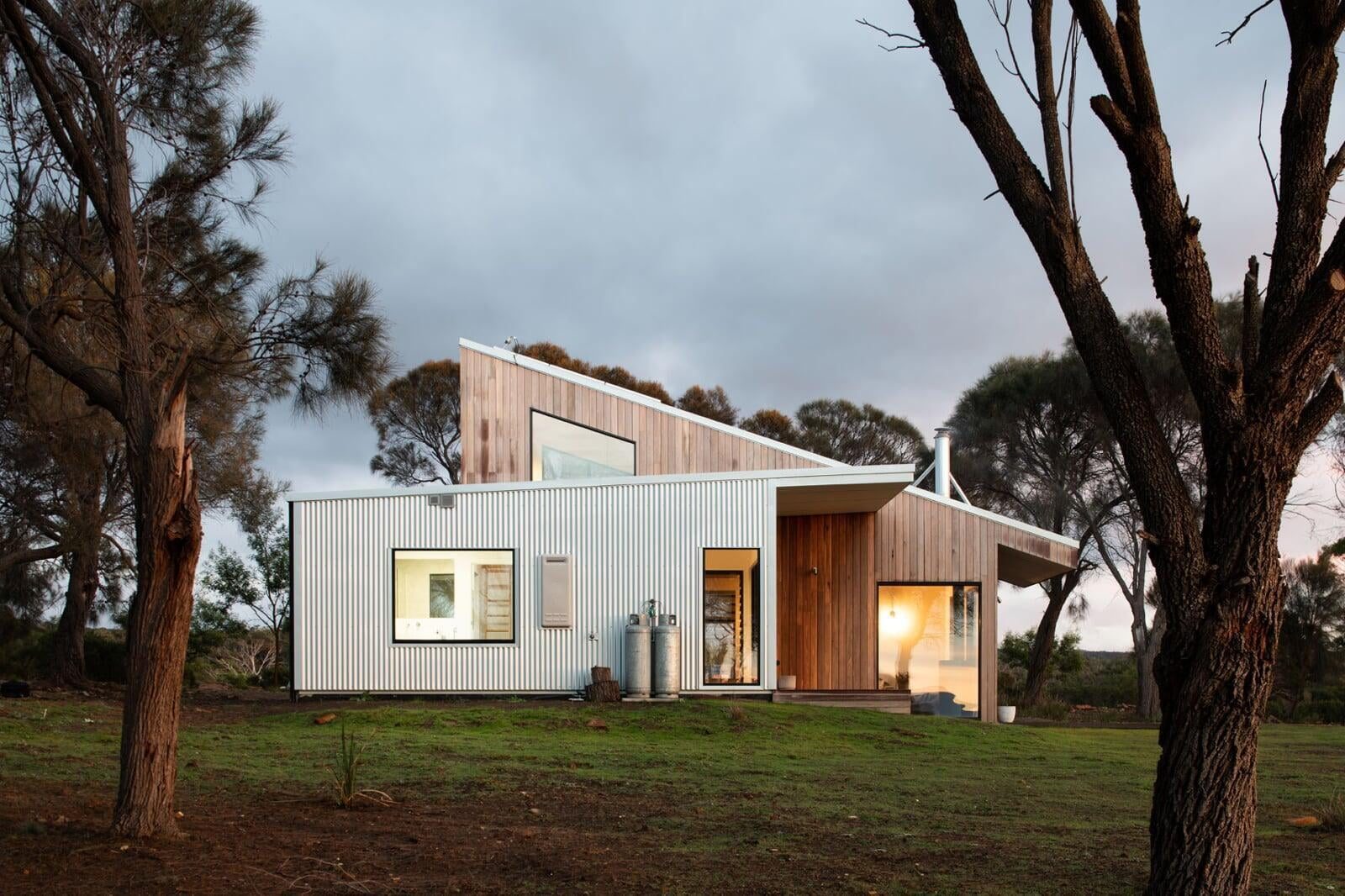
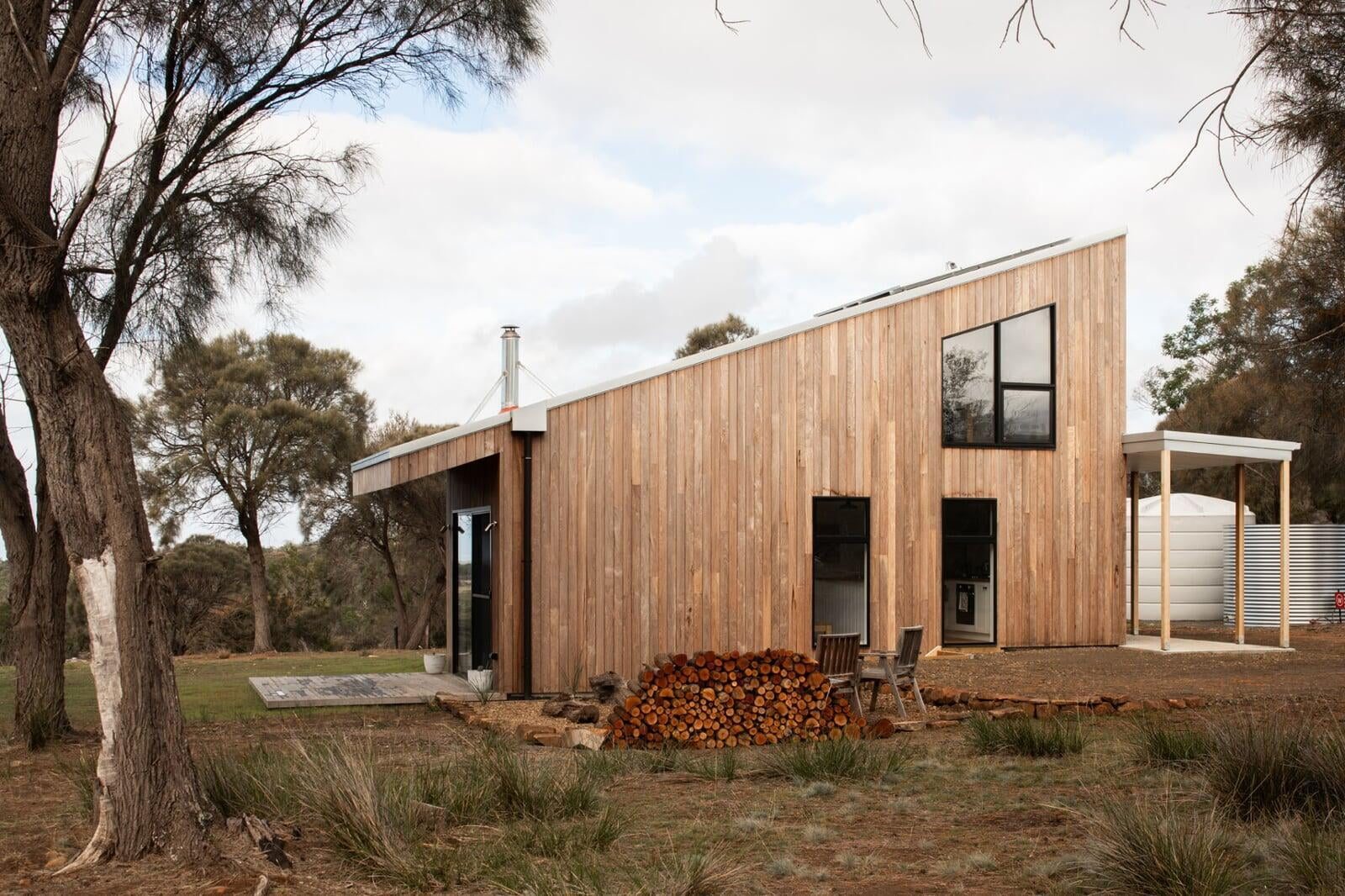
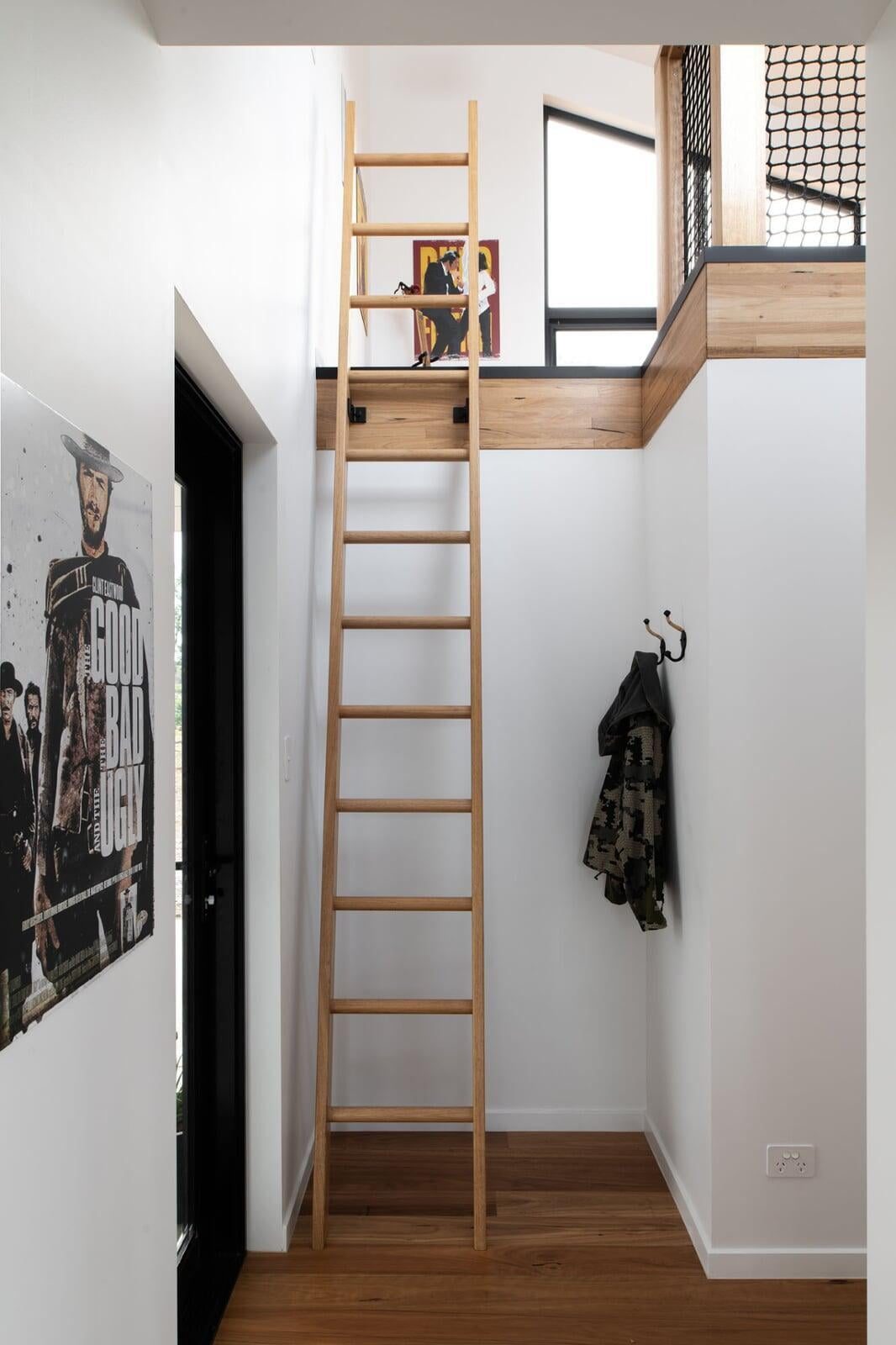
The cabin's form is deliberately restrained — a simple gabled structure that references the modest bush shelters and farming buildings that dot the Tasmanian landscape. But within this simplicity lies considerable sophistication. The floor plan is organised around a central living space that opens to the view, with the bedroom tucked into the rear of the building and a compact bathroom and kitchen arranged along one side. A sleeping loft, accessed by a custom-made Tasmanian oak ladder, provides additional sleeping capacity for guests.
The construction approach prioritised minimal site disturbance. The cabin sits on a pier foundation system that required no excavation, preserving the existing vegetation and soil structure. Materials were selected for their ability to weather gracefully in the harsh bush environment — UV exposure, wind-driven rain, and temperature extremes that can range from below zero to above 35 degrees in a single season.
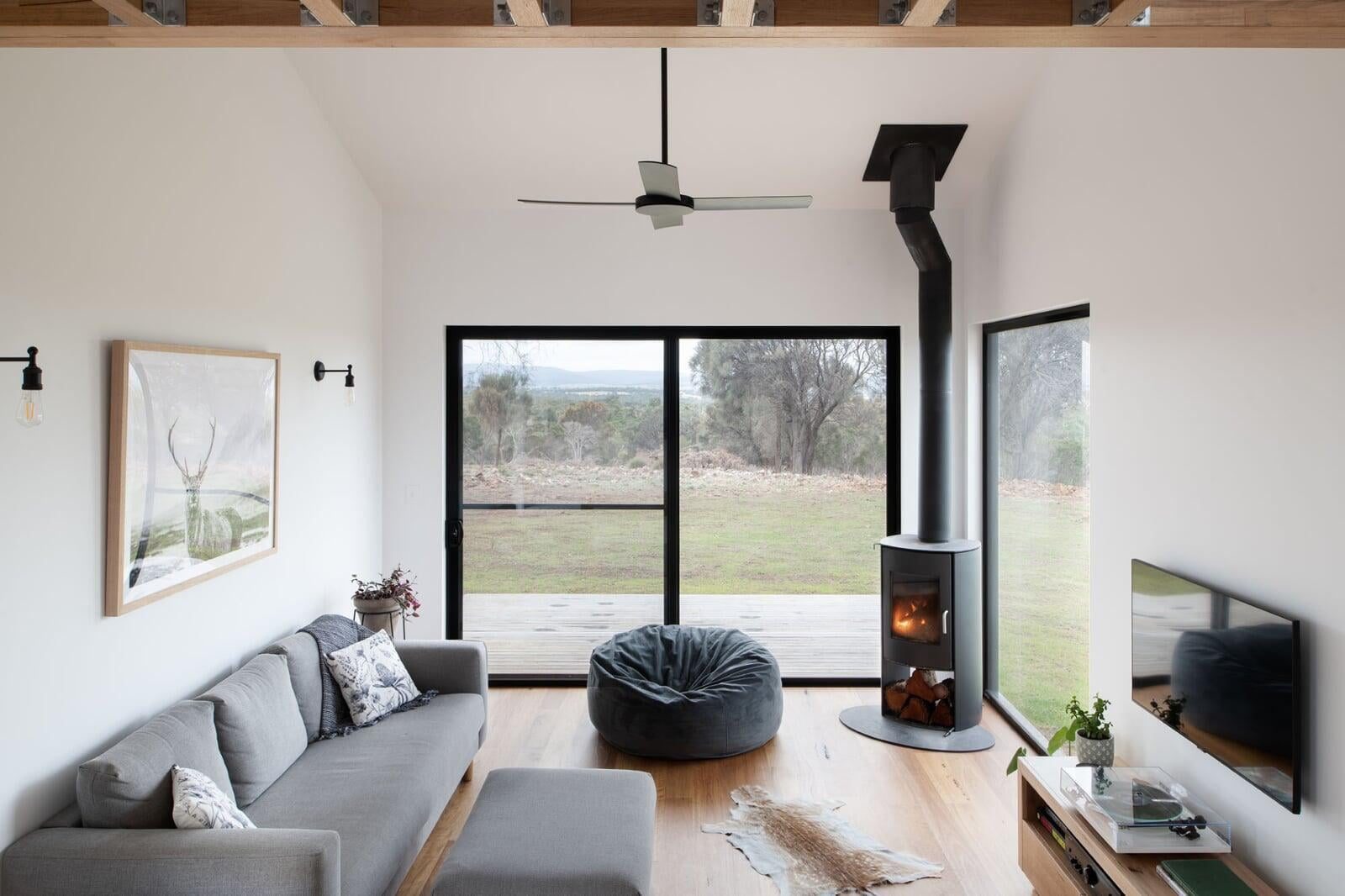
The building's small footprint was both a design choice and a philosophical statement. In an era of ever-expanding floor plans, Huntsman demonstrates that a well-designed small building can provide a richer living experience than a poorly designed large one. Every view from every window has been composed. Every transition between spaces has been considered. The loft joists — exposed glue-laminated Tasmanian oak — become the ceiling's primary visual feature, their warm timber tone creating an overhead canopy that makes the compact space feel intimate rather than cramped.
Materials & Craft
The material palette reads like a love letter to Australian hardwoods. Spotted gum cladding and decking provide the exterior shell — a timber chosen for its exceptional hardness, natural durability, and the way it develops a rich silver-grey patina when exposed to the elements. Over time, the cabin will increasingly blend with the surrounding bushland, its surfaces echoing the colours of bark and stone.
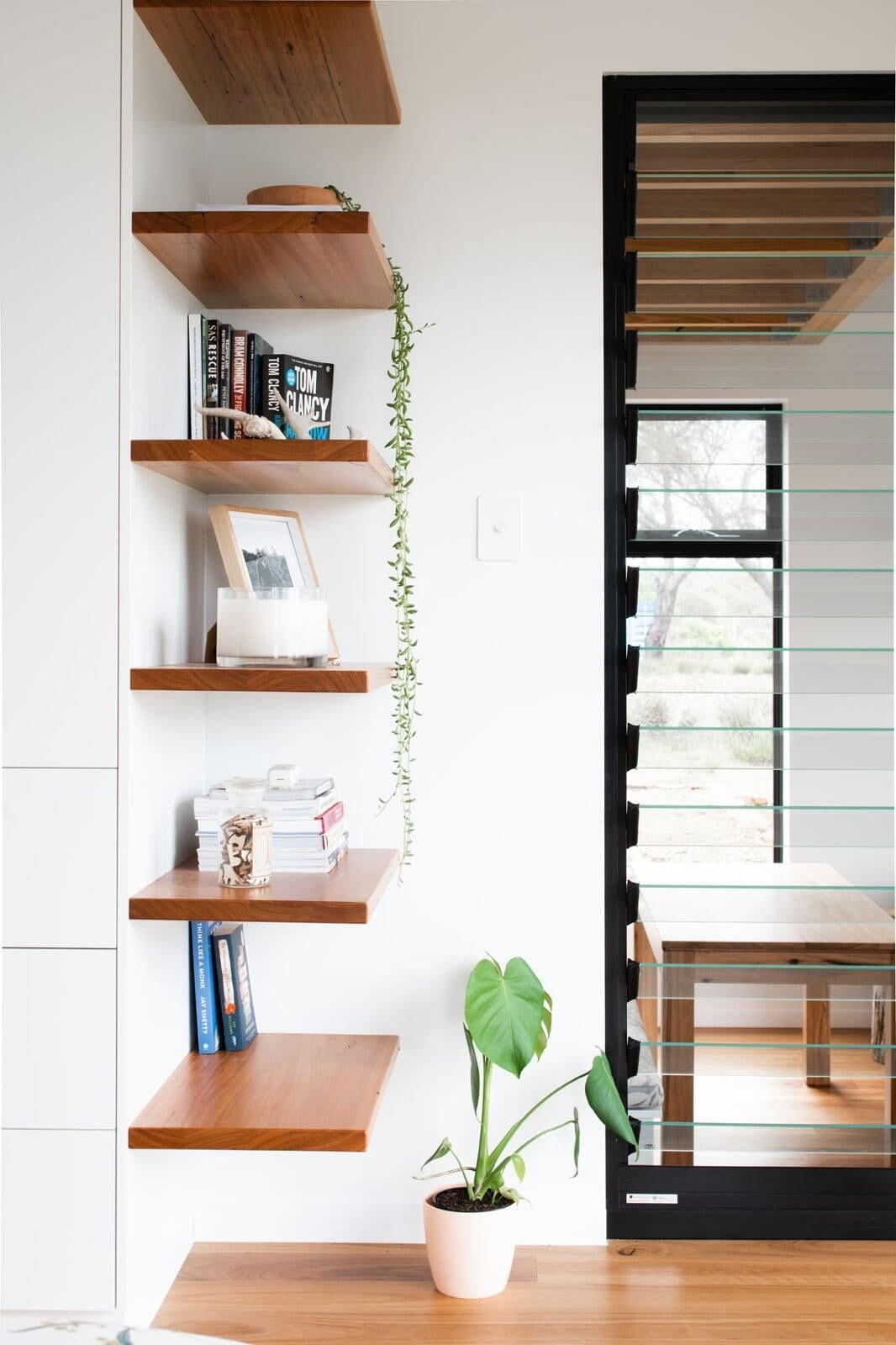
Inside, Blackbutt timber overlay flooring creates a warm, durable surface underfoot. The timber's subtle grain and honey-gold colour complement the exposed Tasmanian oak loft joists above, creating a coherent timber narrative from floor to ceiling. The solid Blackbutt timber benchtop in the kitchen continues this theme, its live edge providing a tactile connection to the forest that surrounds the building.
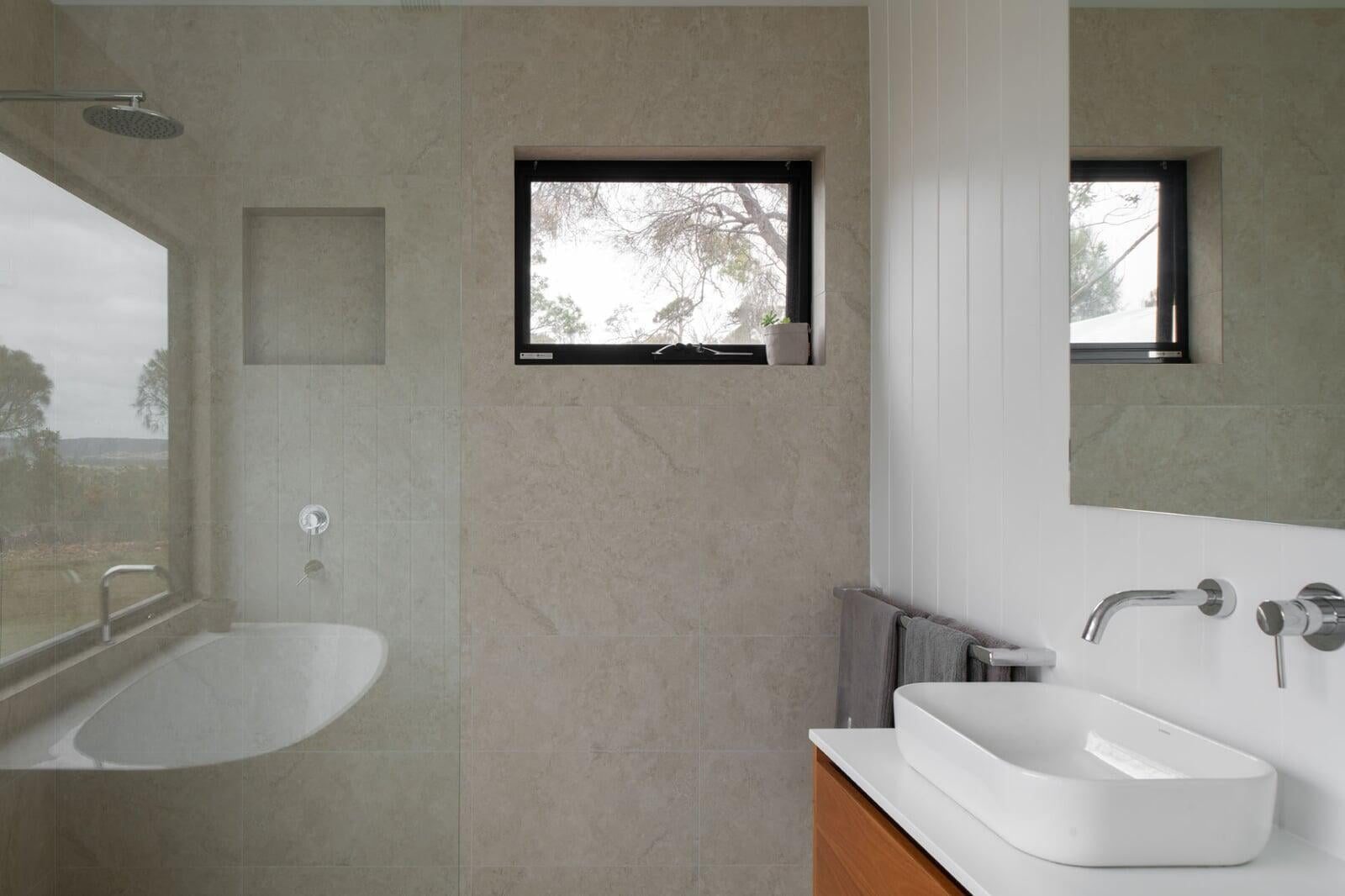
In the bathroom, Travertine tiles introduce a contrasting materiality — their creamy, pitted surface providing a spa-like quality to the compact wet area. The Tasmanian oak custom-made ladder and handrail that access the loft are pieces of craftsmanship in their own right, their joints carefully resolved and their surfaces hand-finished to a smooth, tactile quality.
- •Spotted gum cladding and decking
- •Travertine tiles in the bathroom
- •Blackbutt timber overlay flooring
- •Solid blackbutt timber benchtop
- •Tasmanian oak custom made ladder and handrail
- •Exposed glue-laminated Tasmanian oak loft joists
Off-Grid Living
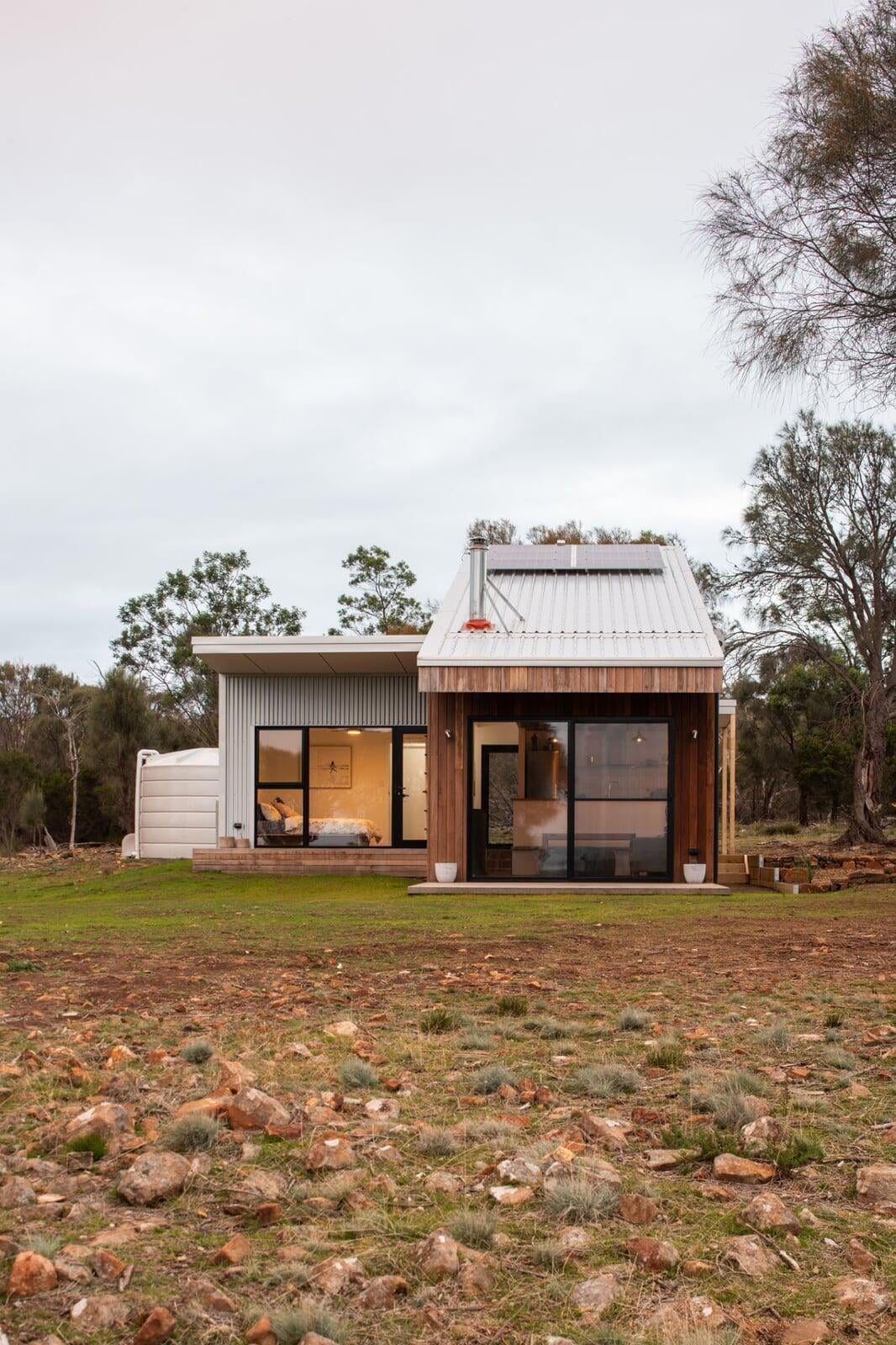
Huntsman's off-grid systems represent a carefully calibrated balance between comfort and consciousness. Although the cabin achieved a 6-star energy rating, the small footprint combined with wood heating and passive solar orientation make it considerably more efficient than that rating suggests. The building performs well above its stars.
The energy system centres on a single lithium battery, charged by a modest solar array. This deliberate constraint changes the occupant's relationship with energy. You become aware of consumption in a way that grid-connected living never requires. Lights are turned off when not needed. Devices are charged during peak solar hours. The evening's entertainment might be a book by firelight rather than a streaming service. This is not deprivation — it is a different, and many would argue richer, way of living.
A single water tank captures and stores rainfall for all domestic use. Like the energy system, this finite supply creates awareness. Showers are shorter, but they're also more appreciated. Water is not wasted because its value is understood viscerally, not abstractly.
The Huntsman cabin has become something of a touchstone for Davies — a project that reminds us why building matters. Not every home needs to be large, complex, or expensive to be transformative. Sometimes the most profound impact comes from the smallest building, in the quietest place, built with the greatest care.
Also building in
North-West Coast & Hinterland
Tamar Valley & Launceston
Midlands & East Coast
Southern Tasmania
More Projects