

Building in Gunns Plains
An agricultural valley on the Central Coast — volcanic soils, the Leven River, and one of Tasmania's most significant cave reserve systems on the doorstep.
A Farming Valley With Remarkable Natural Character
Gunns Plains is a small agricultural valley in Tasmania's Central Coast region, home to approximately 195 residents (ABS 2021). Defined by rich red volcanic soils, the Leven River, and productive farming land that has supported the north-west's agriculture for well over a century, the valley offers a rural character that is genuinely difficult to find this close to the coast.
The valley was named after botanist Ronald Campbell Gunn, who visited the area in 1860. A post office operated here from 1900 to 1974. Over generations, Gunns Plains has supported dairy farming, beef cattle, potatoes, and historically hops — the red basaltic soils that underlie much of the valley floor are among the most productive in northern Tasmania.
The defining natural landmark is Gunns Plains Cave State Reserve — a 10-hectare reserve on the valley's northern boundary, proclaimed in 1918 and built around a cave system discovered in 1906. Guided by Parks & Wildlife Tasmania, the caves include calcite formations, glowworms, and an underground river that has drawn visitors to the valley for generations. Wings Wildlife Park on Gunns Plains Road adds further visitor traffic and local employment.
With Ulverstone approximately 20km north and Penguin nearby, Gunns Plains sits within easy reach of everyday services while retaining the character of a genuine working valley. For buyers seeking a rural lifestyle block on productive land — or a quiet corner of Tasmania with extraordinary natural amenity — the valley is a compelling destination.
Why People Choose Gunns Plains
Gunns Plains Cave Reserve
A 10-hectare state reserve on the valley's northern boundary — calcite cave formations, glowworms, and an underground river guided by Parks & Wildlife Tasmania since 1918. One of the north-west's most distinctive natural amenities, and a constant draw for visitors to the valley.
Agricultural Character
Rich red volcanic soils, reliable rainfall, and the Leven River through the valley floor have made Gunns Plains productive farming country for generations. Dairy, beef cattle, potatoes — the land's productive character informs the valley's rural identity and makes it unlike most lifestyle destinations.
Genuine Rural Privacy
With approximately 195 residents across a broad valley, Gunns Plains offers the space and separation of genuine rural living. Properties here are typically on larger parcels — working farms or lifestyle blocks — with neighbours measured in paddocks rather than fences.
Ulverstone Access
Ulverstone is approximately 20km north — around 20–25 minutes by road. The town provides supermarkets, schools, medical services, and the Leven River foreshore. Penguin and other coastal townships are also accessible for everyday needs.
Community Identity
Gunns Plains has a small but defined community identity built around its farming heritage and the cave reserve that has made it known well beyond its resident population. Wings Wildlife Park adds visitor employment and a local landmark that gives the valley a distinctive character beyond agriculture.
North-West Coast Reach
Situated between the Kentish ranges and the coast, Gunns Plains sits within reach of both Ulverstone (20km) and the broader north-west coast network. The Gunns Plains Road provides a clear link north to the Bass Highway and the coastal towns of Penguin and Ulverstone.
What to Know About Building in Gunns Plains
Gunns Plains falls under Central Coast Council, with planning assessed under the Tasmanian Planning Scheme and the Central Coast Local Provisions Schedule (LPS), which commenced on 27 October 2021. Here's what to understand before you build:
- Rural Resource zone is dominant in Gunns Plains — residential use is constrained to permitted uses under the zone. Check your specific lot's zone and any overlays via PlanBuild Tasmania before purchasing or designing.
- The valley's high agricultural productivity means some land may carry provisions protecting rural production from non-agricultural development. A pre-application enquiry with Central Coast Council is worthwhile for any residential or lifestyle build.
- No reticulated sewerage: all new builds require an on-site sewage management (OSSM) system — engineered, designed, and council-approved separately from the building permit.
- No reticulated water supply in most of the valley. Rainwater collection and tank systems are standard for residential builds; bore water may also be available on some properties.
- Lots close to the Gunns Plains Cave State Reserve boundary should be checked for any conservation or heritage overlay requirements via PlanBuild Tasmania — the reserve's protected status may affect development in proximity.
- The Leven River runs through the valley. Lots with river frontage or near the river boundary should be checked for any waterway overlay that affects setbacks and development footprint.
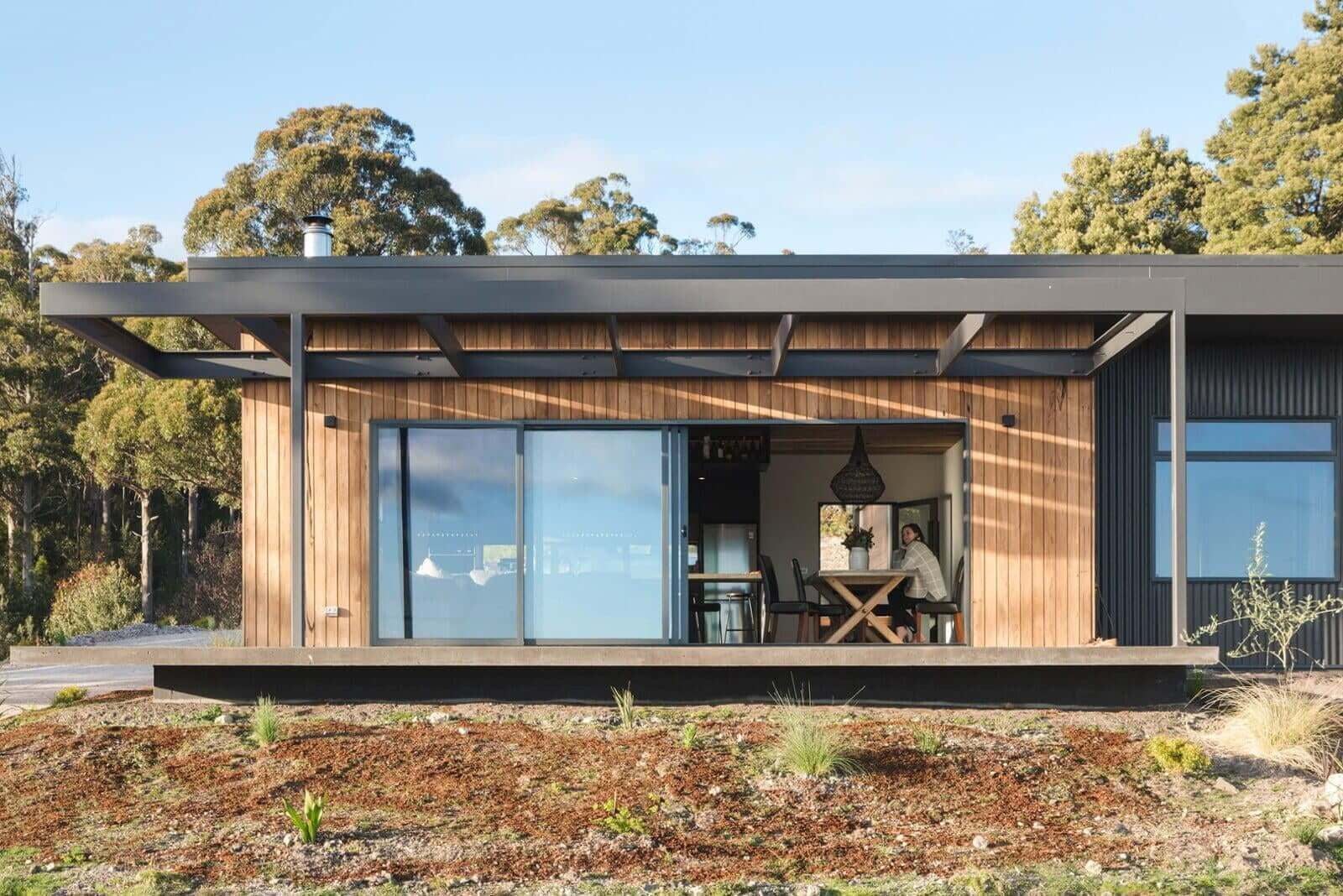
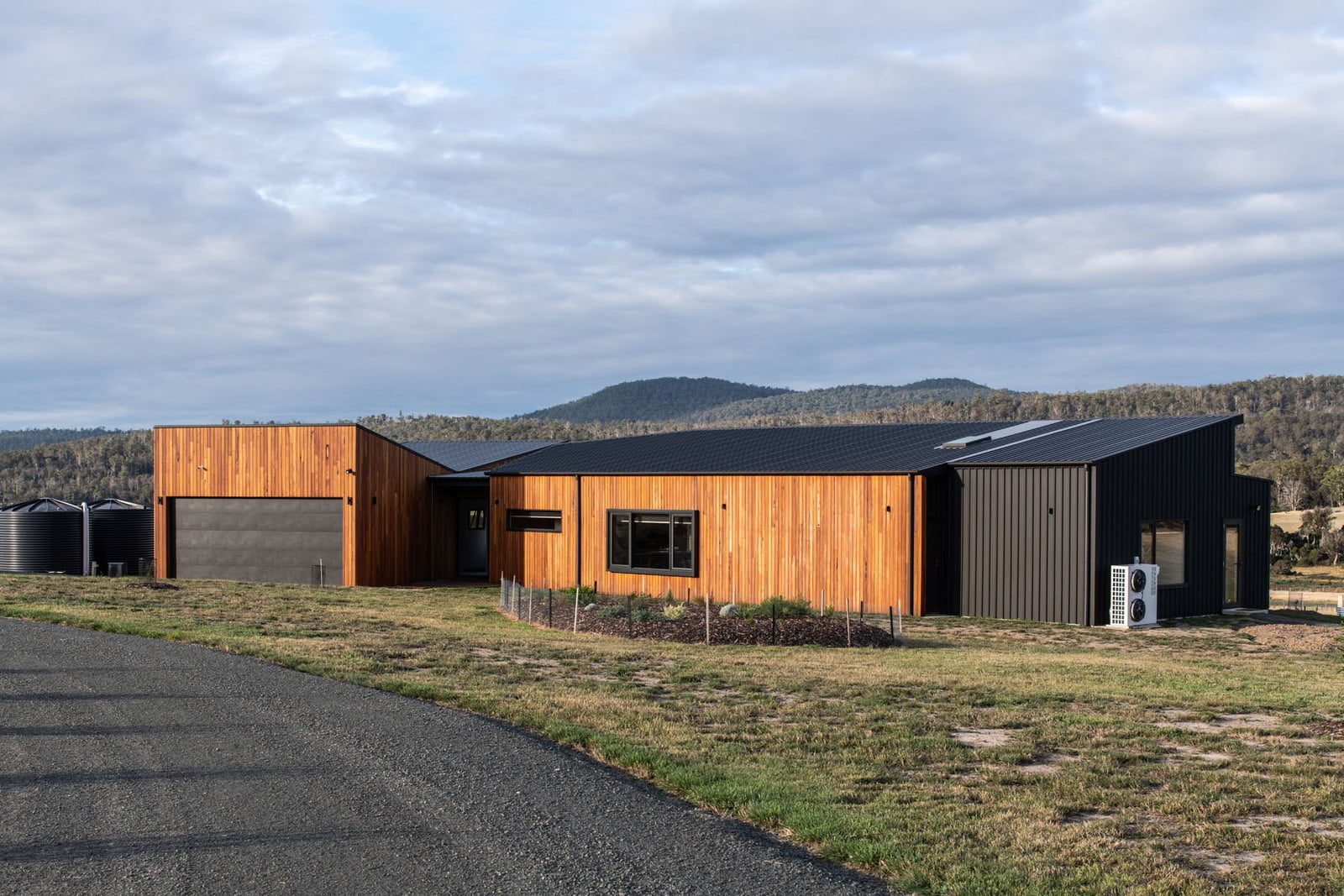
Our Sheffield base is approximately 45–55km from Gunns Plains. We build across the north-west region and understand the rural zone requirements common to this part of Tasmania. Our Barn House Penguin on the coast gives a sense of what's possible in the north-west landscape.
Davies Projects in the Region
Our portfolio spans the north-west coast and Kentish ranges — each a demonstration of what thoughtful design and quality construction can achieve in Tasmania's rural landscapes.
Gunns Plains Building FAQ
How much does it cost to build in Gunns Plains?+
Does Davies Construction build custom homes in Gunns Plains?+
What is the planning process for building in Gunns Plains?+
What makes Gunns Plains worth building in?+
Also building in
North-West Coast & Hinterland
Tamar Valley & Launceston
Midlands & East Coast
Southern Tasmania