Blackwood House
The Site
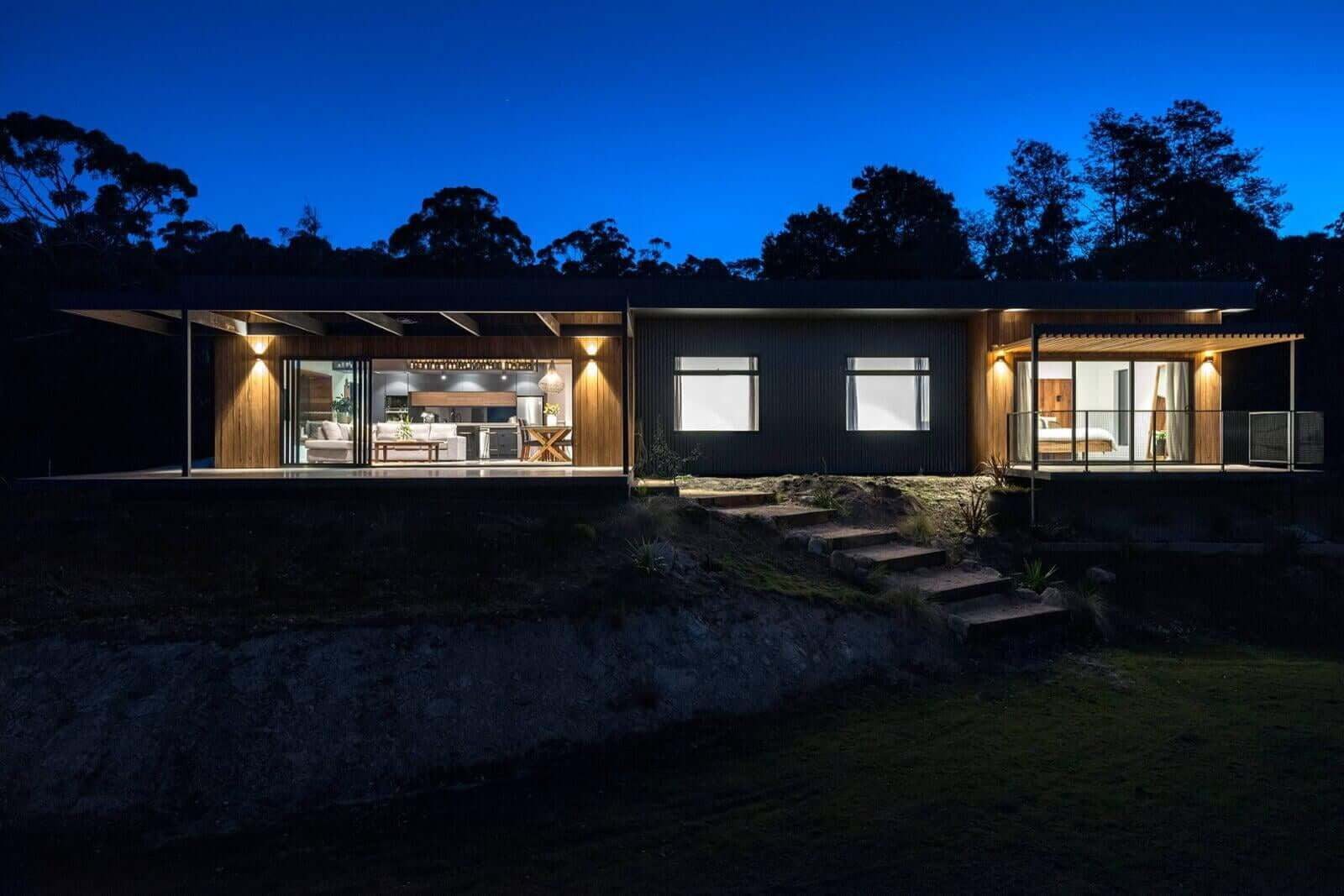
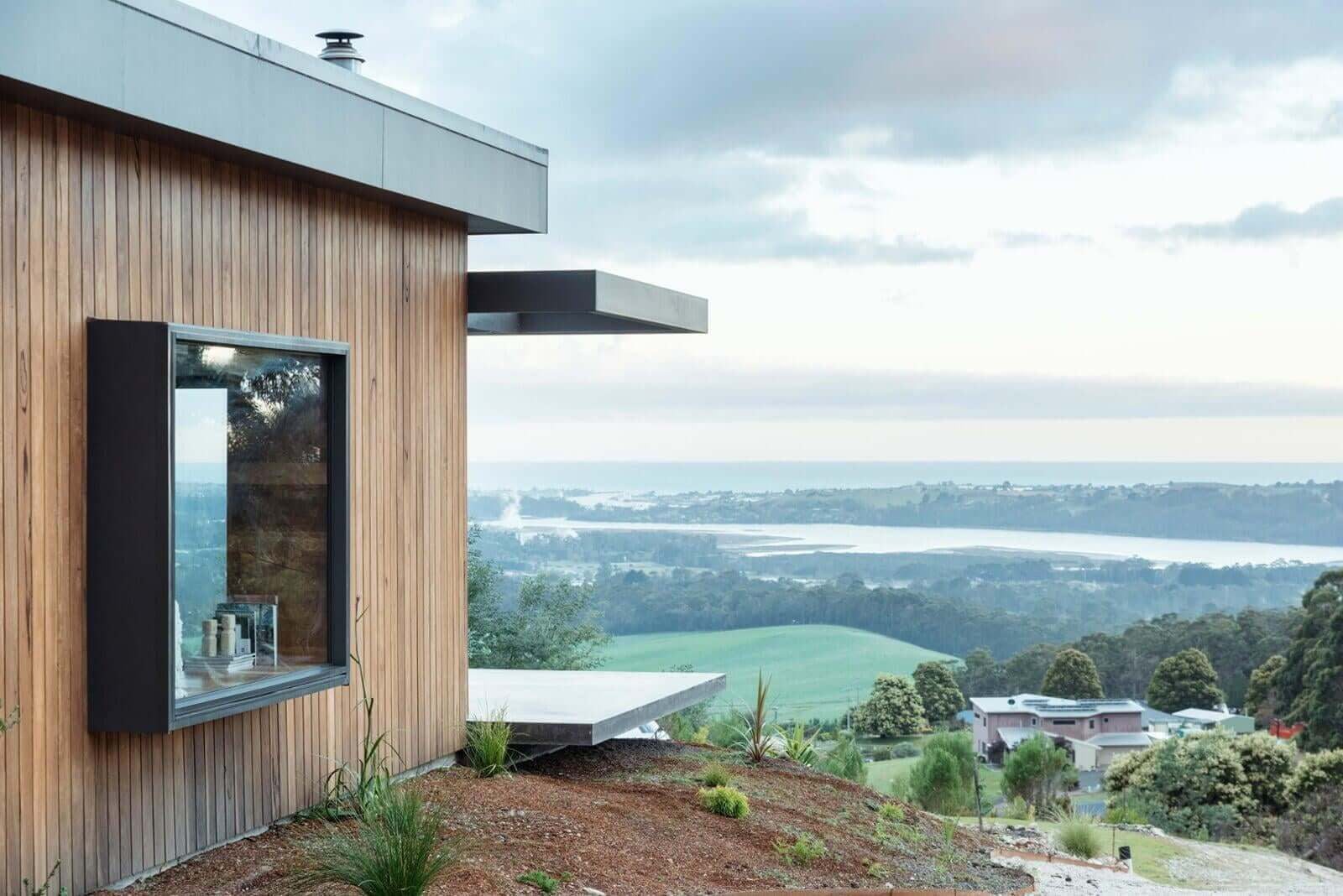
A steep, rugged bush block awaits. The slender spur presents the only relief from the steep slope in all other directions — and this is where the journey begins. The prominent Blackwood trees at once provide a sense of place and ultimately guide the design from beginning to end. A slight twist against the contour provides a perfect northerly aspect and encapsulates the ever-changing outlook of the valley close and the distant ocean.
This site demanded respect. The steep terrain, the established vegetation, the drainage patterns carved by decades of rainfall — all of these elements needed to be understood and accommodated rather than bulldozed into submission. Our approach was to work with the land's natural character, positioning the building to minimise earthworks and preserve the bush setting that makes this location so special.
The Blackwood trees that give this home its name were the starting point for the entire design narrative. Their presence — their scale, their canopy structure, their relationship to the slope — informed everything from the building's footprint to its material palette. We wanted the home to feel as though it had grown from the same soil as these ancient trees, sharing their colours, their textures, their quiet dignity.
Design Response
The design intent was always for this home to blend seamlessly into the natural landscape, and the material selection was strongly influenced by this desire. The steep slope forced a terraced design approach to maximise usable land, where each terrace would serve a specific use and be connected by a series of landscaping links.
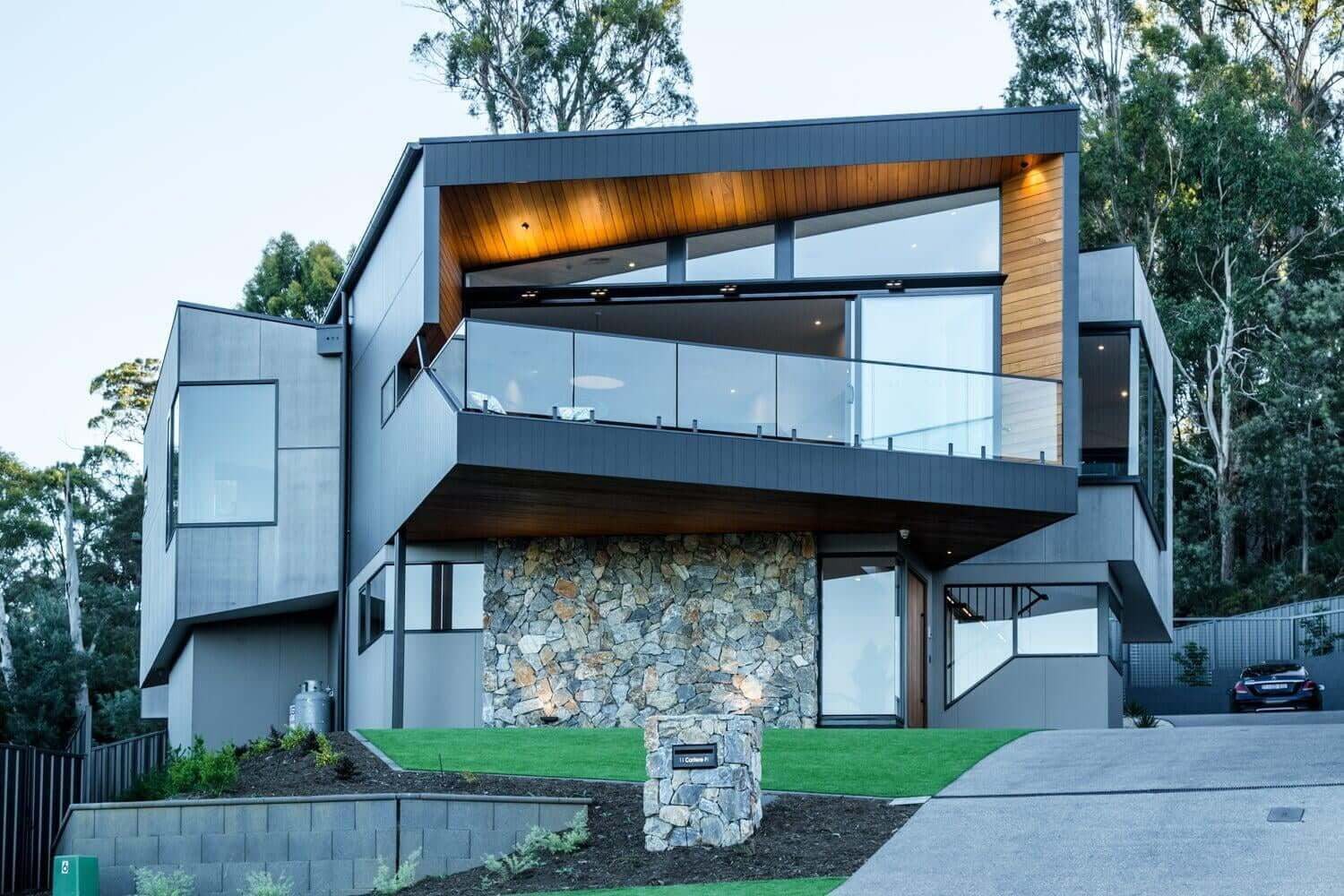
Working with architect Michael Loubser from Loubser Workshop, we developed a building that steps down the hillside in a series of connected platforms. Each level responds to the slope at its specific point, creating spaces that feel grounded and stable despite the dramatic topography. The terracing also creates distinct zones of activity — entertaining, living, sleeping — each with its own character and relationship to the surrounding bush.
The building's narrow footprint was a deliberate response to the spur's limited width. Rather than creating a broad, flat platform that would require extensive earthworks, we elongated the plan, allowing the building to follow the ridge while maintaining a intimate scale. This approach preserves the natural drainage patterns on either side of the spur and reduces the visual impact of the building when viewed from the valley below.
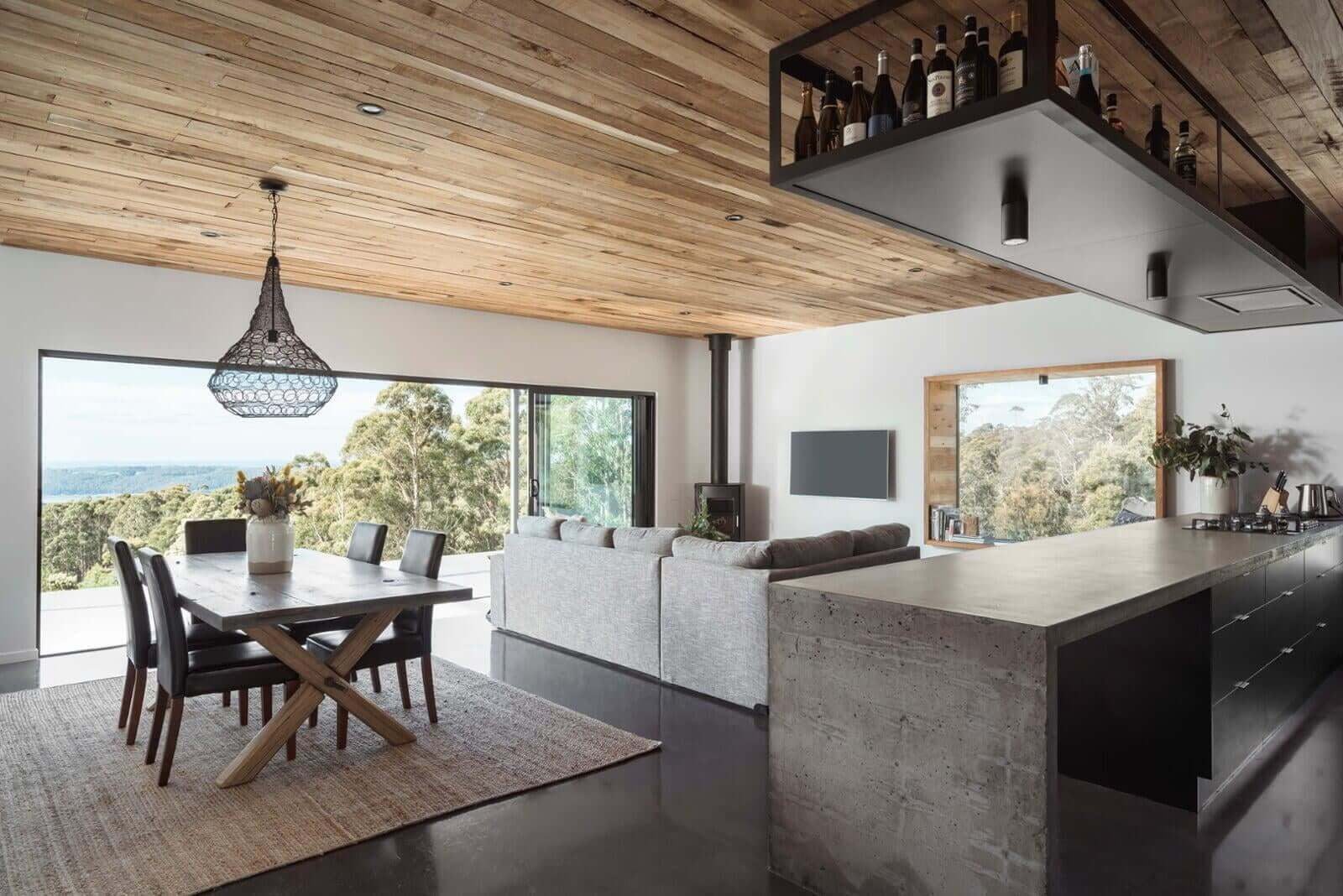
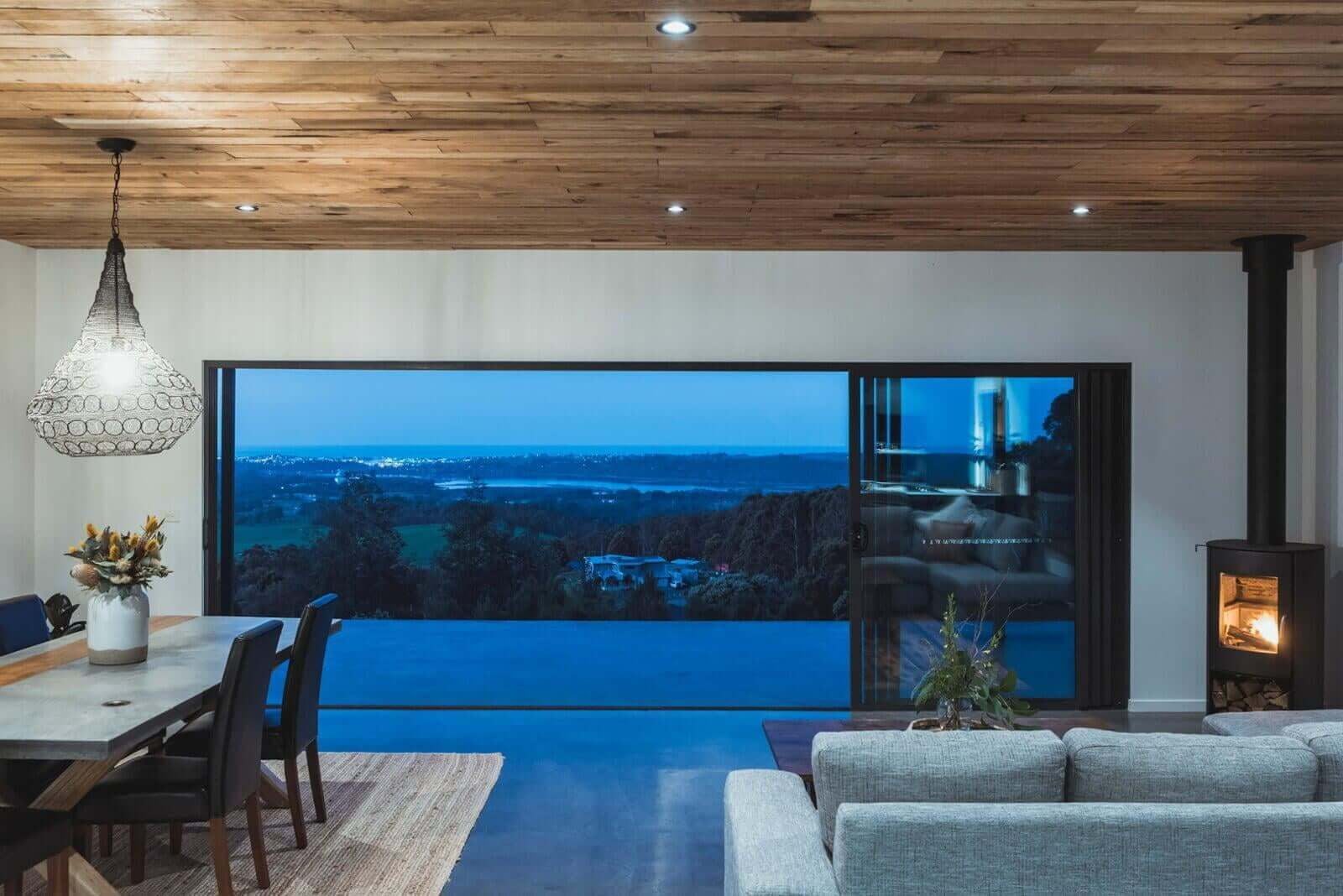
The orientation captures the northerly sun that the spur's alignment fortuitously provides, while the terraced plan creates sheltered outdoor spaces at each level. The valley views evolve as you move through the building — from intimate bush framing at the entry to panoramic ocean vistas from the living spaces. This progression creates a sense of journey through the home that mirrors the experience of walking through the landscape itself.
Materials & Craft
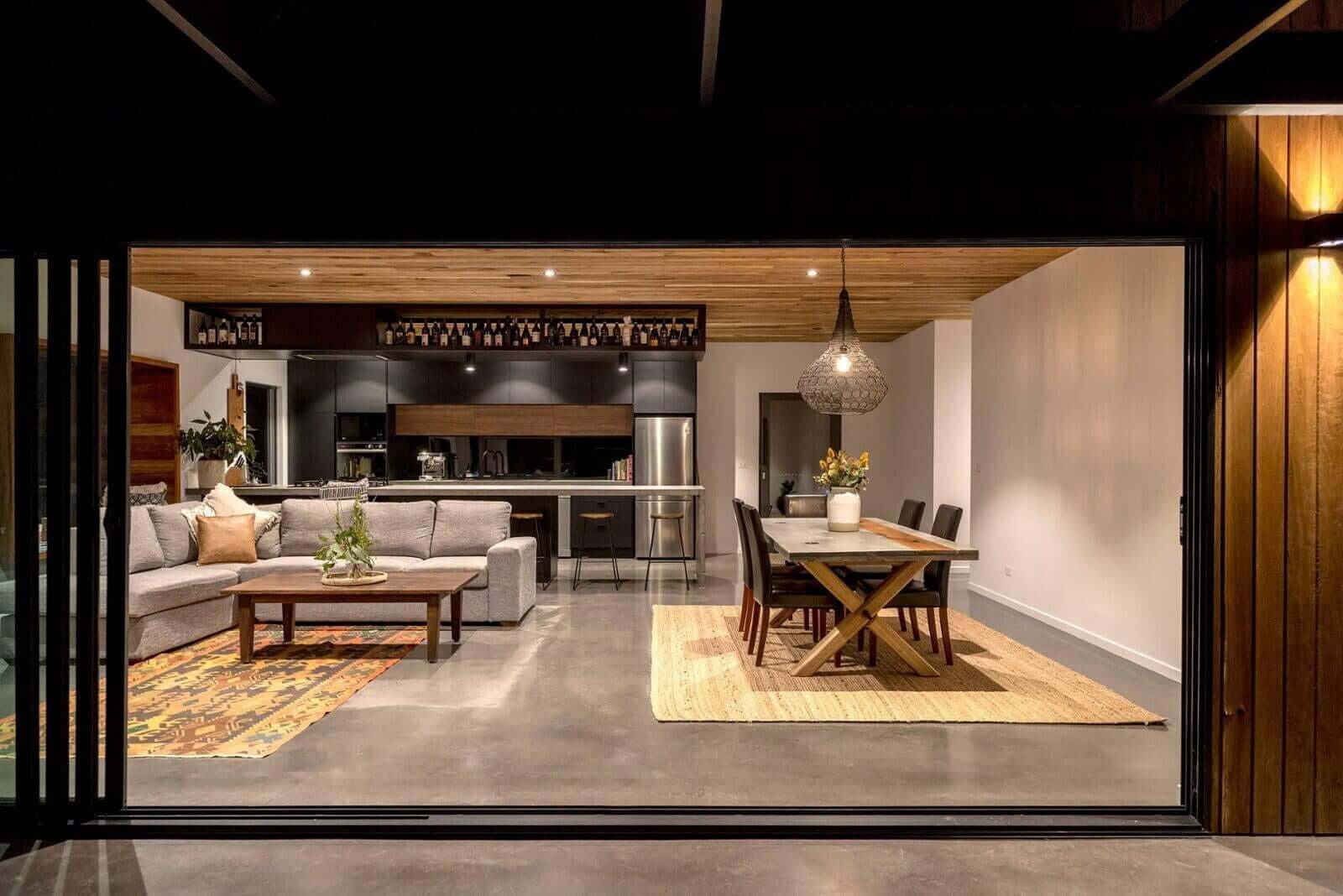
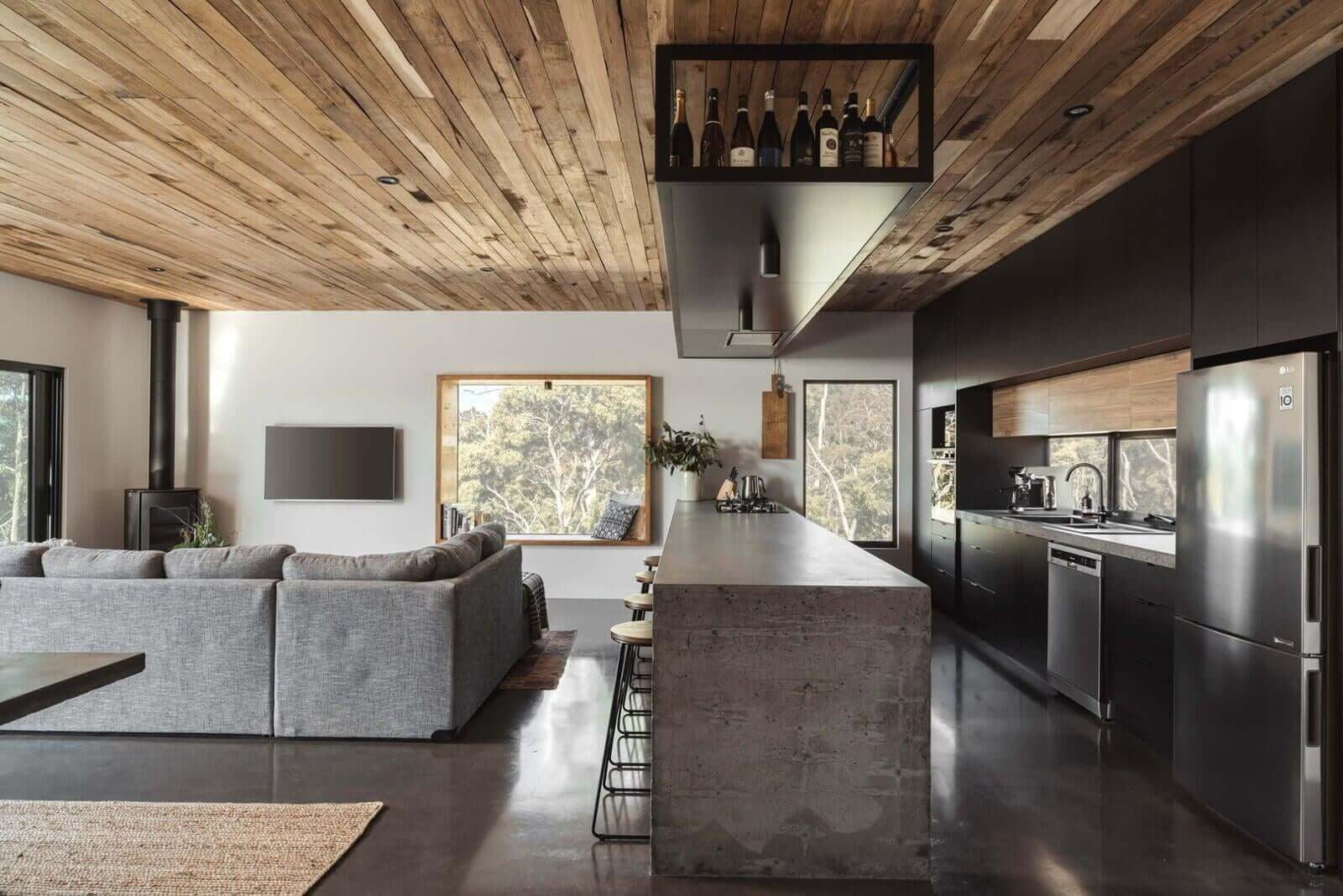
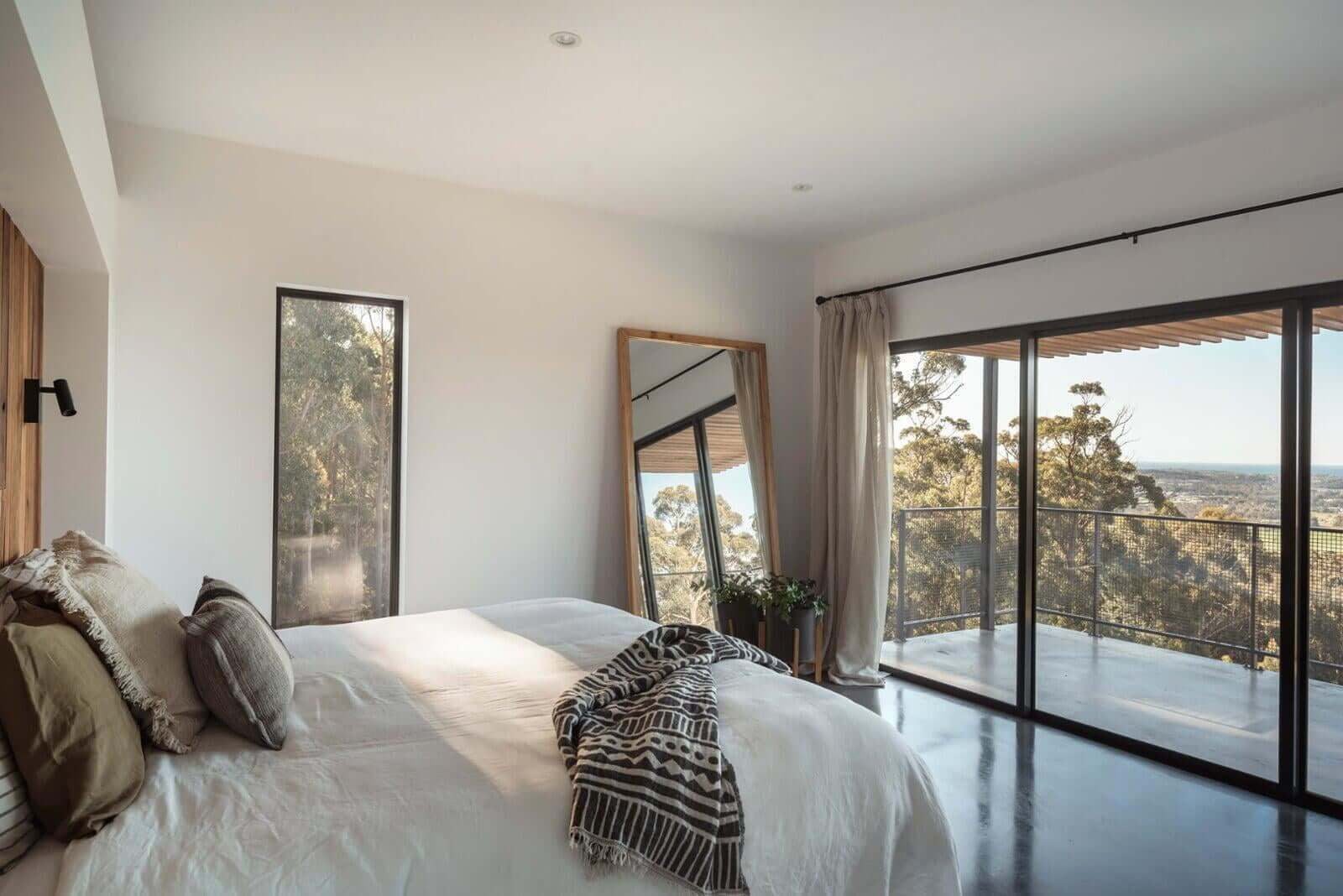
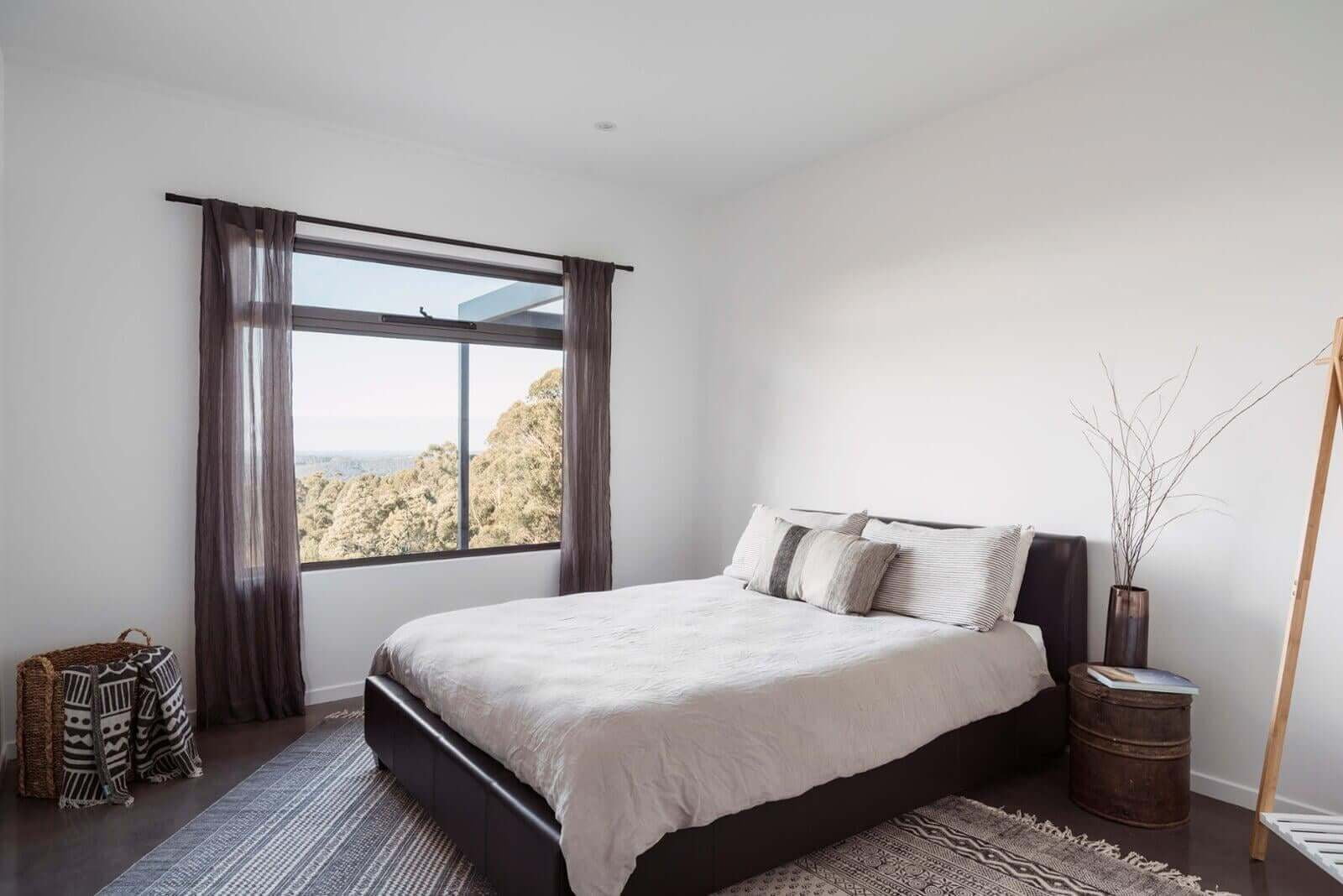
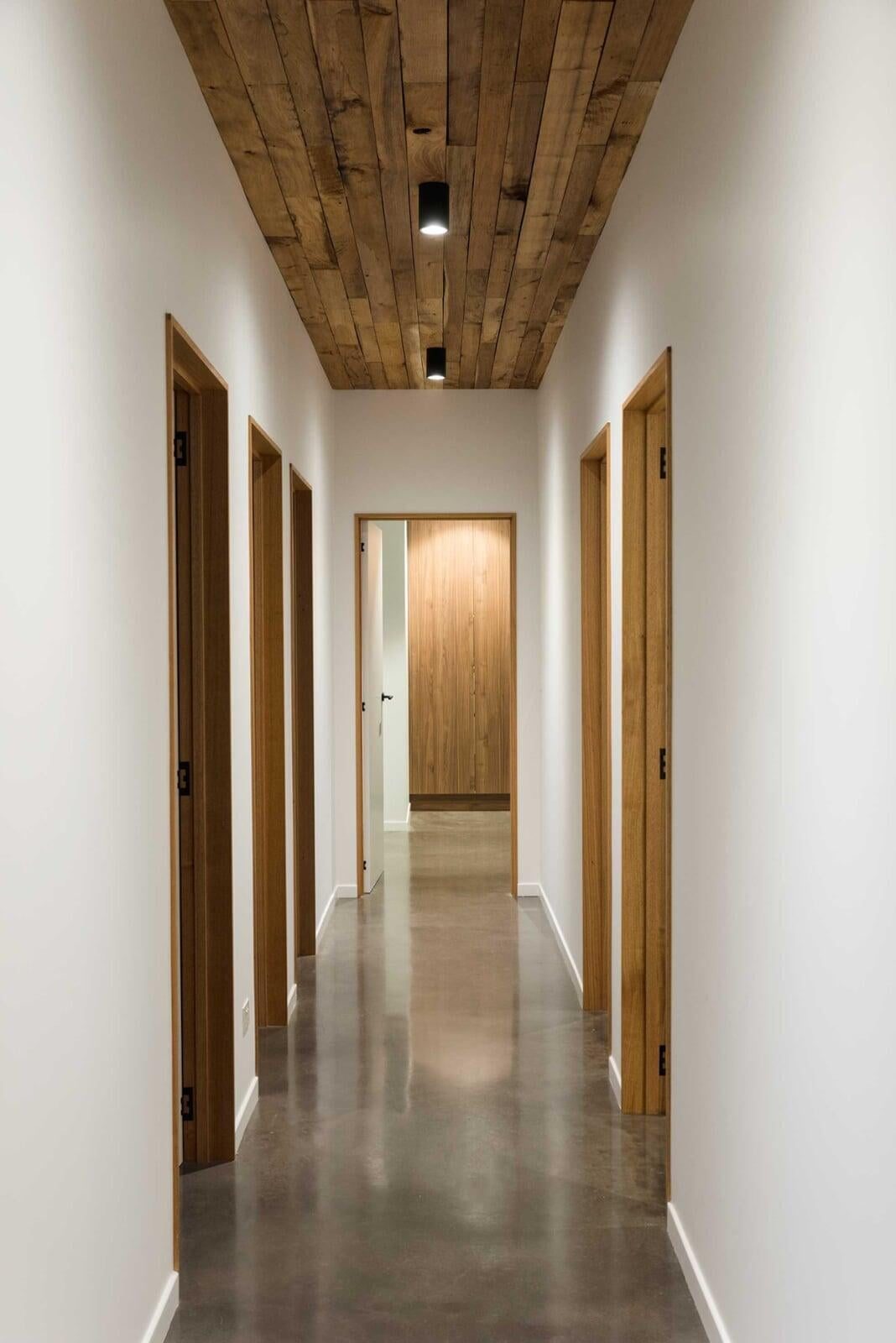
Every material in Blackwood House was chosen to reinforce the connection between building and landscape. The burnished concrete floors throughout, with charcoal oxide added for depth of colour, provide thermal mass that stores the sun's heat during the day and releases it slowly through the evening. The dark, earth-toned surface echoes the forest floor visible through the windows.
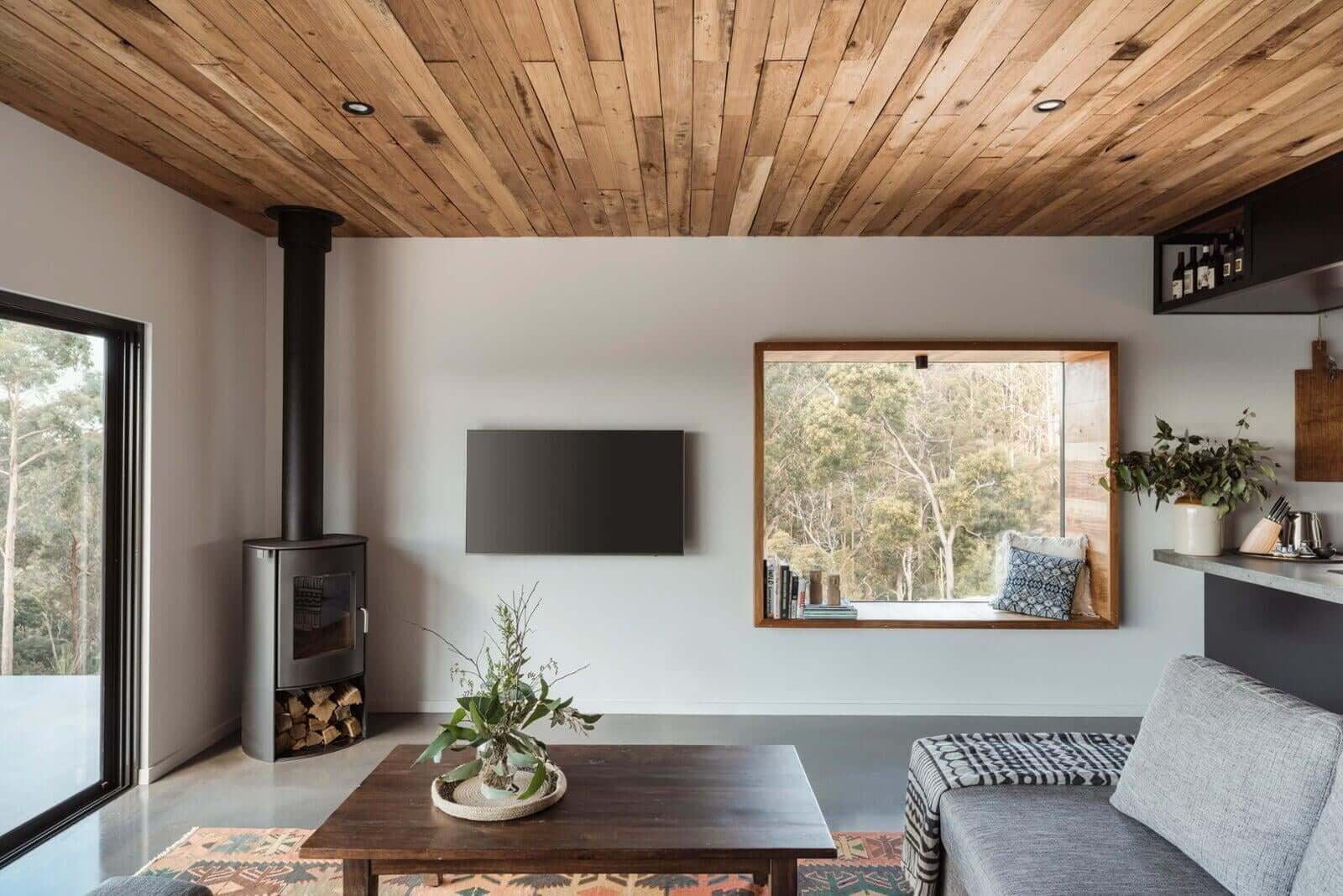
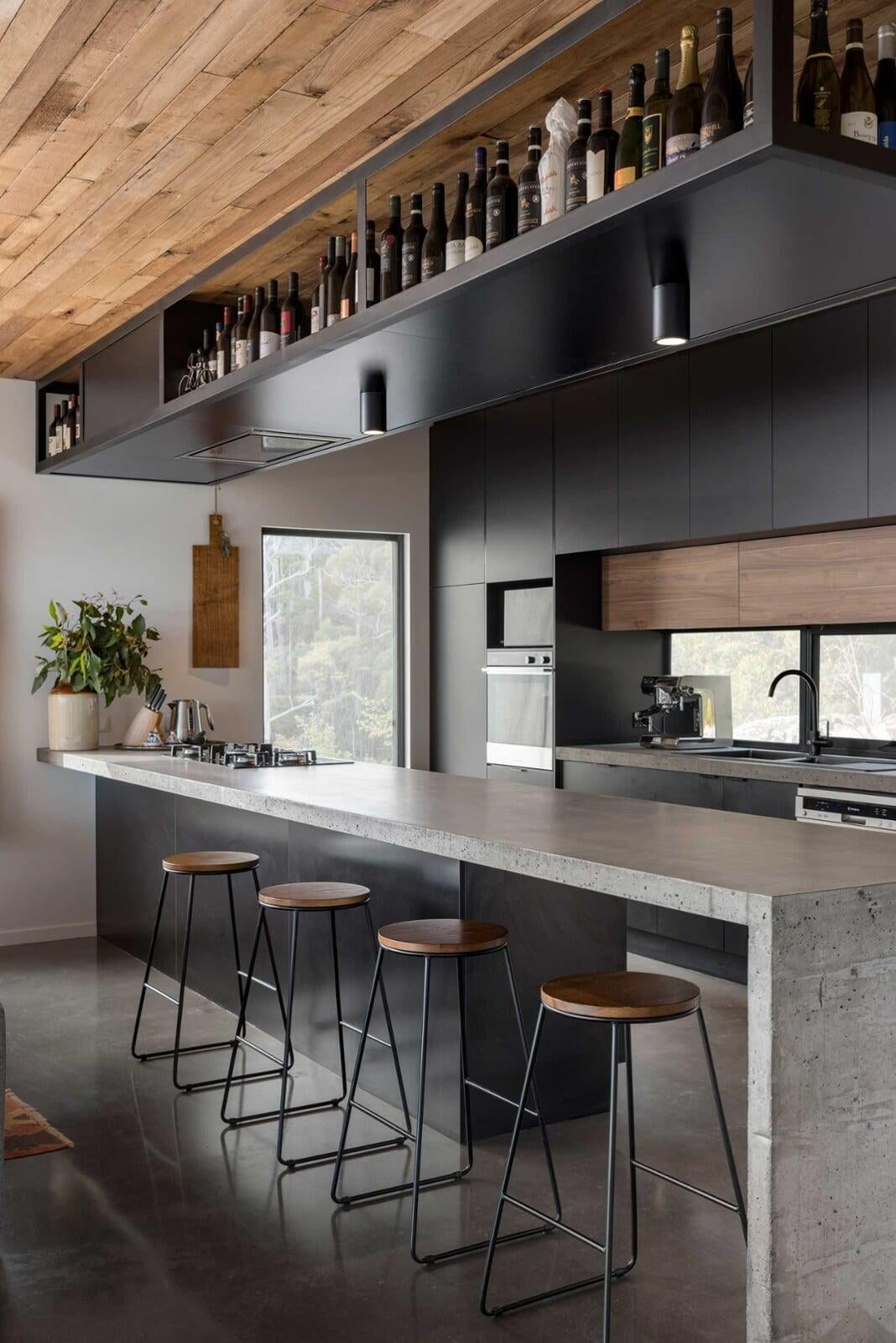
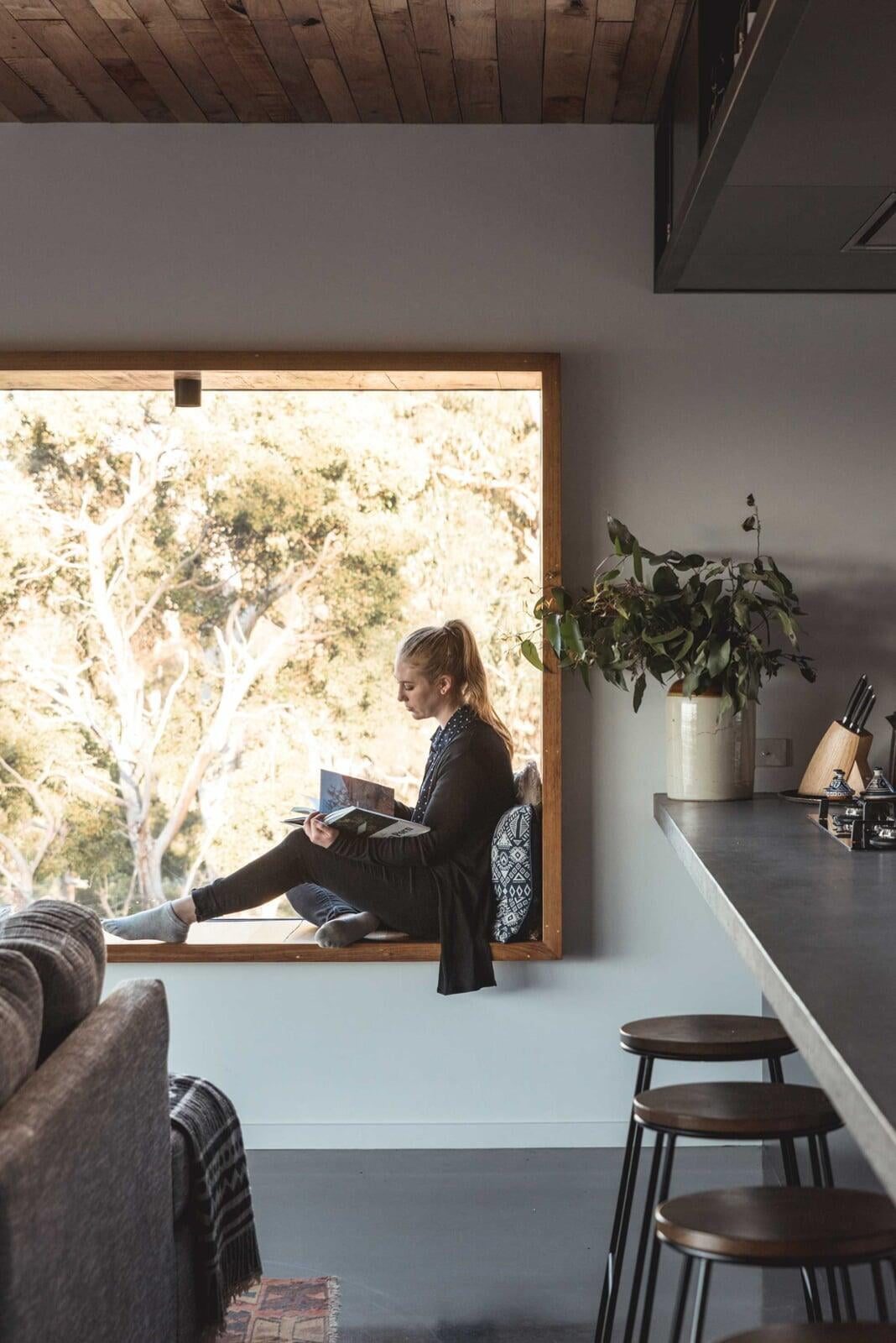
The ceiling is lined with skip-dressed Blackwood — the same species that grows on the site. The boards are various widths, left unsealed, their raw surfaces carrying the marks of the milling process and the natural variations of the timber. This is not a refined, gallery-like finish — it is honest and tactile, connecting the interior to the trees visible outside.
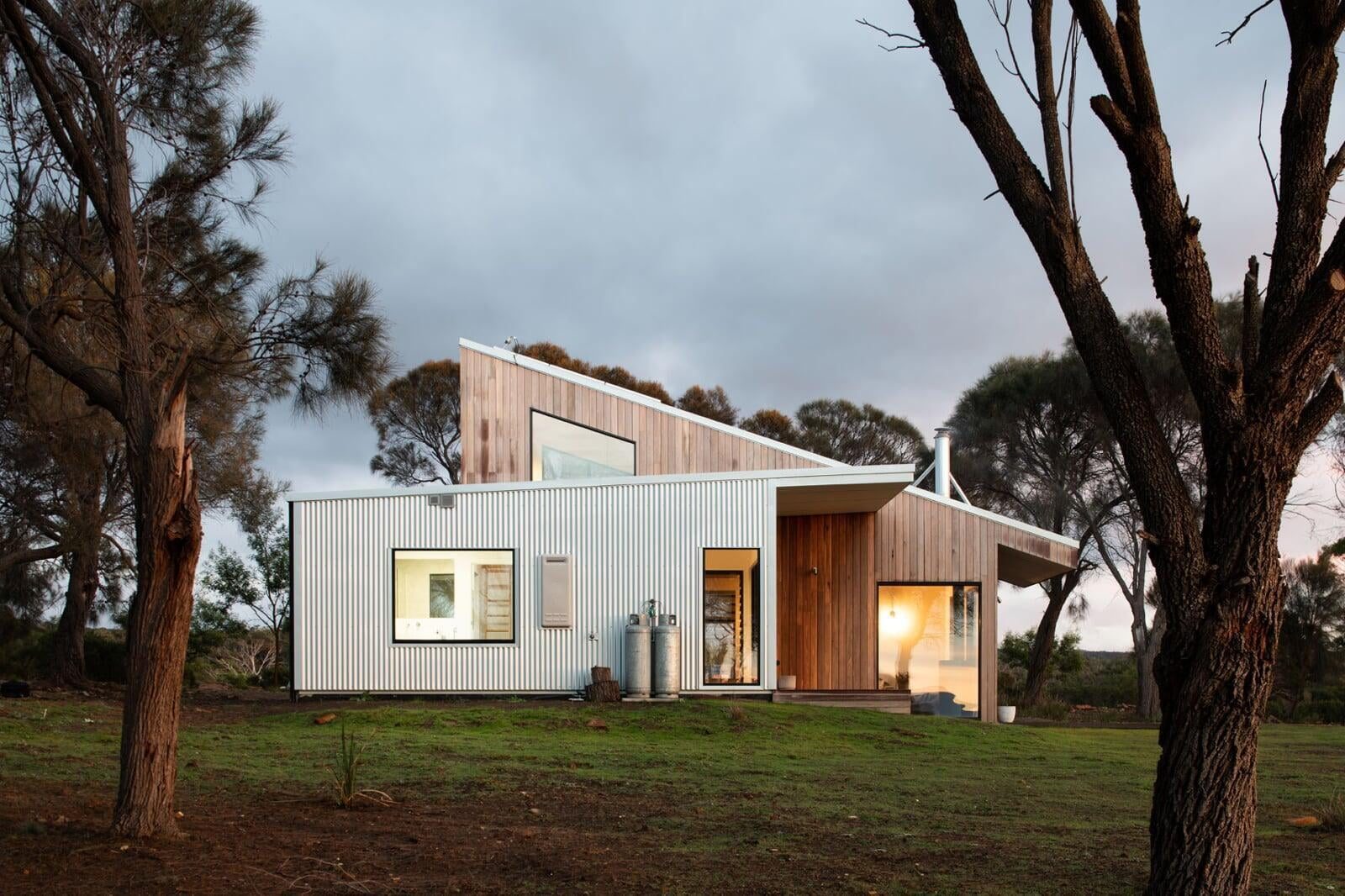
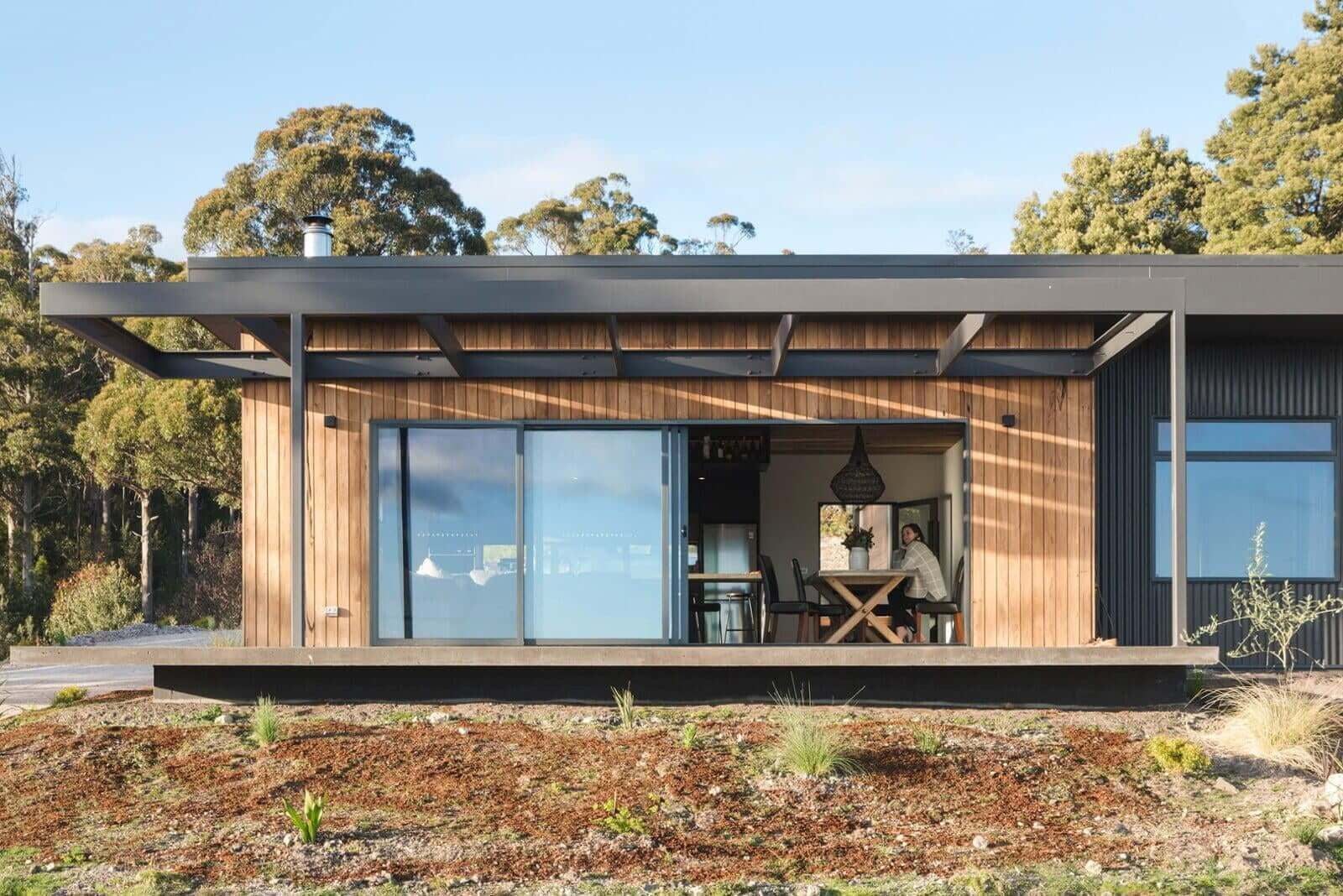
The exterior cladding is BAL-rated Silver Top Ash shiplap, feature grade, finished with Intergrain oil sealer in a light walnut tint. The BAL rating was essential given the bush setting, ensuring the cladding meets the bushfire attack level requirements for this location. The light walnut tint was carefully selected to complement both the Blackwood ceiling inside and the tree trunks outside, creating a visual continuity between interior and exterior.
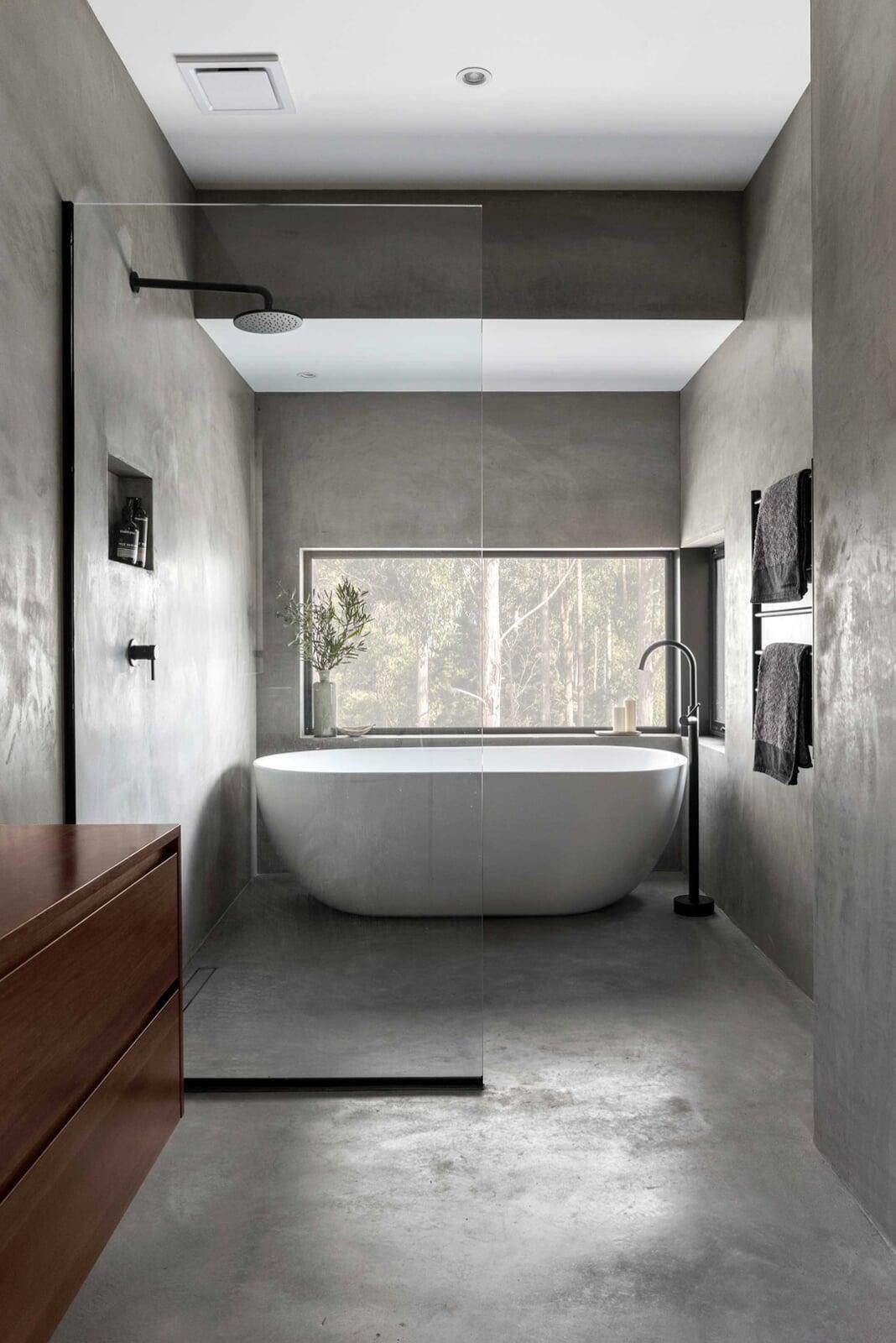
In the bathrooms, Rockcote Marrakesh Natural Render provides a raw, seamless finish that feels appropriate to the home's bush aesthetic. This render technique creates surfaces that are smooth but not slick, with subtle texture variations that catch the light and create visual warmth. Combined with double glazing and the passive heat retention of the concrete floors, the Nectre N60 woodheater is the only source of extra heating — a remarkably efficient thermal envelope for a home in this climate.
- •Burnished concrete floors throughout with charcoal oxide added for depth of colour
- •Skip dressed Blackwood ceiling lining. Various widths left unsealed
- •BAL-Rated Silver Top Ash shiplap feature grade cladding. Intergrain oil sealer with light walnut tint
- •Rockcote Marrakesh Natural Render used in bathrooms to provide raw seamless finish
- •Double glazing and passive heat retention in the concrete floor provide the base load heat required
- •Nectre N60 Woodheater is the only source of extra heating.
Living Experience
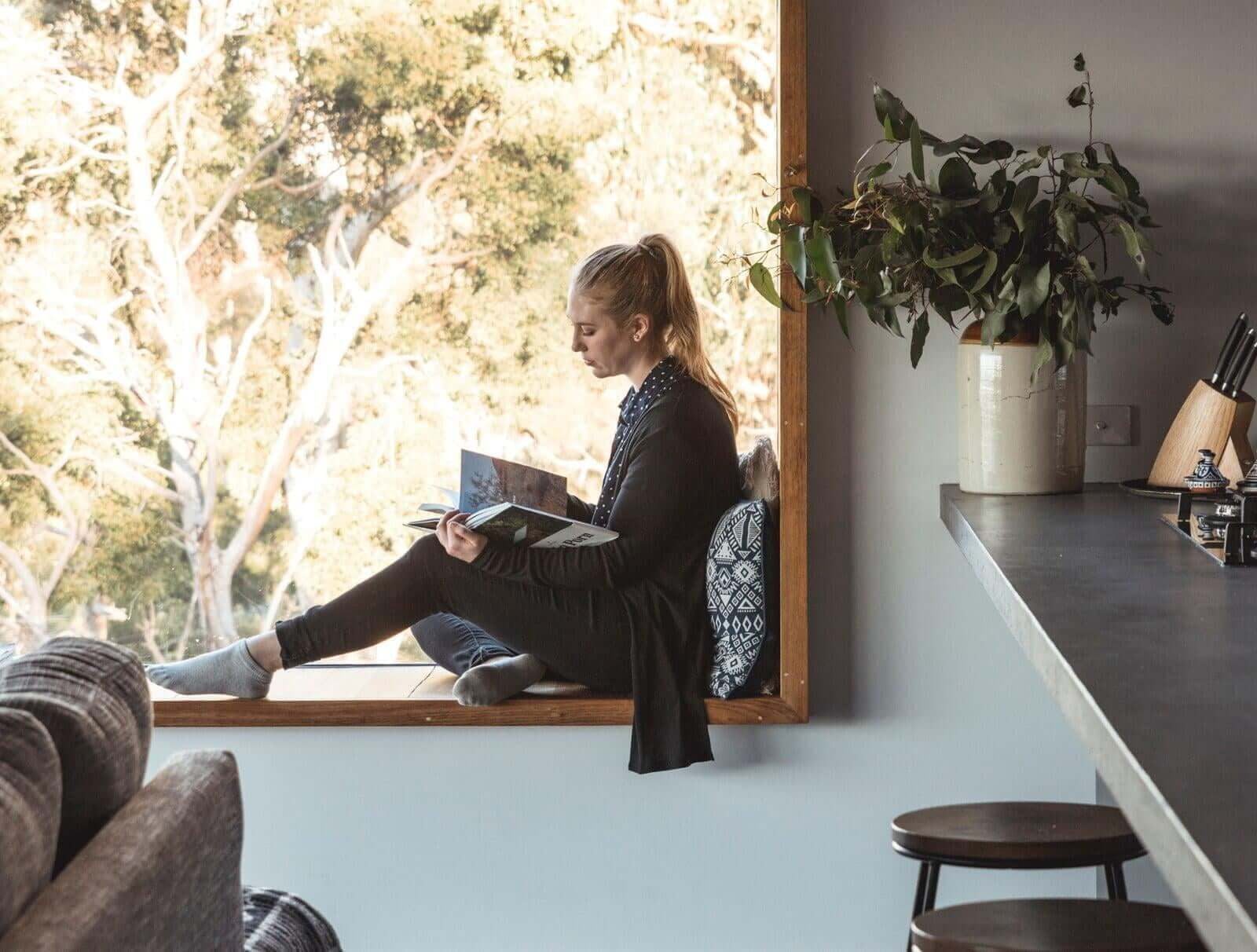
"As our very first home we could not have imagined that living in the home could be so much better than we originally dreamed of. The house evolves with the time of day and every part of the house manages to capture the essence of the day in one way or another. We are surrounded by bush and the house interacts with this so well. There is an overarching warmth that the house provides and our house really has become our home." — Happy Campers 2018
These words from our clients capture something that statistics and specifications cannot — the emotional reality of living in a home that has been designed and built with genuine care. Blackwood House is not merely shelter; it is a companion to the landscape, a frame for the daily drama of light, weather, and season that plays out across the Tasmanian bush.
The home's thermal performance has been a revelation. With the concrete floors absorbing solar heat through the north-facing glazing and the woodheater providing supplementary warmth on the coldest evenings, the house maintains a remarkably stable and comfortable temperature year-round. The double glazing eliminates the cold draughts that plague many bush homes, while the natural ventilation pathways provide comfortable cooling in summer without mechanical assistance.
For Davies, Blackwood House represents a foundational principle of our practice: that the best homes are those that respond deeply to their sites. This home could not exist anywhere else. Its materials are drawn from the landscape. Its form follows the terrain. Its orientation captures the specific qualities of light and view that this particular spur, on this particular hillside, uniquely offers. It is, in the truest sense, a home that belongs to its place.
Recognition
- •2018 Master Builder Tasmania - Best home $200,000-$350,000
- •2018 National Master Builder - Best home $200,000-$350,000
- •2018 HIA - Custom built home up to $500,000
Also building in
North-West Coast & Hinterland
Tamar Valley & Launceston
Midlands & East Coast
Southern Tasmania
More Projects