
Building in Chudleigh
Tasmania's Village of Roses — a Meander Valley community of 213 at the gateway to Mole Creek Karst National Park, beneath the Great Western Tiers.
The Village of Roses
Chudleigh sits on the floor of the Meander Valley in north-central Tasmania, approximately 80 km south-west of Launceston and 40–50 minutes from Sheffield. With a population of approximately 213 residents (ABS 2021), it is among the smaller Meander Valley communities, yet it holds an outsized local reputation — earned partly from its designation as the Village of Roses (since 2001, for its historic rose-growing tradition and the rose displays that accompany its agricultural show), and partly from its position at the western gateway to Mole Creek Karst National Park and the limestone cave system that draws visitors from across Australia.
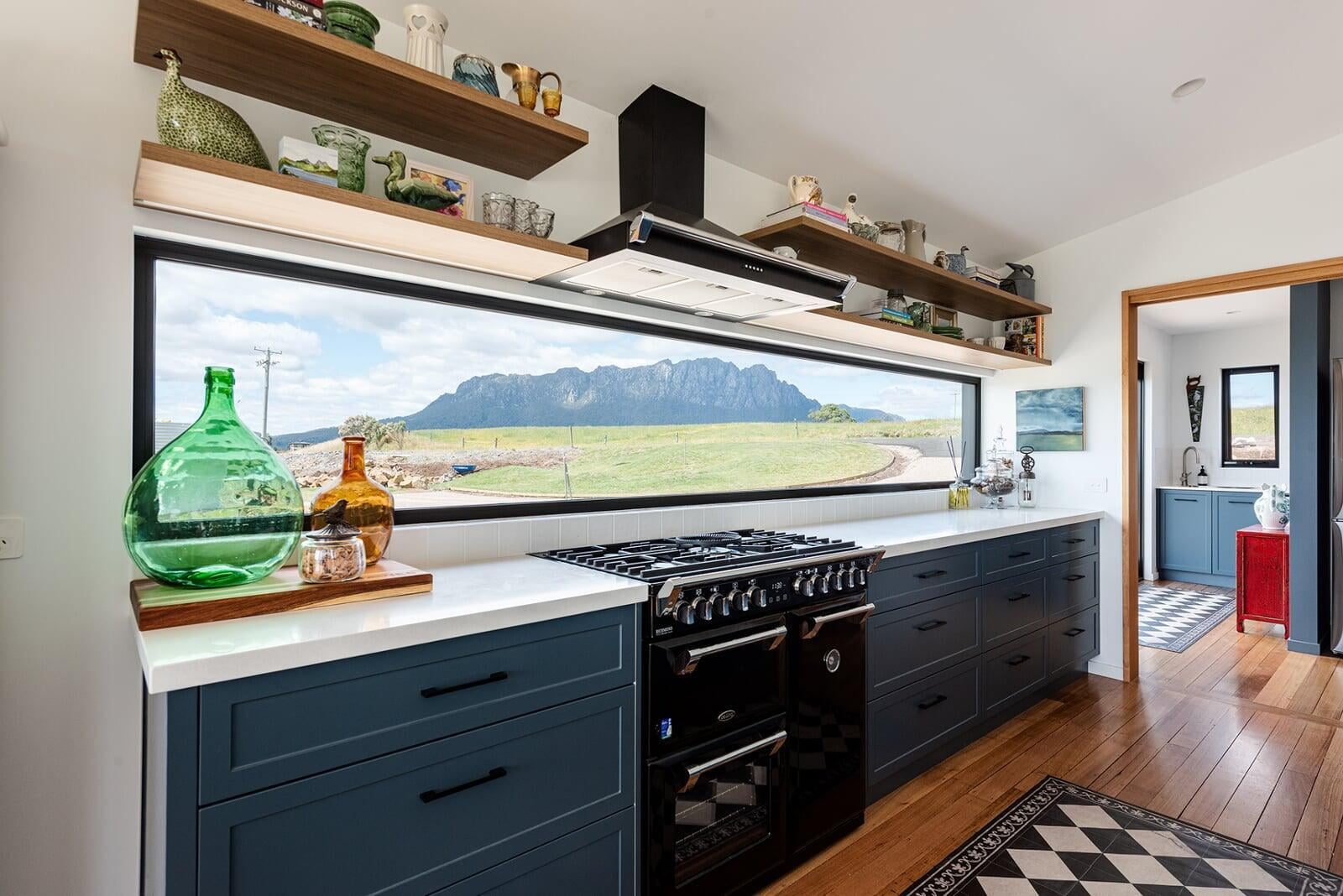
The Great Western Tiers — the dramatic escarpment edge of the Central Plateau — rise immediately to the south, providing one of the most distinctive backdrops available to any residential building site in Tasmania. The Tiers are visible from almost every point in the valley, changing character through the seasons: snow-capped in winter, deep green through summer, and catching extraordinary light in the late afternoon. It is a landscape that rewards considered architecture — homes oriented to engage the view rather than turn away from it.
Chudleigh has significant European settlement history. Van Diemen's Land Company (VDL) established a grain store in the area in 1827–28 — one of the early pastoral infrastructure installations in the Meander Valley — and the Chudleigh Agricultural Show, held each February, is among the oldest in Tasmania, reflecting the community's deep farming heritage. Nearby attractions include Trowunna Wildlife Sanctuary (1 km east, a well-regarded wombat and Tasmanian devil conservation facility), Melita Honey Farm (a local producer and tourist destination), and the karst cave tours at Marakoopa Cave and King Solomon's Cave.
Davies has been building across the Meander Valley since 2009. Chudleigh is well within our service area — the drive from Sheffield is 40–50 minutes via the Mole Creek Road. We understand the Meander Valley LPS planning environment and the practical requirements of building in the valley: rural and rural-residential zoning, the MEA-S6.0 Small Town SAP, and the overlay checks relevant to the karst country and forested southern ranges.
Why People Choose Chudleigh
Village of Roses Heritage
Chudleigh's identity as the Village of Roses is more than a tourist slogan — it reflects a genuine community culture built around garden craft, local produce, and small-scale rural enterprise. The Melita Honey Farm has operated in the valley for decades, the agricultural show draws entries from across the region, and the community's identity is rooted in the land in a way that suburban living rarely replicates. For families choosing a genuinely rural lifestyle — where the community has character and history — Chudleigh offers something that is becoming rare in Tasmania's growing regions.
Great Western Tiers Backdrop
The Great Western Tiers rise directly to the south of Chudleigh, creating one of the most dramatic natural backdrops available to a residential building site in northern Tasmania. The escarpment is visible from the valley floor in all directions, framing the landscape and providing constant orientation to the south. A well-designed home on the Chudleigh valley floor — positioned and glazed to engage the Tiers — is a home with a genuinely irreplaceable view. Davies designs to site: where the landscape is the asset, the architecture should serve it.
Gateway to Wilderness
Mole Creek Karst National Park begins 7 km west of Chudleigh, and Marakoopa Cave and King Solomon's Cave are among the most accessible show caves in Australia. Trowunna Wildlife Sanctuary, 1 km east, is one of Tasmania's better-regarded native wildlife conservation facilities. Living in Chudleigh means daily proximity to extraordinary natural environments — not as a tourist destination but as the surrounding landscape. For families who value outdoor access, this part of the Meander Valley has few equals in northern Tasmania.
Deep Heritage Fabric
European settlement in the Chudleigh area dates to the late 1820s, and the built environment reflects that history — heritage stone buildings, working farm structures, and the Chudleigh Agricultural Show that has run since the nineteenth century. For those who value a sense of place and continuity, Chudleigh has a heritage fabric that gives the community its character. A new custom home designed to respect and engage with that heritage — in scale, materiality, and siting — can sit appropriately in this landscape in a way that generic construction cannot.
Productive Farmland Climate
The Meander Valley floor at Chudleigh has a temperate continental climate — cool, reasonably dry winters and warm summers — well suited to the mixed farming, orcharding, and market gardening that has characterised the valley for 200 years. The same climate suits high-performance residential construction: passive solar orientation is effective, good thermal mass delivers winter comfort, and the well-established native and introduced vegetation of the valley provides natural windbreaks. Davies builds homes that perform year-round in the Tasmanian climate, and the Meander Valley is one of the regions where that performance is most tangible.
Accessible from Sheffield
Chudleigh is 40–50 minutes from Sheffield via the Mole Creek Road — well within Davies' primary service area. Deloraine, which provides the commercial and service centre for the upper Meander Valley, is approximately 25 km east. The town's position at the western end of the valley means it is accessible from both the north-west coast (via Mole Creek Road from Sheffield) and from the Midland Highway corridor. For those looking to build in the Meander Valley without the higher land prices of Deloraine's immediate surroundings, Chudleigh represents genuine value with genuine character.
What to Know About Building in Chudleigh
Chudleigh falls under Meander Valley Council, which administers the Tasmanian Planning Scheme — Meander Valley Local Provisions Schedule (commenced 19 April 2021, replacing the Meander Valley Interim Planning Scheme 2013). Applications for building permits are lodged with and assessed by Meander Valley Council. Here is what prospective builders need to understand about building in Chudleigh:
- Chudleigh township is covered by the MEA-S6.0 Small Town Specific Area Plan (SAP) within the Meander Valley LPS. This SAP restricts development in the township zone to single dwellings — multiple dwellings are not permitted on township-zoned land. This provision is intended to preserve Chudleigh's small residential character and prevent subdivision-driven intensification. If you are considering land in the township itself, your project must be a single dwelling on the lot.
- Properties near the Mole Creek limestone system should be checked for a karst overlay in the Meander Valley LPS. The karst overlay zone reflects the presence of soluble limestone beneath the surface and the cave systems it supports. Development within or near the overlay may require a hydrogeological assessment to confirm the building footprint and excavation approach will not affect the cave system. This is a straightforward due-diligence step — confirm the overlay status of any specific lot via PlanBuild Tasmania before purchasing.
- Properties near the forested southern ranges should check the Bushfire-Prone Area overlay. The Chudleigh area sits at the interface of the valley floor and the forested escarpment — some rural lots close to the treeline will carry a Bushfire-Prone Area designation, requiring a BAL (Bushfire Attack Level) assessment as part of the planning process. Higher BAL ratings (BAL-29, BAL-40, BAL-FZ) affect construction specifications and can increase building costs. Confirm the overlay status of any individual property before committing.
- Most rural and rural-residential land in the Chudleigh area is zoned Rural or Rural Living under the Meander Valley LPS. Rural Living zoning specifies minimum lot sizes, building envelopes, setbacks from road frontages, and separation from productive agricultural operations. Confirm the zone and any applicable overlays for your specific lot before purchase.
- Reticulated sewerage is not available across most of the Chudleigh area. An Onsite Wastewater Management System (OWMS) will be required for most lots — typically an Aerated Wastewater Treatment System (AWTS) or conventional septic with soil absorption trenches. Budget $15,000–$30,000 for OWMS depending on soil type, site access, and system type. Soil permeability in the Meander Valley varies — a geotechnical report will determine the appropriate system type.
- PlanBuild Tasmania provides a state-wide enquiry service for checking the planning zones and overlays that apply to any property. Use this tool to verify zone, overlays, and any site-specific constraints for a Chudleigh lot before making a purchase commitment. Applications are lodged with Meander Valley Council — not through PlanBuild.
A well-designed home in Chudleigh — sited to engage the Tiers, specified for the Meander Valley climate, and built to a high-performance standard — is a home with enduring character in one of northern Tasmania's most beautiful valley settings.
Davies Projects in the Region
Our portfolio spans the Sheffield foothills and Meander Valley corridor — custom homes designed for the Tasmanian highlands climate and the character of the working valley.
Chudleigh Building FAQ
What is Chudleigh like to live in?+
How much does it cost to build in Chudleigh?+
What are the planning requirements for building in Chudleigh?+
Does Davies Construction build in Chudleigh?+
Also building in
North-West Coast & Hinterland
Tamar Valley & Launceston
Midlands & East Coast
Southern Tasmania