

Building in Ridgley
Rural plateau community of 645 residents, 280 metres above sea level south of Burnie — farming heritage, state forest setting, and a cooler elevated climate suited to high-performance construction.
Plateau, Forest, and Farming Heritage
Ridgley sits on a plateau approximately 280 metres above sea level, roughly 15 kilometres south of Burnie. It is a community of 645 residents (ABS 2021), governed by the City of Burnie. The plateau has a farming and forestry heritage that predates most of the surrounding coastal communities: Old Surrey Road, running through the Ridgley area, was historically the first road opened into the north-west hinterland, built to open up the plateau's fertile soils for agriculture. Henry Hellyer — the Van Diemen's Land Company surveyor who explored this region in the late 1820s — named the area "Ridgley" after Ridgley in Wiltshire, England. The locality was previously known as "Stirling" before being renamed in 1905.
The plateau's most significant infrastructure is the Pet Reservoir — a 4,210-megalitre dam completed in 1956 that supplies water to Burnie and surrounding communities. Guide Falls Farm at West Ridgley is a 64-acre working farm and animal park that has operated as a regional tourism destination for decades. The Emu Bay Railway's narrow-gauge Melba line once serviced the plateau, connecting its agricultural production to the coast — a piece of industrial heritage preserved in local memory and historical records.
The climate here is distinctly different from the coast. The elevated plateau is cooler and wetter, with more heating degree days than Burnie or Devonport. This makes high-performance construction — highly insulated, airtight, and thermally massive — more impactful in Ridgley than in milder coastal locations. A well-designed home on this plateau will be measurably more comfortable and energy-efficient than one built to the minimum standard. The climate makes the difference obvious.
Davies has been building across the north-west coast and hinterland since 2009. Ridgley is approximately 50–55 minutes from our Sheffield base — at the outer edge of our core service area but well within range. We understand the Burnie City planning requirements, the Rural Living Zone controls, bushfire overlay compliance, and the design considerations that matter most in elevated rural locations.
Why People Choose Ridgley
State Forest Setting
Ridgley is bordered by Tasmanian State Forest — a backdrop of mature eucalyptus and mixed native forest that gives the plateau a genuine rural and natural character. The forest-farm interface creates a distinctive landscape that is markedly different from the cleared pastoral land of the lower north-west or the coastal fringe. For those seeking a tree-change in the north-west, Ridgley is among the more genuinely rural options within reasonable distance of city services.
Rural Living Zone — Larger Allotments
Much of Ridgley sits within the Rural Living Zone or Rural Zone under the Burnie City Local Provisions Schedule. This means larger allotment sizes, more private space, and a genuine separation from neighbouring properties. For those who want room — to garden, to keep animals, or simply to live with more land than a suburban quarter-acre allows — Ridgley offers it within 15 minutes of Burnie.
15 Minutes to Burnie
Despite its rural character, Ridgley is approximately 15 kilometres and 15 minutes by road from central Burnie. The city offers a regional hospital, TAFE North, Woolworths and Coles, the Burnie Arts and Function Centre, and Bass Strait ferry access via the Spirit of Tasmania at Devonport. Rural living without meaningful isolation is a balance Ridgley strikes effectively.
High-Performance Climate Advantage
The plateau's cooler, wetter climate — with more heating degree days than coastal locations — makes the return on high-performance construction tangible. A well-insulated, airtight home on this plateau will be noticeably warmer in winter, more comfortable year-round, and meaningfully cheaper to run than a home built to a standard specification. Our approach to high-performance residential construction is particularly well-suited to this environment.
Guide Falls Farm and Tourism
Guide Falls Farm at West Ridgley is a 64-acre working farm and animal park that has been a regional tourism destination for decades. The farm draws visitors from across north-west Tasmania, supporting local trade and giving the plateau a recognised public identity beyond its agricultural function. The presence of an active tourism operation adds to the community's amenity and accessibility to visitors.
Pet Reservoir
The Pet Reservoir — a 4,210-megalitre water supply dam completed in 1956 — is the dominant water infrastructure feature of the plateau. The reservoir and its surrounding catchment area create a peaceful rural water landscape adjacent to the community. The dam's presence underpins the water security of Burnie and surrounding communities, and the catchment area is managed to protect water quality for the broader region.
What to Know About Building in Ridgley
Ridgley falls within the City of Burnie local government area. Burnie City Council administers the Tasmanian Planning Scheme — Burnie City Local Provisions Schedule, which commenced on 22 July 2020, making Burnie the first council in Tasmania to implement the Tasmanian Planning Scheme. Applications are lodged with and assessed by Burnie City Council. Here's what prospective builders need to understand:
- No reticulated sewerage is available in Ridgley. All new dwellings require an Onsite Wastewater Management System (OWMS). Budget $15,000–$30,000 or more depending on soil type, allotment size, and system type. Soil percolation tests and a site-specific wastewater assessment are part of the OWMS design process and should be commissioned before finalising any building design.
- Bushfire Prone Area overlay: many allotments near the forest margins in Ridgley will be subject to a Bushfire Prone Area overlay. This requires a Bushfire Hazard Assessment as part of the development application and construction to a Bushfire Attack Level (BAL) rating, which will be specified in the assessment. BAL-rated construction adds to cost upfront but is a planning requirement — not optional. Check the overlay position for any allotment via PlanBuild Tasmania before purchase.
- Rural Living Zone and Rural Zone: subdivision in these zones is tightly controlled under the Burnie City LPS. Check the zone provisions for any allotment before assuming subdivision is possible. Single residential use on an existing Rural Living lot is generally straightforward; dual occupancy, subdivision, or commercial uses require specific assessment.
- The elevated plateau climate makes thermal performance a priority investment. Ridgley's heating degree days are significantly higher than coastal Burnie or Devonport. A home built with higher insulation values, better airtightness, and good thermal mass will perform visibly better year-round than a home built to the standard NCC minimum. In this climate, the envelope investment pays back quickly in comfort and running costs.
- Reticulated water supply: confirm water supply infrastructure for any specific allotment with Burnie City Council. The Pet Reservoir supplies water to Burnie and surrounding areas, but not all rural lots in Ridgley are connected to the reticulated water supply. A rainwater tank and pump system may be required for some properties.
- Davies is approximately 50–55 minutes from Ridgley from our Sheffield base. We are experienced with rural plateau builds in the north-west and understand the planning, the OWMS requirements, the bushfire overlay process, and the construction standards that suit this specific environment.
A well-designed home on the Ridgley plateau — properly insulated, airtight, and built to the correct bushfire and wastewater standards — is a genuine long-term asset. The climate rewards good design more visibly here than it does in milder coastal locations.
Davies Projects in the Region
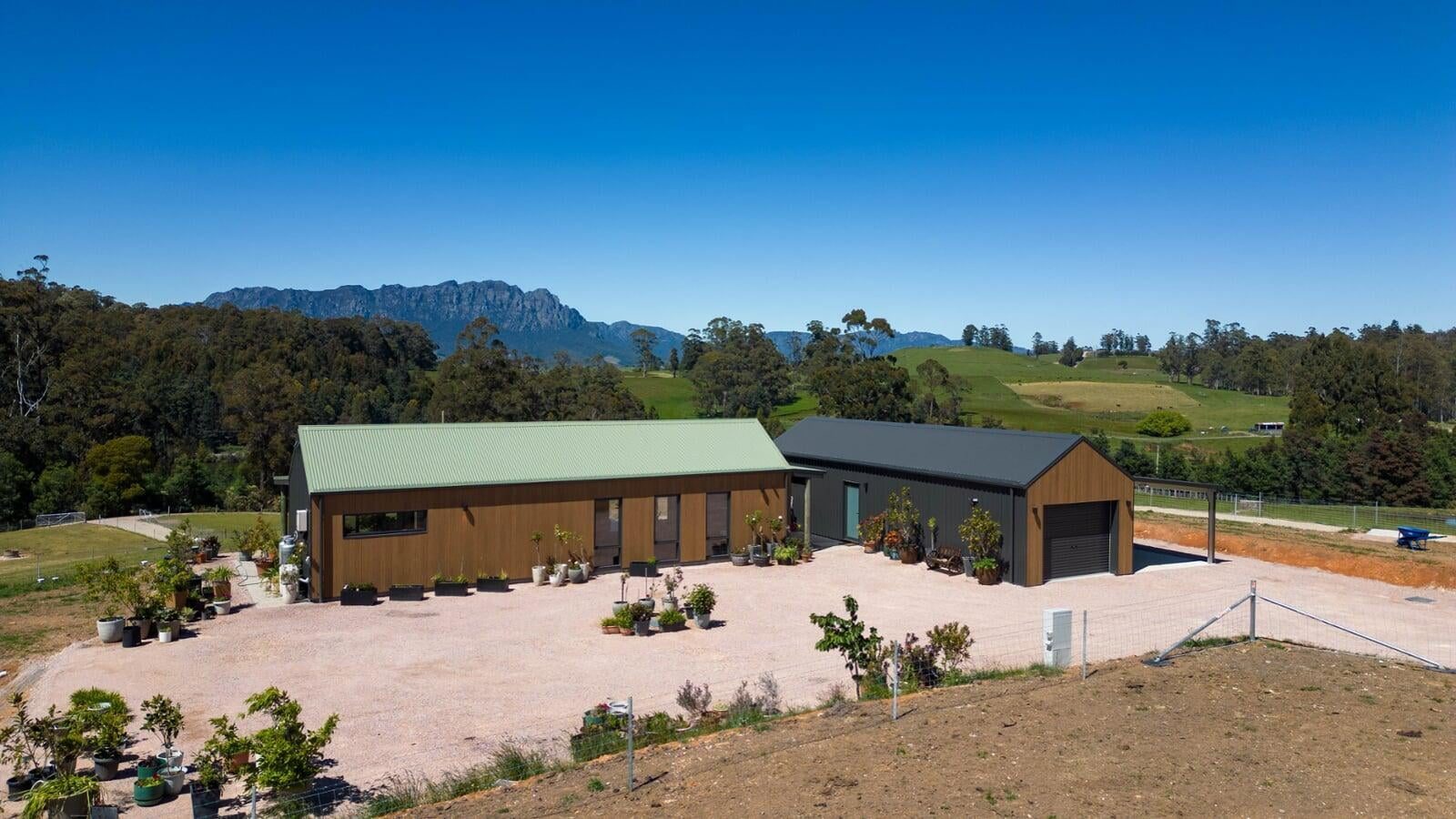
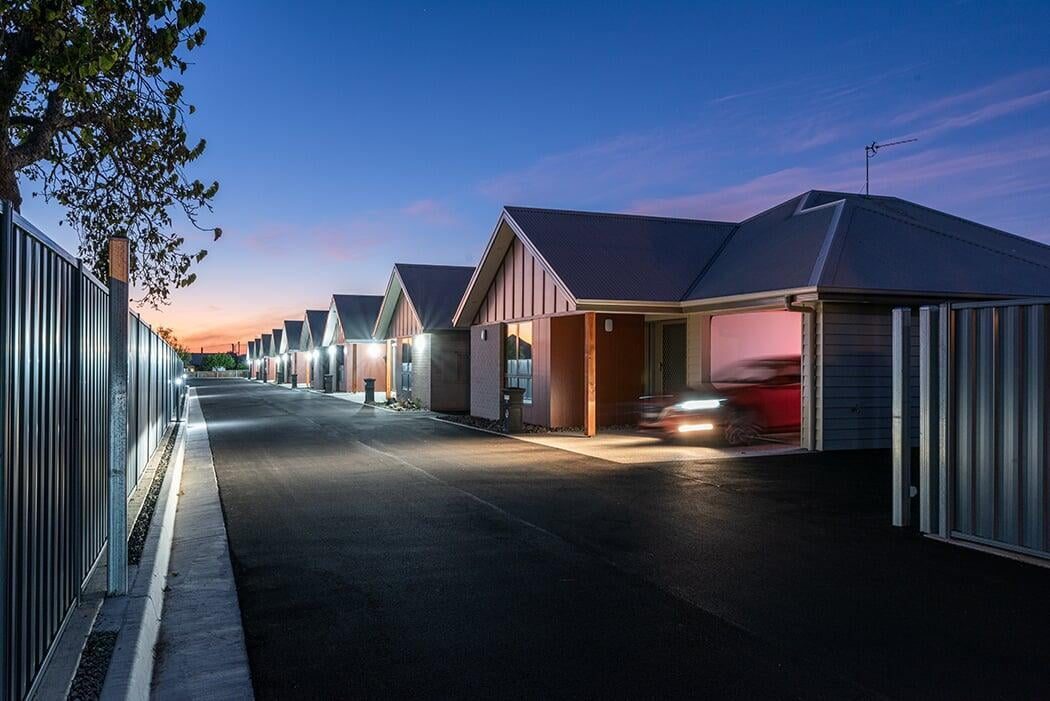
Our portfolio spans the north-west hinterland and coast — rural builds, barn-style homes, and high-performance custom projects designed for the Tasmanian climate.
Ridgley Building FAQ
What is Ridgley like to live in?+
How much does it cost to build in Ridgley?+
What are the planning requirements for building in Ridgley?+
Does Davies Construction build in Ridgley?+
Also building in
North-West Coast & Hinterland
Tamar Valley & Launceston
Midlands & East Coast
Southern Tasmania