Tayenne
The Vision
Tayenne began with a longing — a desire to create a home that would feel as timeless as the mountain landscape it inhabits. Perched on elevated ground with commanding views to Mount Barrow, this project was conceived as a permanent retreat: a place where the drama of Tasmania's northeast highlands could be absorbed daily, where morning light and evening alpenglow would become integral parts of domestic life.
Our clients came to us through our northeast Tasmania office, seeking a home that would honour the landscape without competing with it. They had spent years observing this site, understanding its moods — the way mist gathers in the valley at dawn, the way the mountain changes colour with the seasons, the way prevailing winds shape the vegetation. Their brief was informed by this deep knowledge: create a home that feels inevitable in this landscape, as though it has always been here.
Working with the acclaimed architects at Archier, we developed a design language that draws on the agricultural vernacular of Tasmania's rural northeast while incorporating contemporary performance standards. The result is a home that reads as both deeply traditional and quietly modern — a dwelling that belongs to its place while providing all the comfort and efficiency that contemporary living demands.
The orientation was the first critical decision. Mount Barrow dominates the eastern horizon, its craggy plateau rising above the surrounding foothills. But the home also needed to capture northern sun for passive solar performance. The solution was a subtle rotation of the building's axis — angling the primary living spaces to simultaneously frame the mountain view and maximise solar gain through the cooler months. This seemingly simple move required careful coordination between architectural intent and energy performance, and it defines the entire experience of living in the home.
Site & Architecture
The site presented both opportunity and challenge in equal measure. The elevated position provides extraordinary views but also exposure to the weather systems that sweep across northeast Tasmania. The design needed to provide shelter from prevailing winds while remaining open to the landscape that makes the site so special.
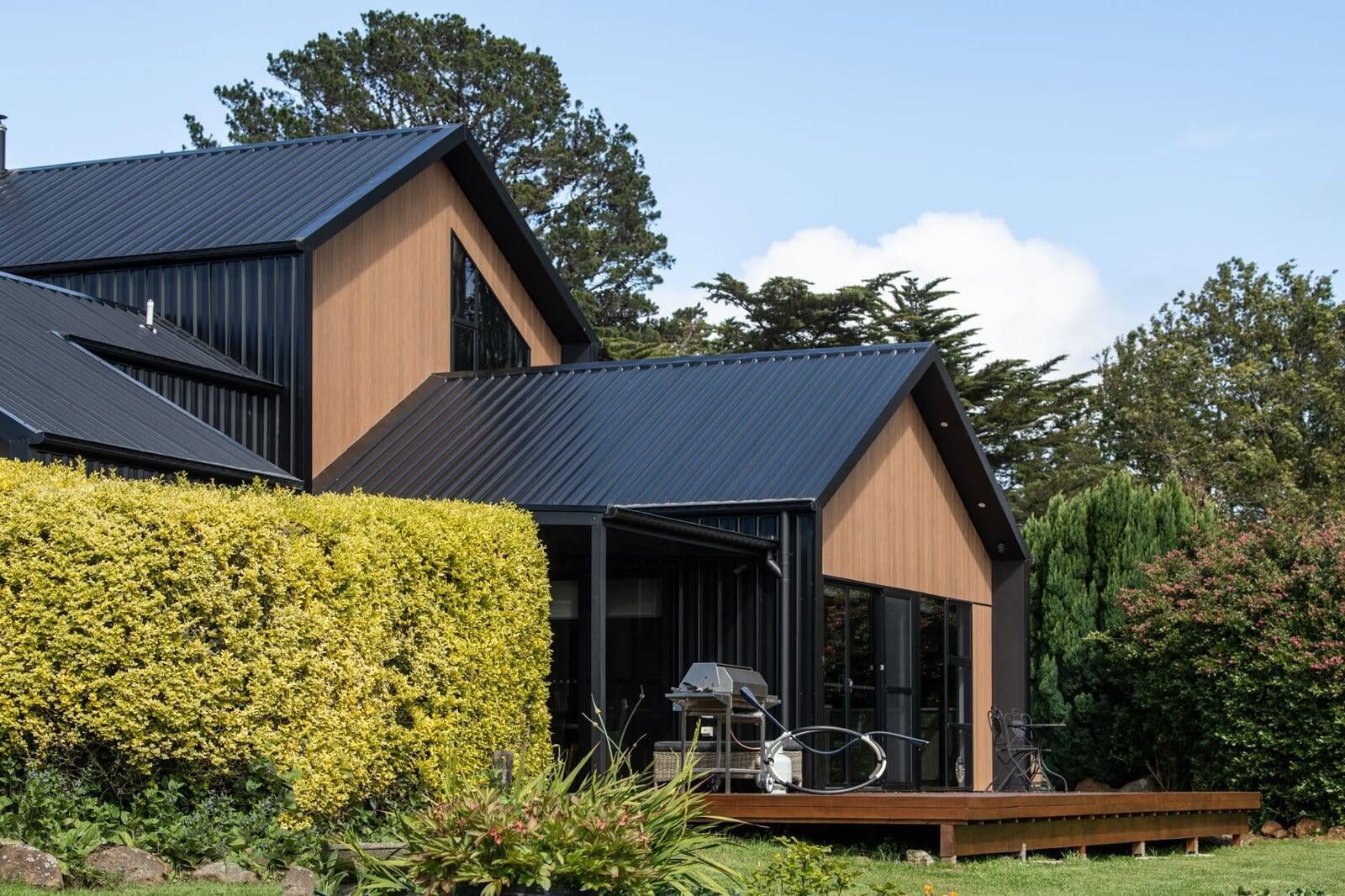
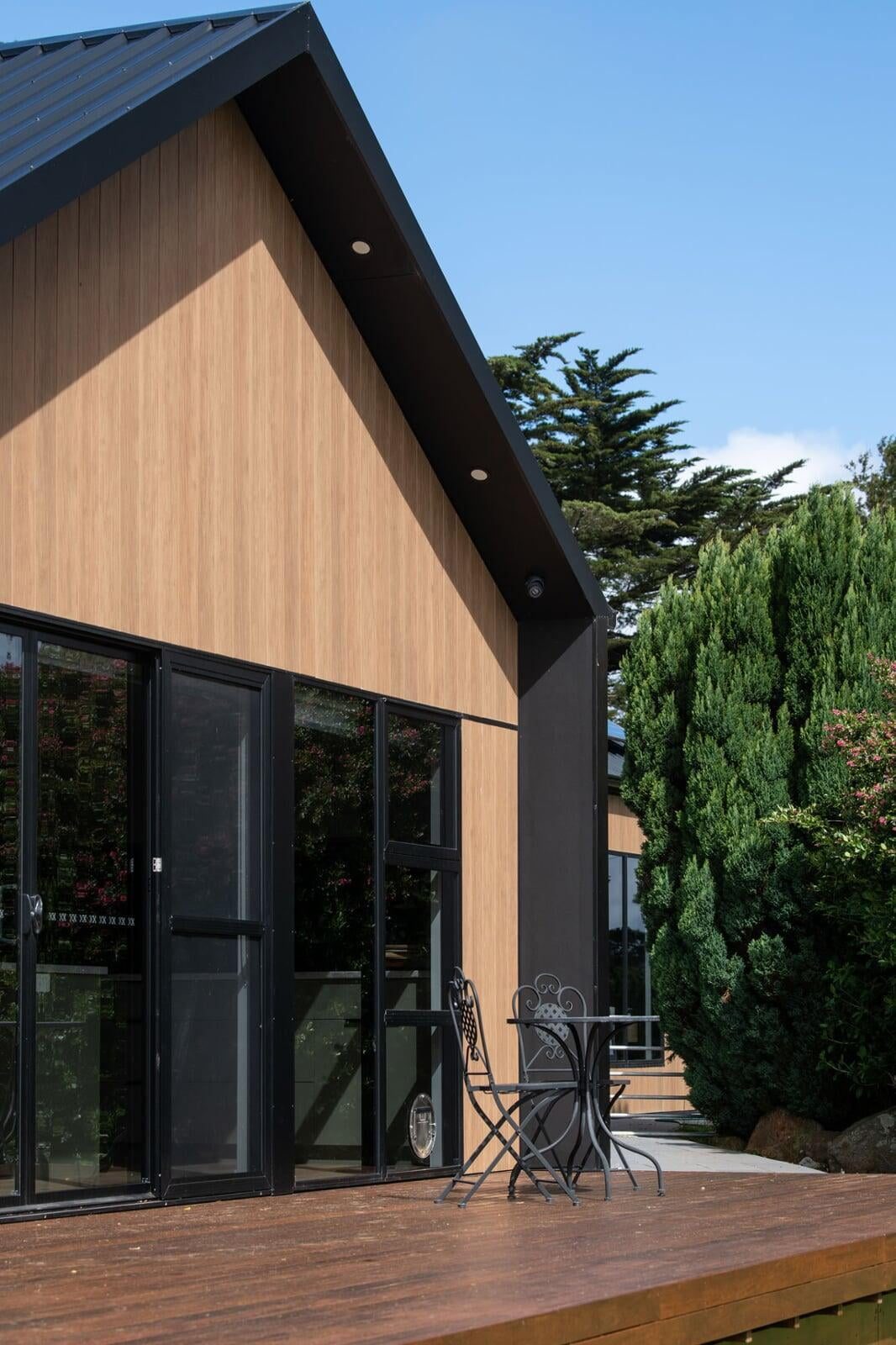
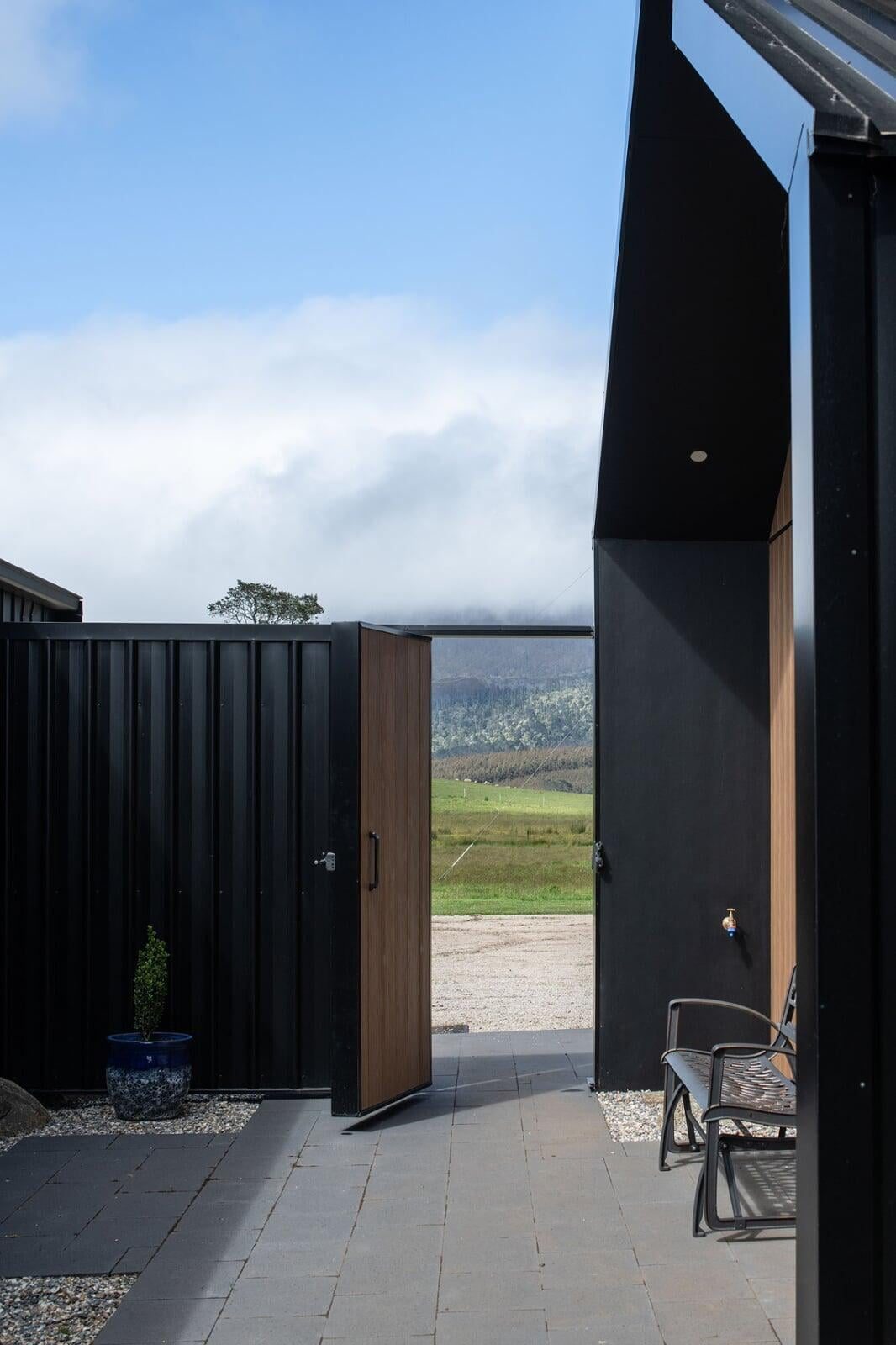
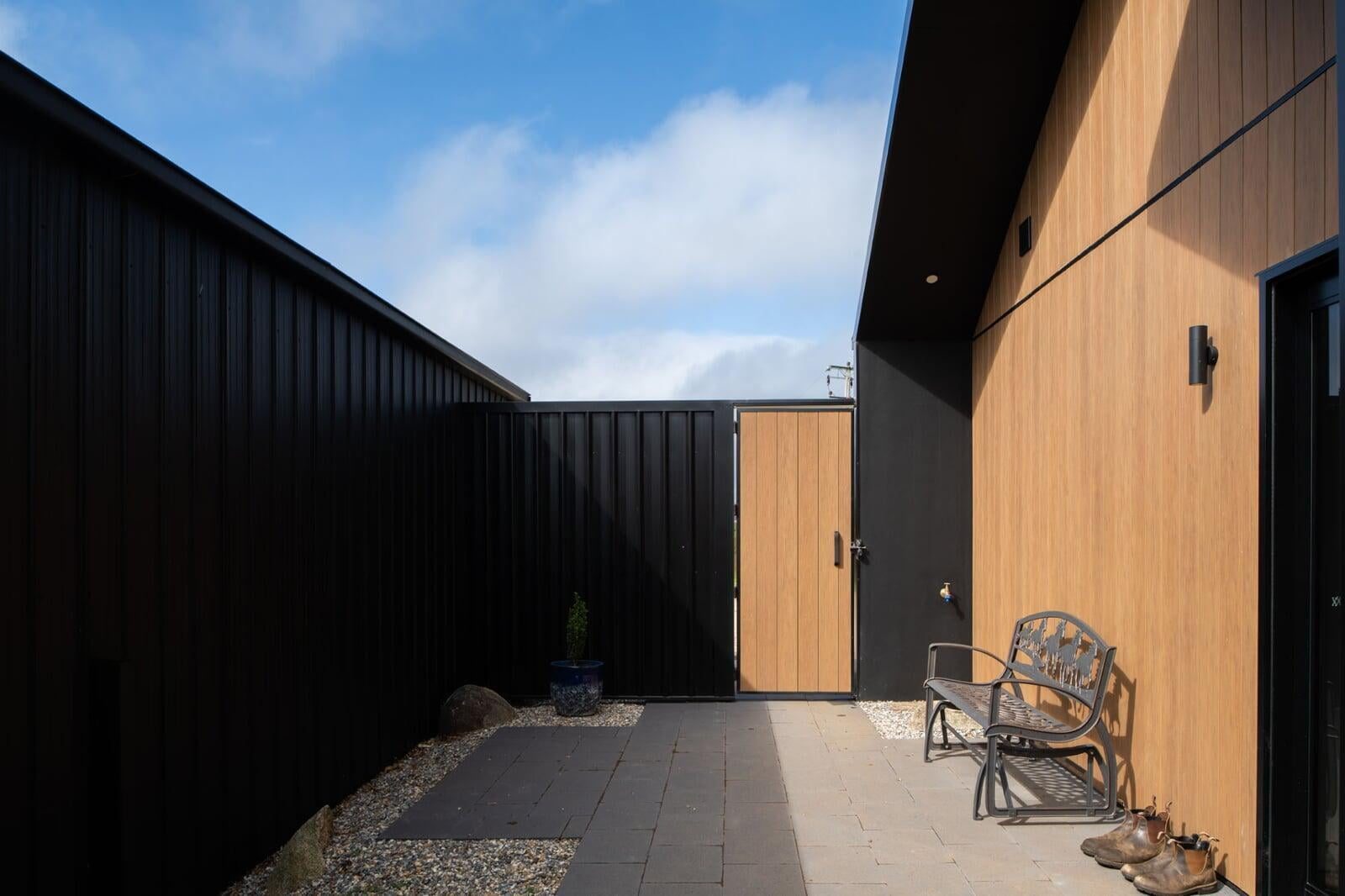
Archier's design response was elegant in its restraint. The home presents a relatively closed face to the south and west, where weather exposure is greatest, while opening generously to the north and east. Deep verandas extend the living spaces outdoors, creating sheltered transition zones where our clients can sit in comfort even when the wind is up. These verandas are not merely decorative appendages — they're carefully proportioned to provide summer shading while allowing winter sun to penetrate deep into the living spaces.
The building's footprint follows the natural contour of the site, minimising earthworks and preserving the established drainage patterns. The foundation system was designed to accommodate the slope without requiring extensive retaining walls, allowing the home to step gently down the hillside. This approach not only reduces visual impact but also maintains the site's natural character, ensuring that the surrounding paddocks and bushland flow uninterrupted to the building's edges.
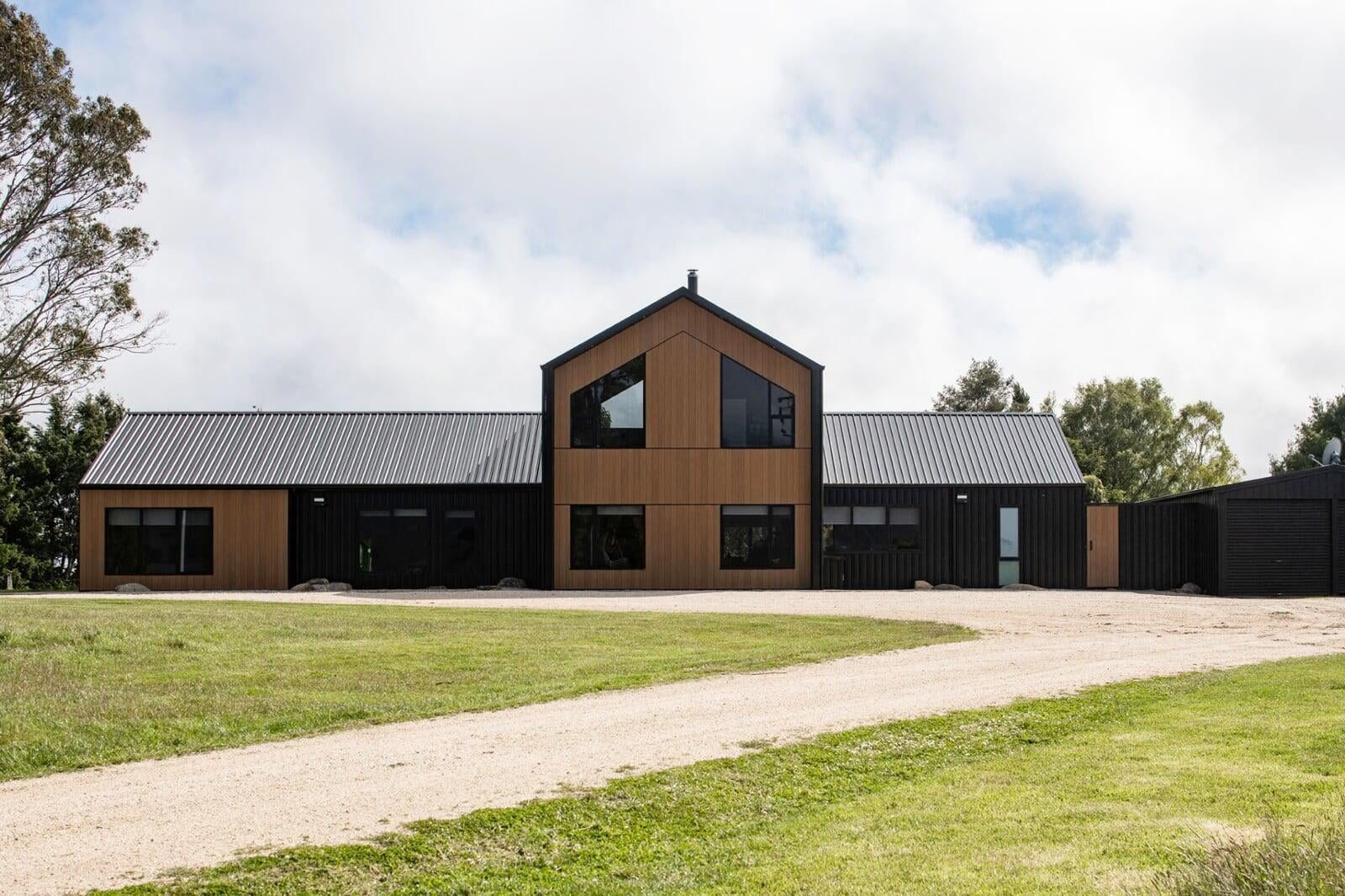
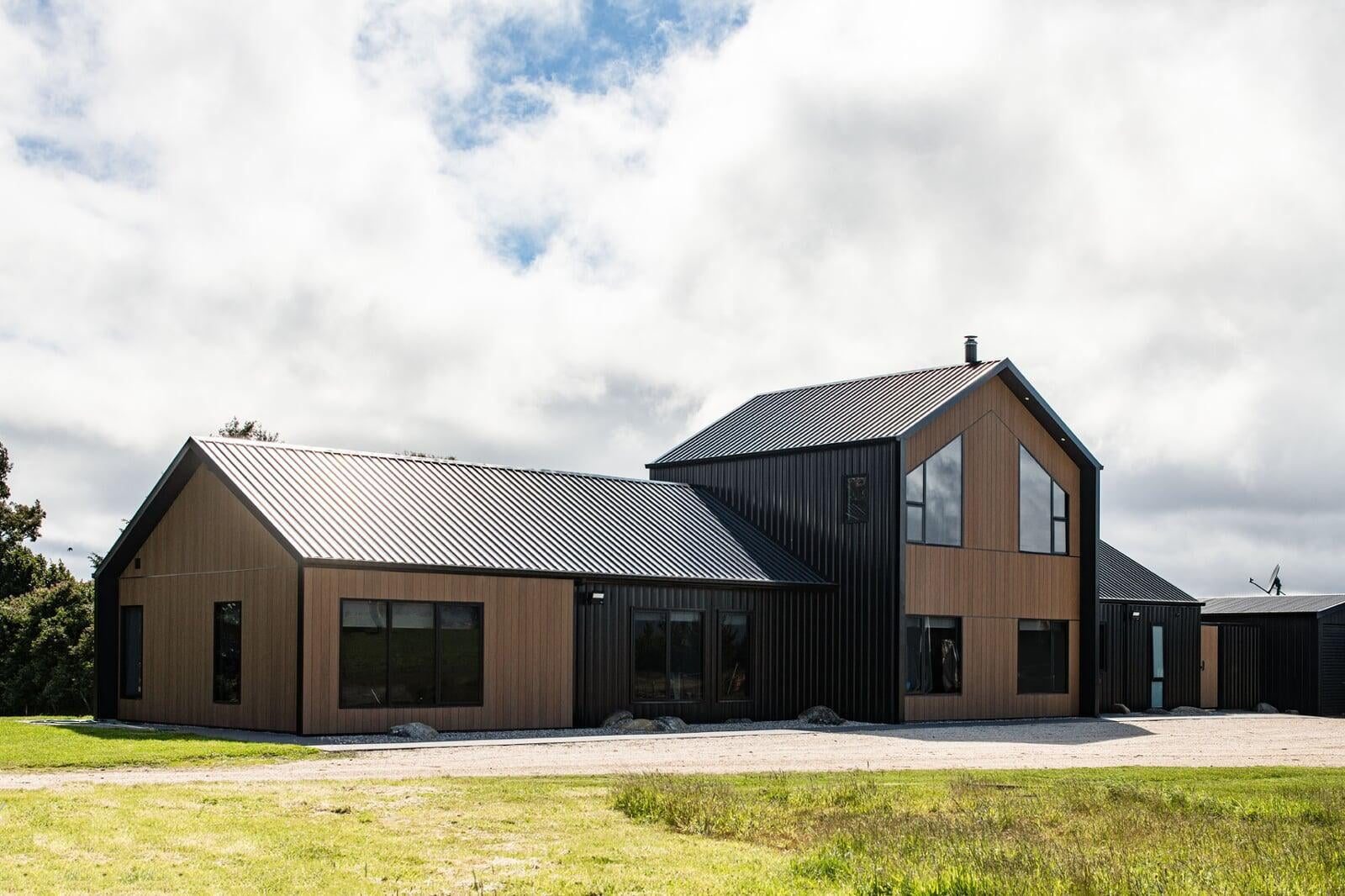
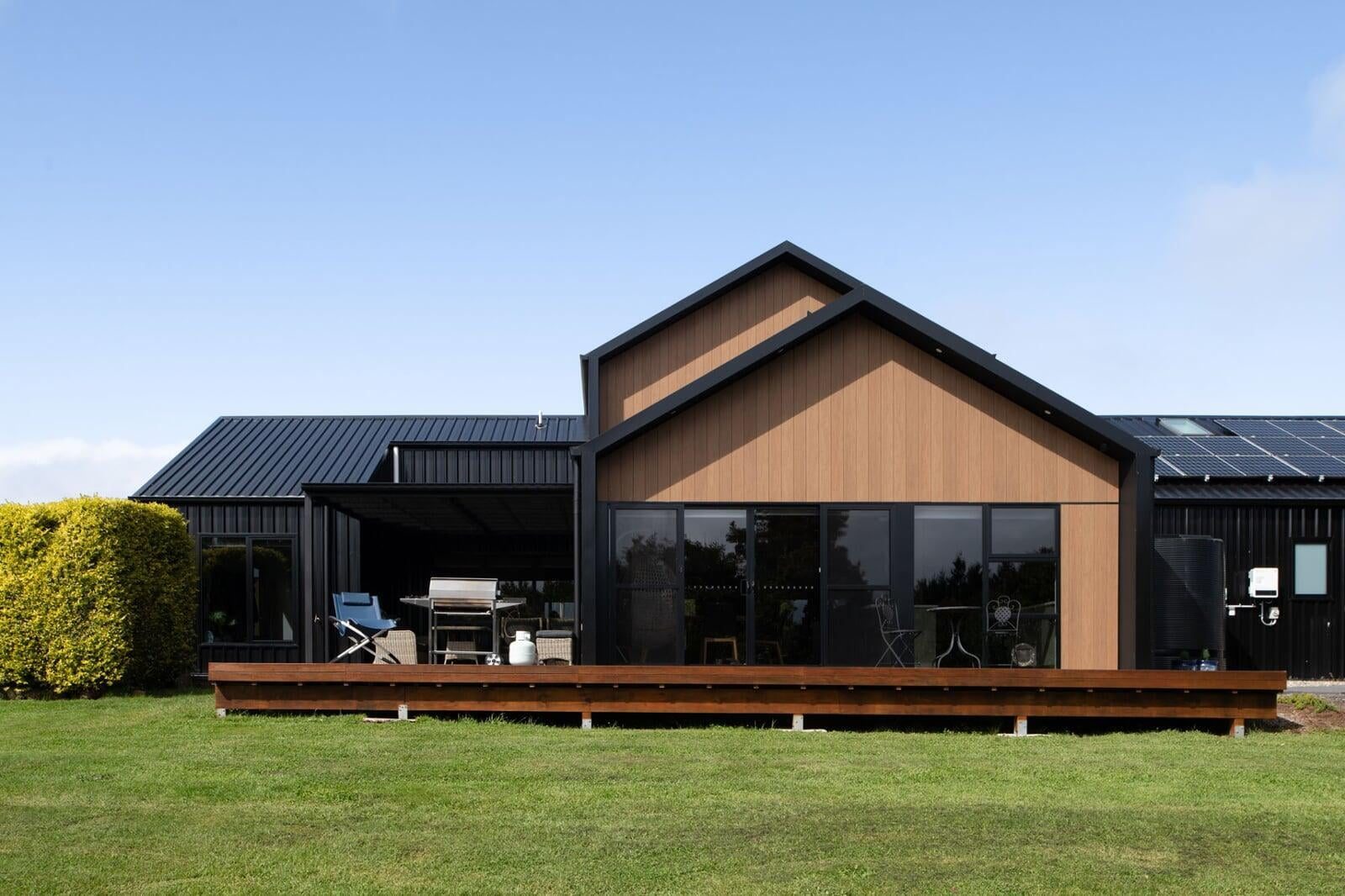
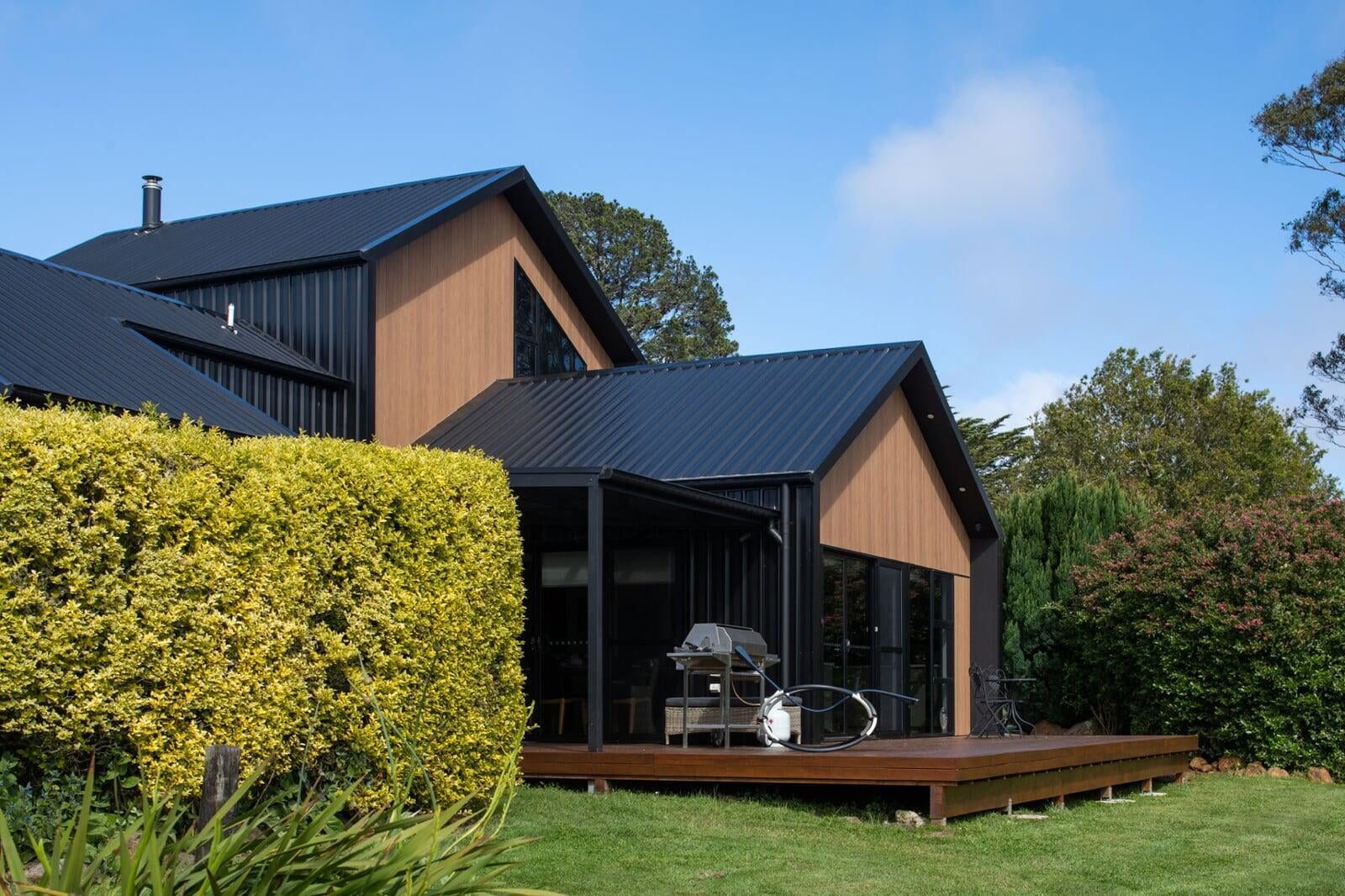
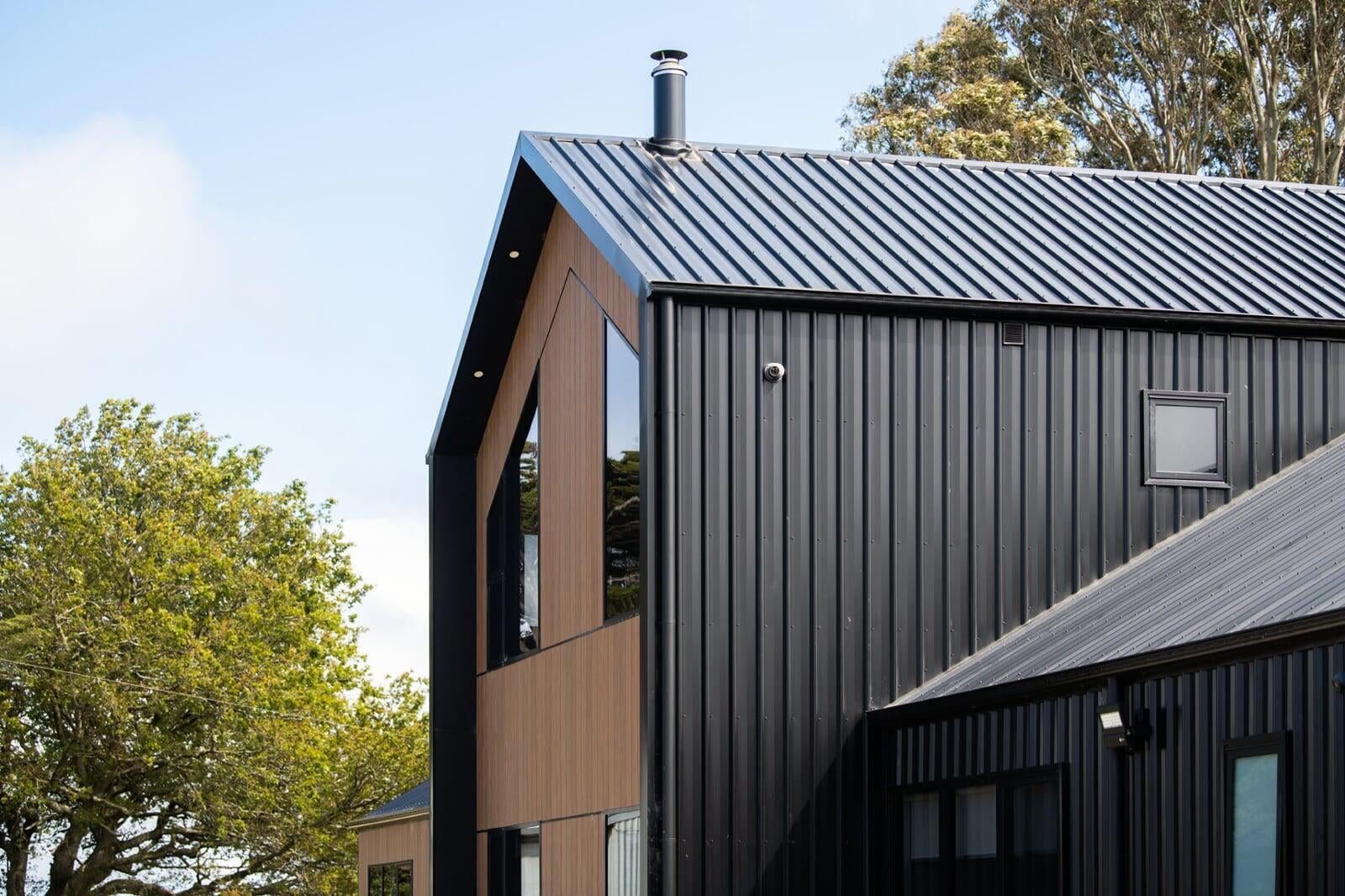
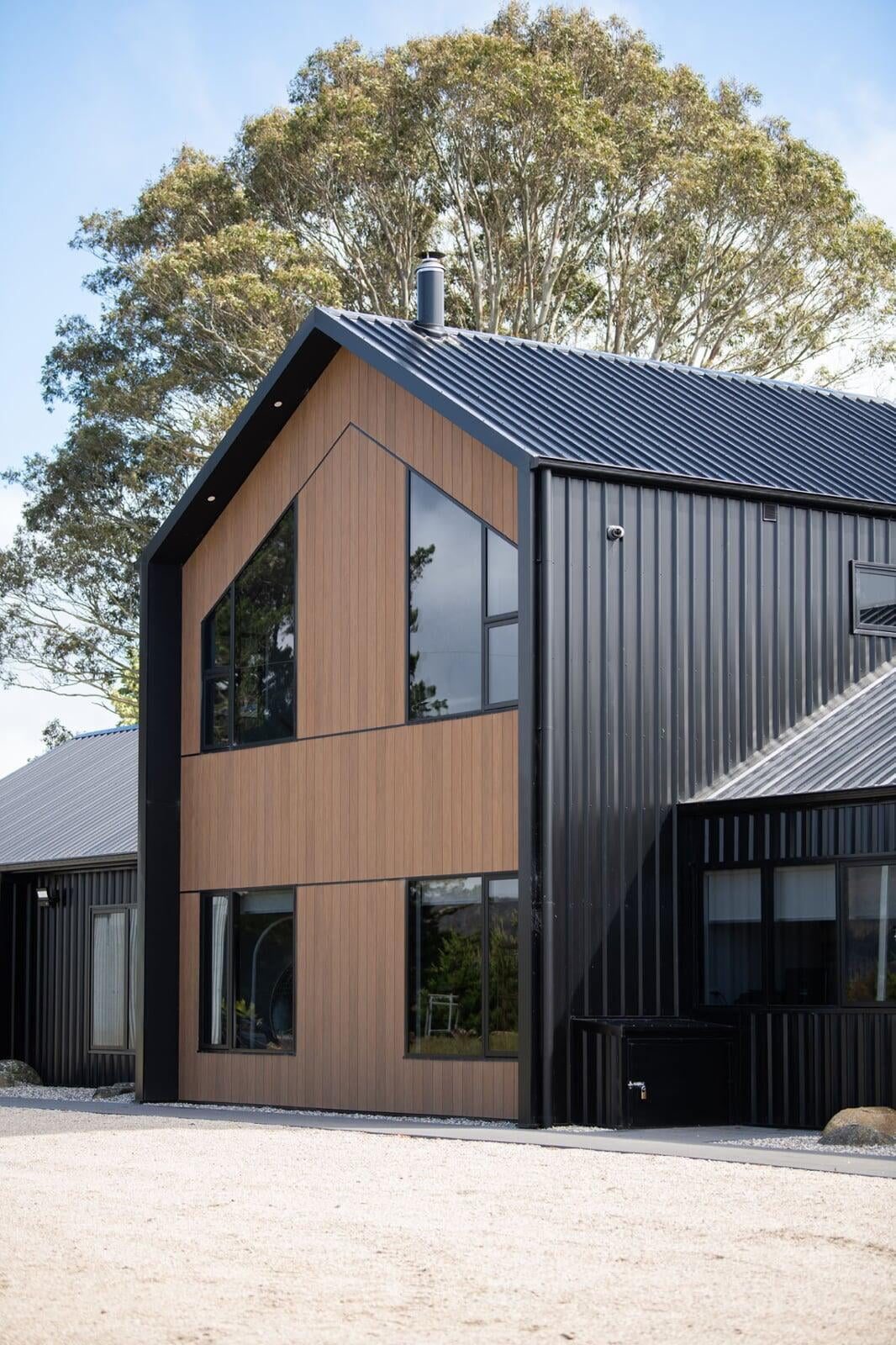
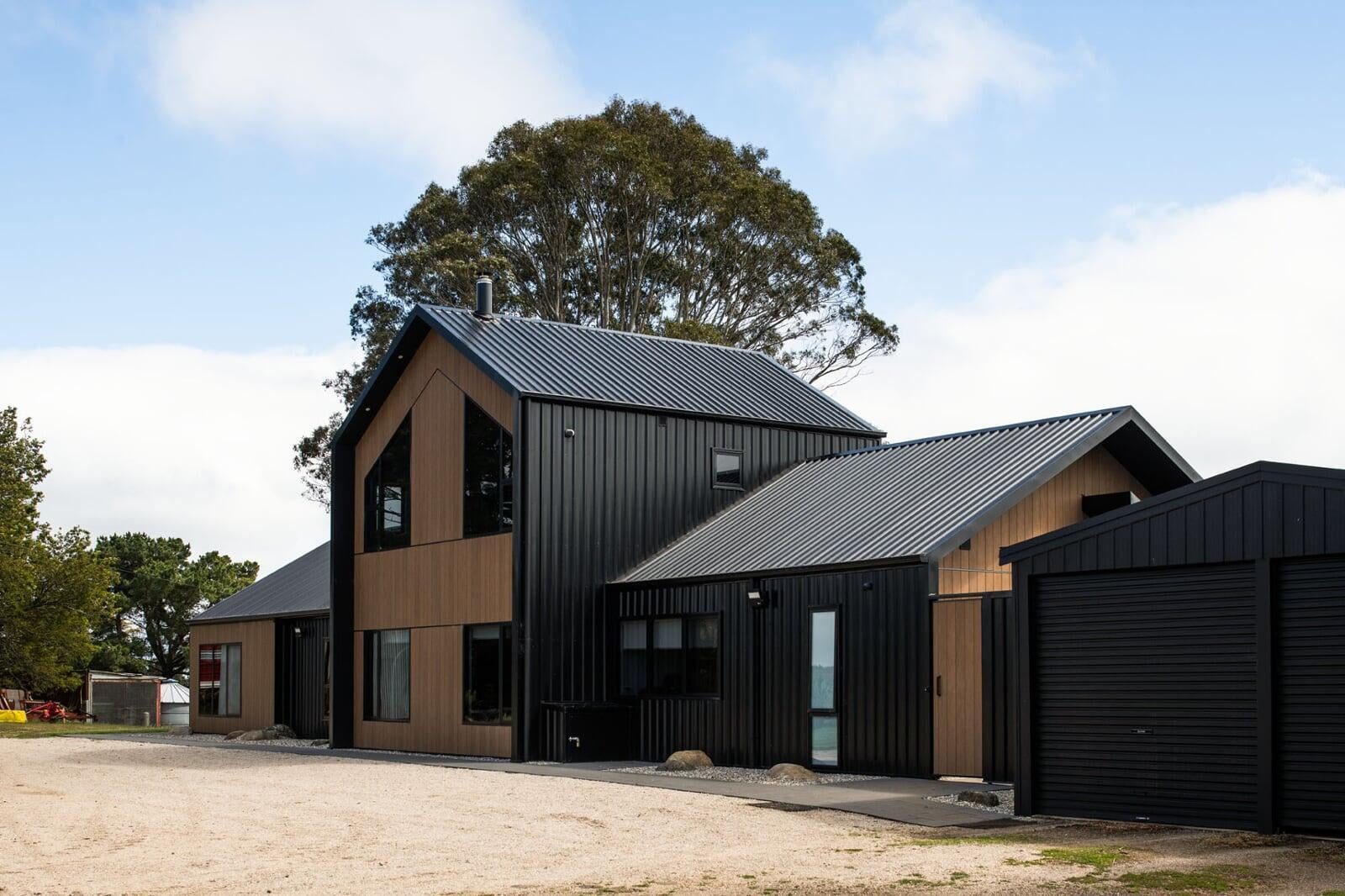
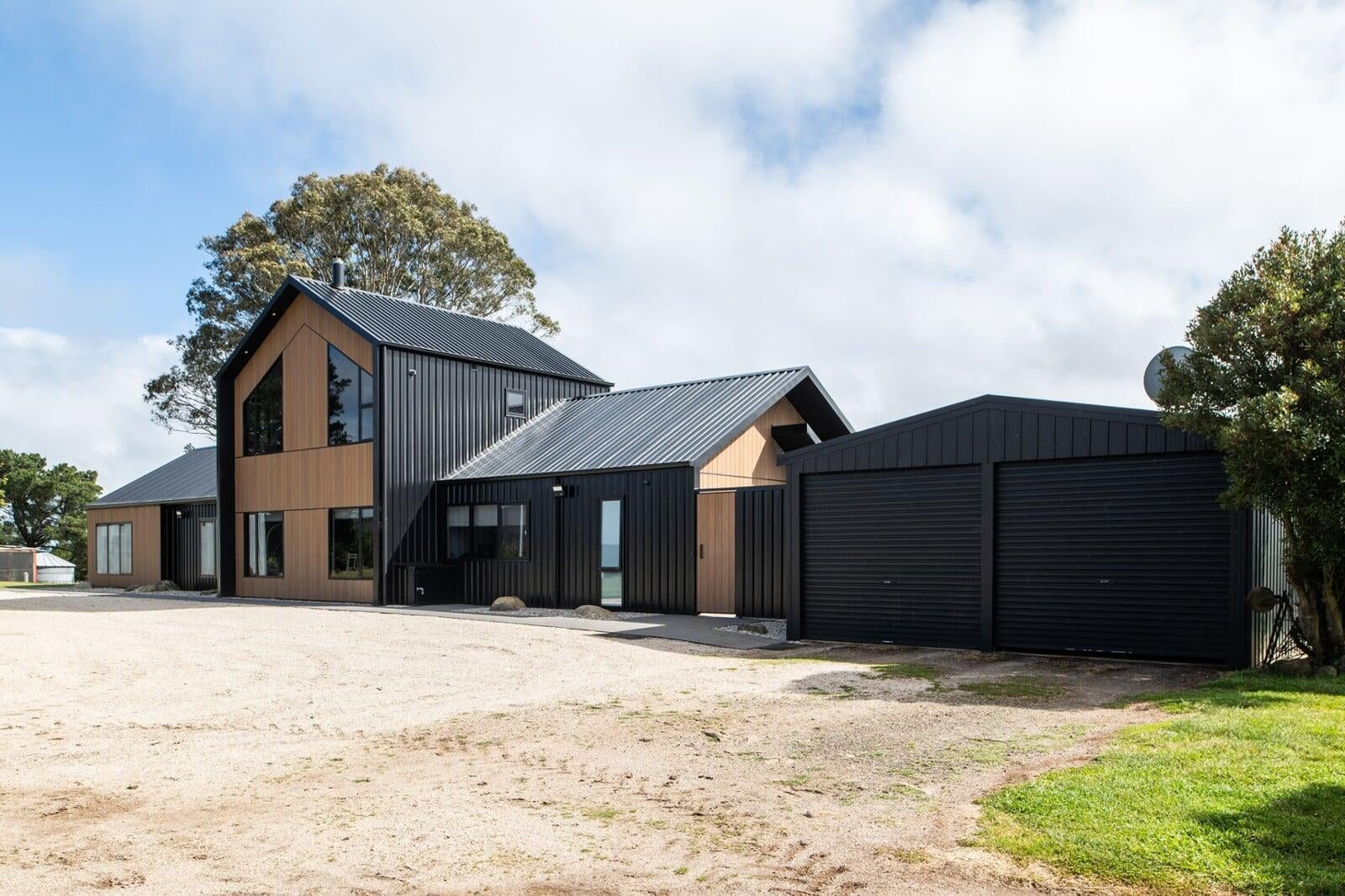
The roof form references the simple gabled structures of Tasmania's rural heritage — woolsheds, hay barns, farmhouses — but with a contemporary refinement in proportion and detail. The eaves are precisely dimensioned, the ridgeline is clean, and the overall silhouette is deliberately restrained. From a distance, the home reads as a natural element of the pastoral landscape, its form and colour sympathetic to the agricultural buildings that dot the surrounding countryside.
Materials & Craftsmanship
The material palette for Tayenne was selected to reinforce the home's connection to its rural context while delivering long-term durability in a demanding climate. Every material choice carries intention, balancing aesthetic expression with practical performance.
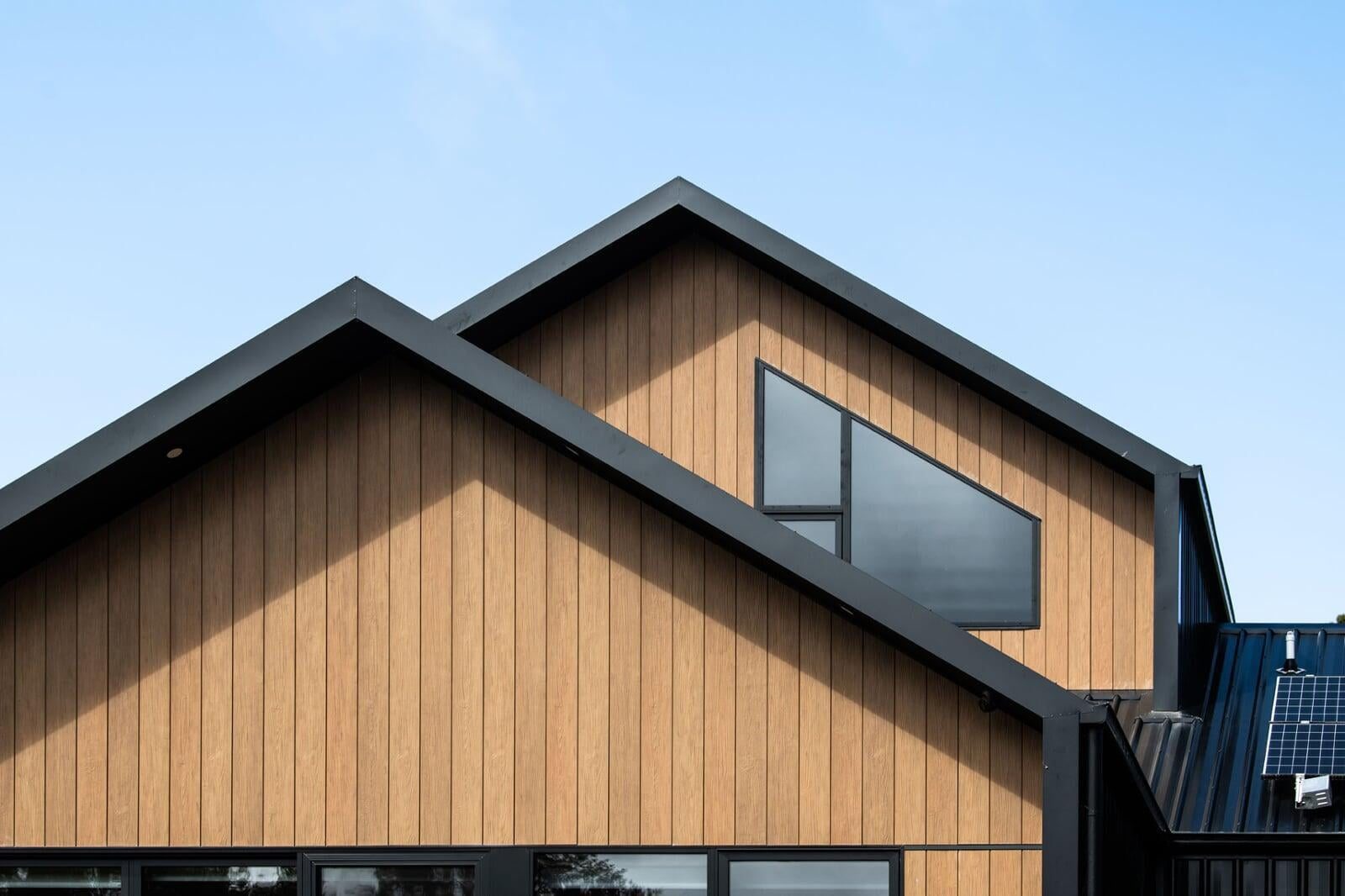
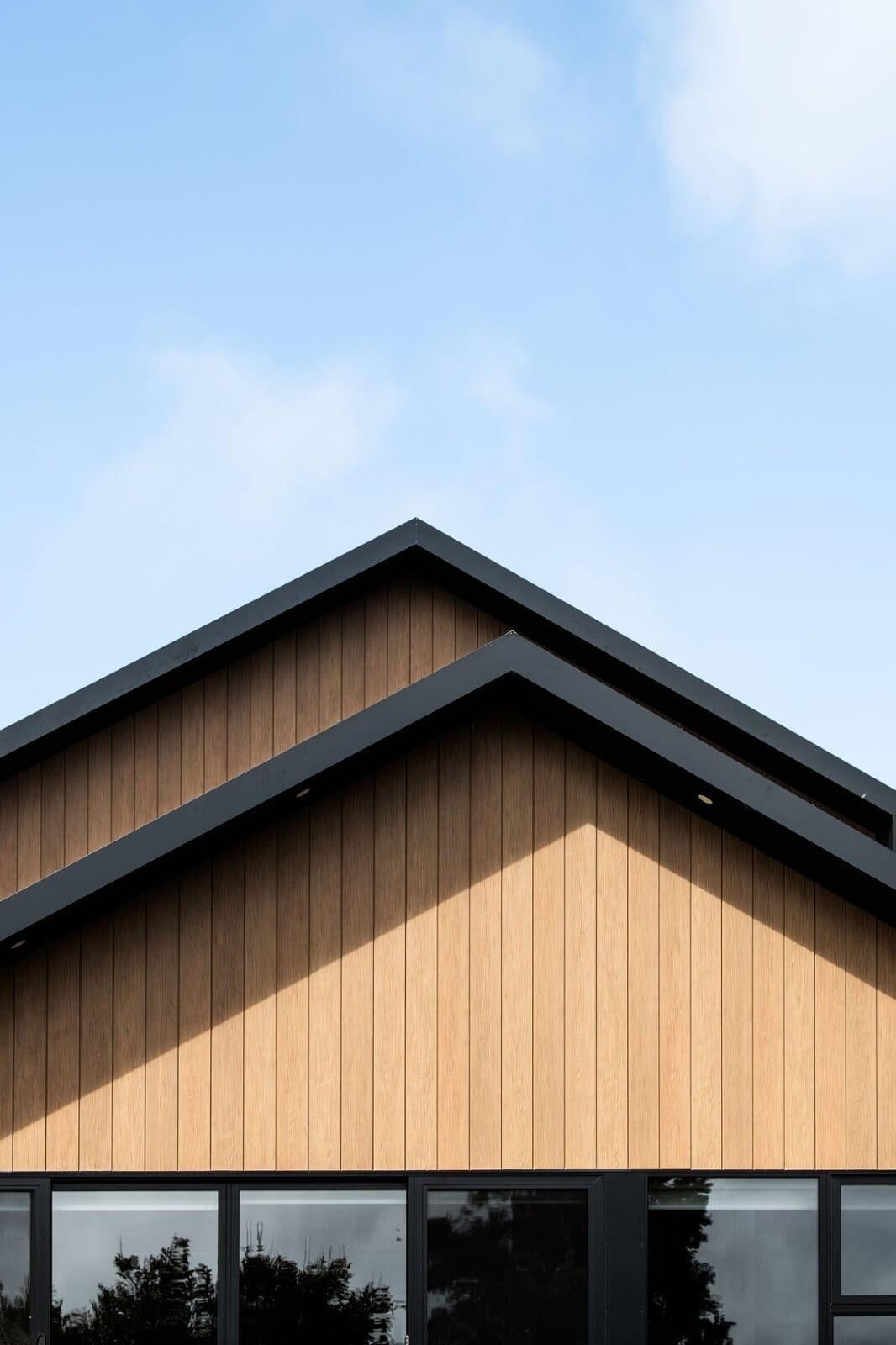
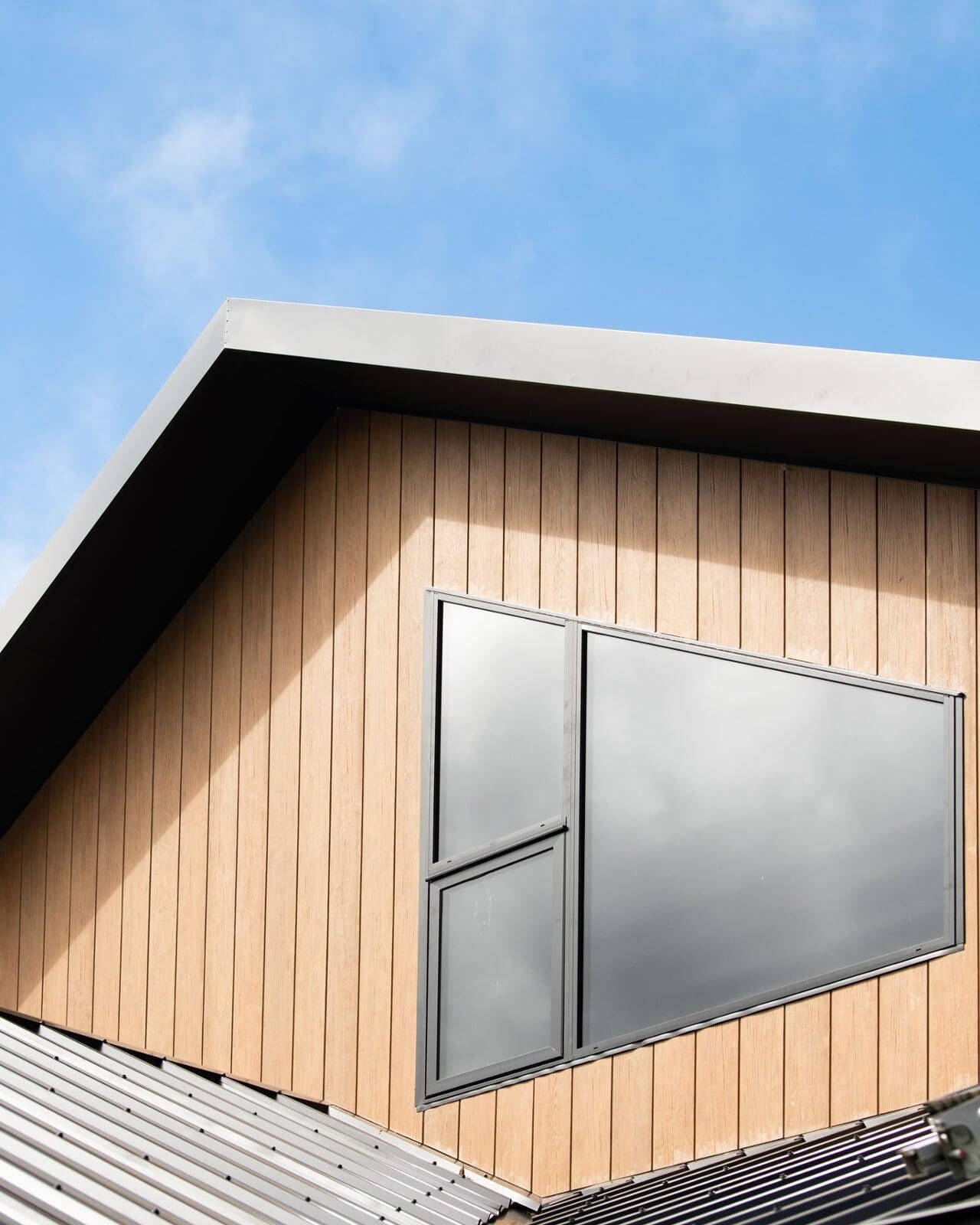
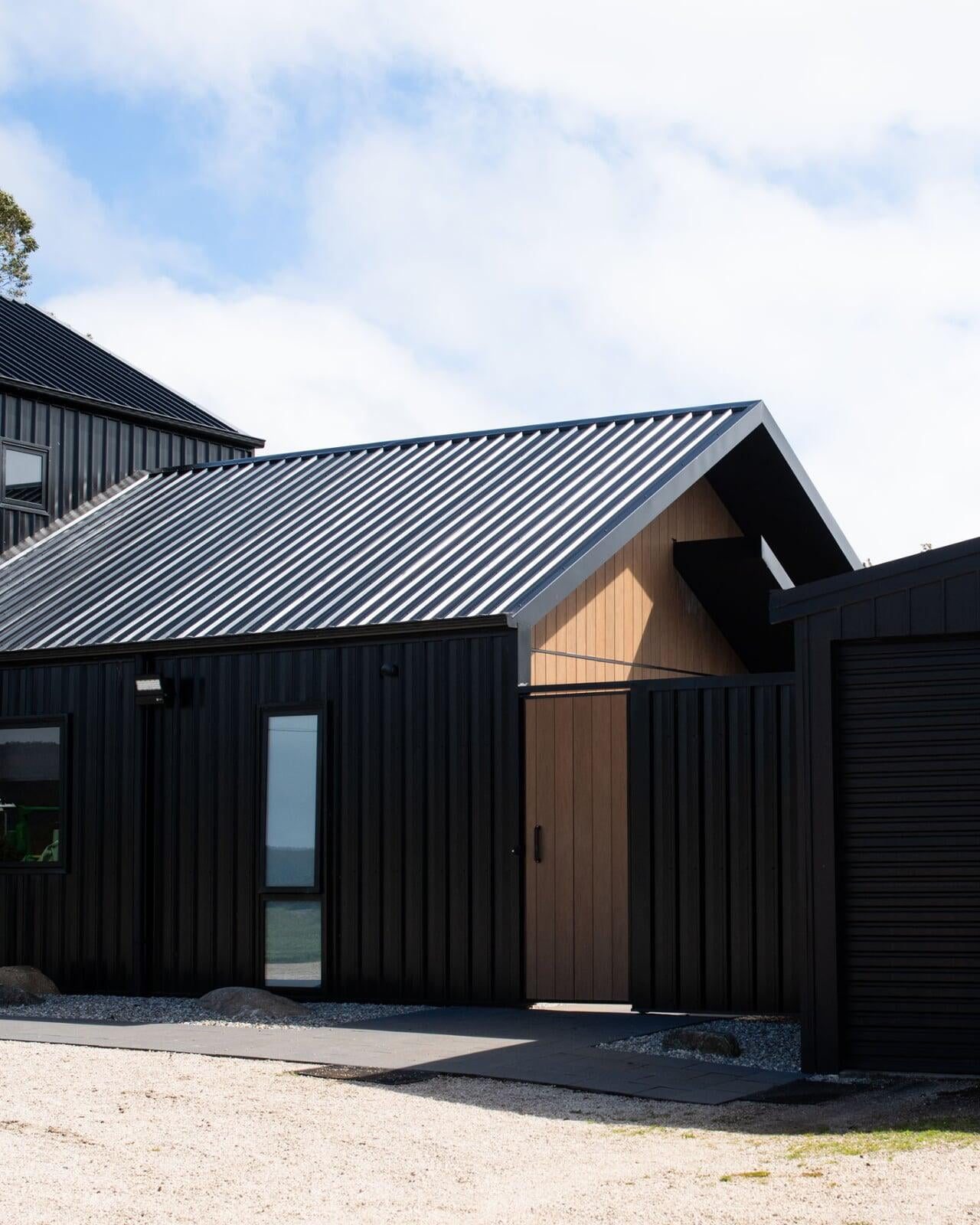
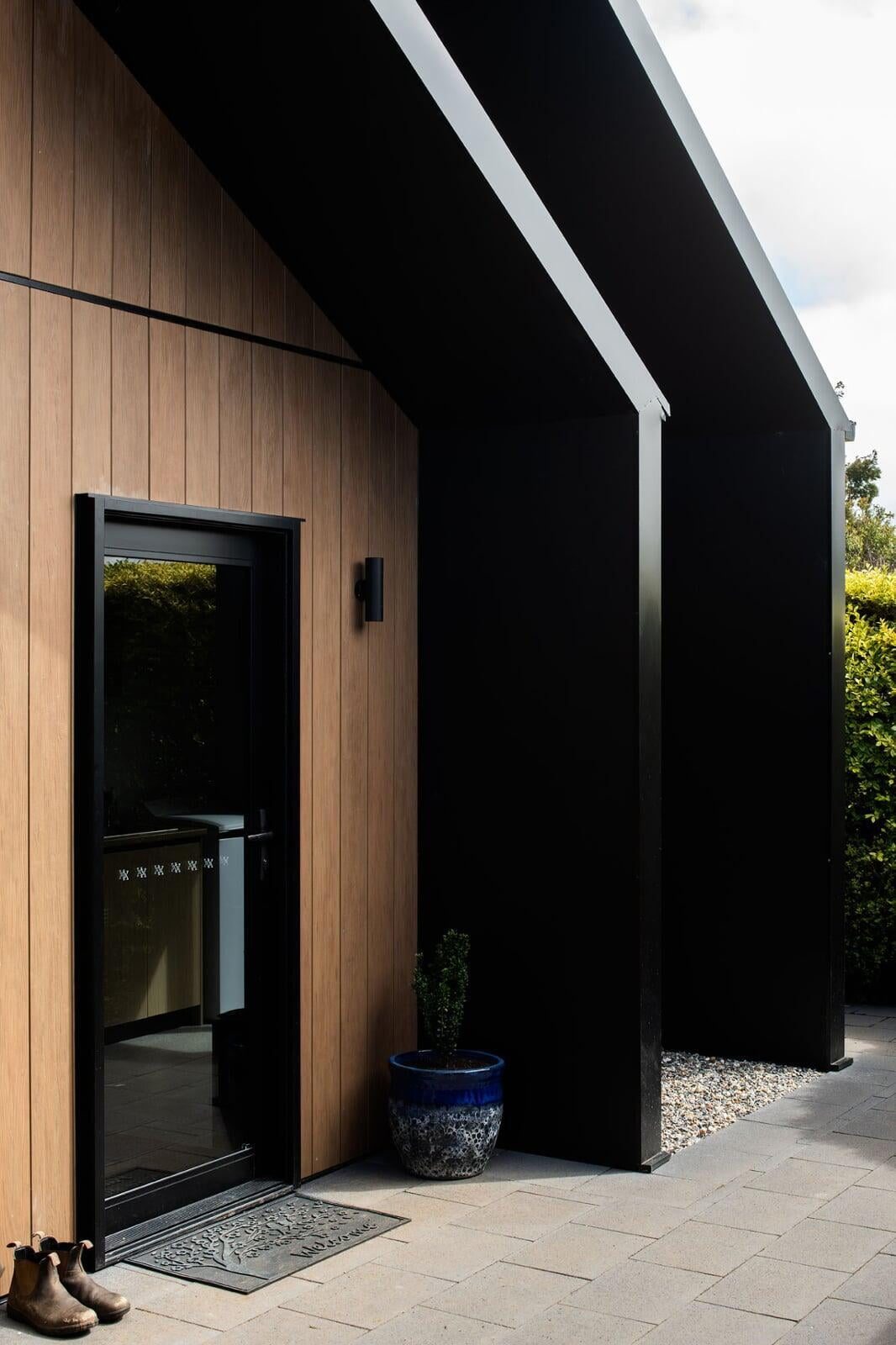
On the exterior, Territory Woodlands cladding in Teak provides the primary wall finish. This timber-look cladding delivers the warmth and texture of natural wood with enhanced weather resistance and dimensional stability — critical qualities at this elevation, where temperature swings between summer and winter are significant and UV exposure is intense. The Teak colour was specifically chosen for its affinity with the surrounding landscape: warm enough to glow in morning light, dark enough to recede into the bush when viewed from a distance.
Contrasting with the warmth of the cladding, the roof and select wall panels are finished in Trimdek Sheeting in 'Night Sky'. This deep, almost-black finish provides dramatic definition to the building's form, emphasising the clean geometry of the roof and creating a striking silhouette against the mountain backdrop. The darkness of the roof also serves a practical purpose: it absorbs solar radiation efficiently, contributing to the home's passive heating strategy during the cooler months.
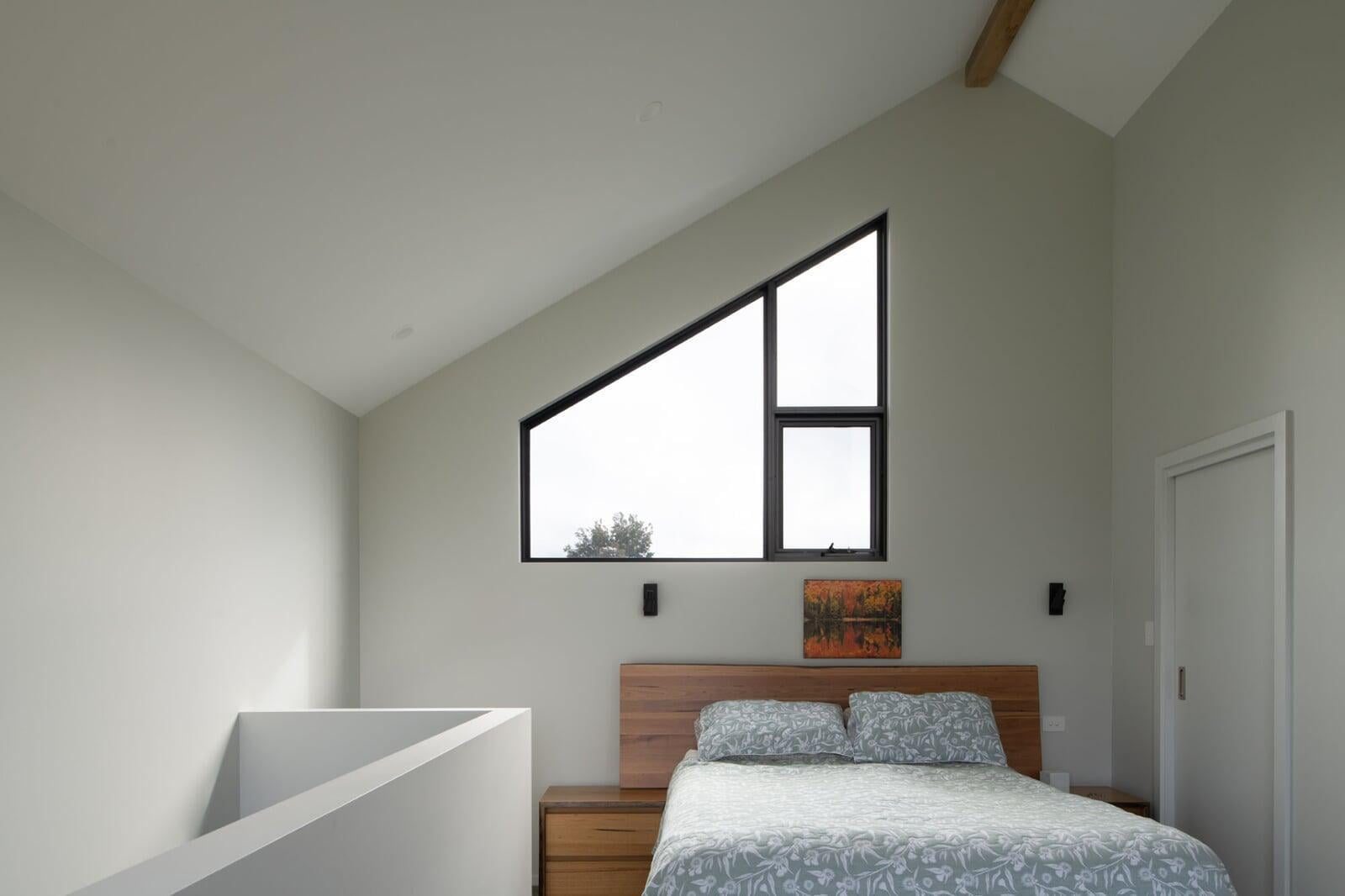
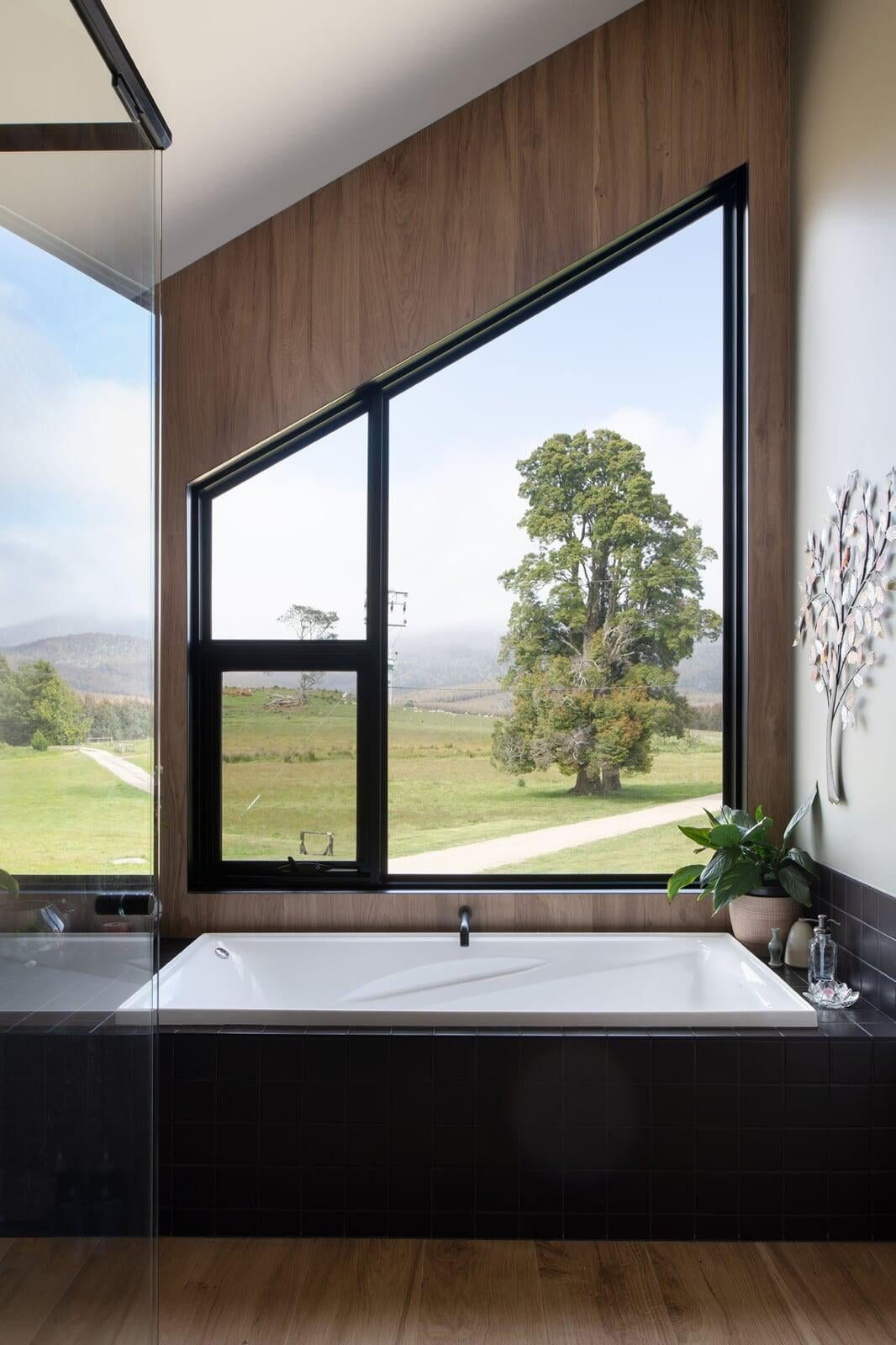
Interior finishes continue the dialogue between warmth and restraint. Timber features prominently throughout — in flooring, ceiling linings, and joinery — connecting the interior experience to the exterior material language. The colour palette is deliberately muted, allowing the views to remain the dominant visual element. Large windows are framed simply, their proportions carefully considered to compose specific views of the mountain and surrounding landscape.
The construction detailing throughout Tayenne reflects the precision that defines Davies' work. Junctions between materials are resolved cleanly, weatherproofing details are meticulous, and the overall build quality ensures that the home will age gracefully over decades. In a climate this demanding, there is no margin for compromise in construction quality.
Living Experience
Living in Tayenne is an experience defined by light, landscape, and seasonal rhythm. The home responds to the passage of the day with constantly changing character — morning sun flooding the living spaces with warm light, afternoon shadows creating deep contrasts across the interior surfaces, evening alpenglow painting Mount Barrow in hues of gold and rose.
The sunlit verandas have become the home's most cherished spaces. Sheltered from the wind but open to the views, they function as outdoor living rooms for much of the year. On still mornings, breakfast on the veranda with the mountain filling the horizon has become a daily ritual for our clients — one they describe as the single greatest luxury of their home.
The home's thermal performance has exceeded expectations. The combination of passive solar orientation, quality insulation, and thermal mass creates a remarkably stable internal environment. On the coldest winter nights, the home retains warmth long after the fire has died down. On the hottest summer days, the deep verandas and carefully positioned openings maintain comfortable temperatures without mechanical cooling.
Photography for Tayenne was beautifully captured by Anjie Blair, whose work reveals the interplay between the home and its landscape across different times of day and seasons. Her images convey what we've always believed: that the best homes are not objects to be admired in isolation, but elements of a larger composition that includes the land, the sky, and the lives lived within.
Tayenne stands as a testament to what happens when client vision, architectural intelligence, and construction excellence align. It's a home that will grow more beautiful with age, its materials weathering gently into the landscape, its spaces enriched by the accumulation of memories and daily rituals. For Davies, it represents exactly the kind of building we're most proud to be associated with — quiet, considered, and deeply connected to its place.
Also building in
North-West Coast & Hinterland
Tamar Valley & Launceston
Midlands & East Coast
Southern Tasmania
More Projects