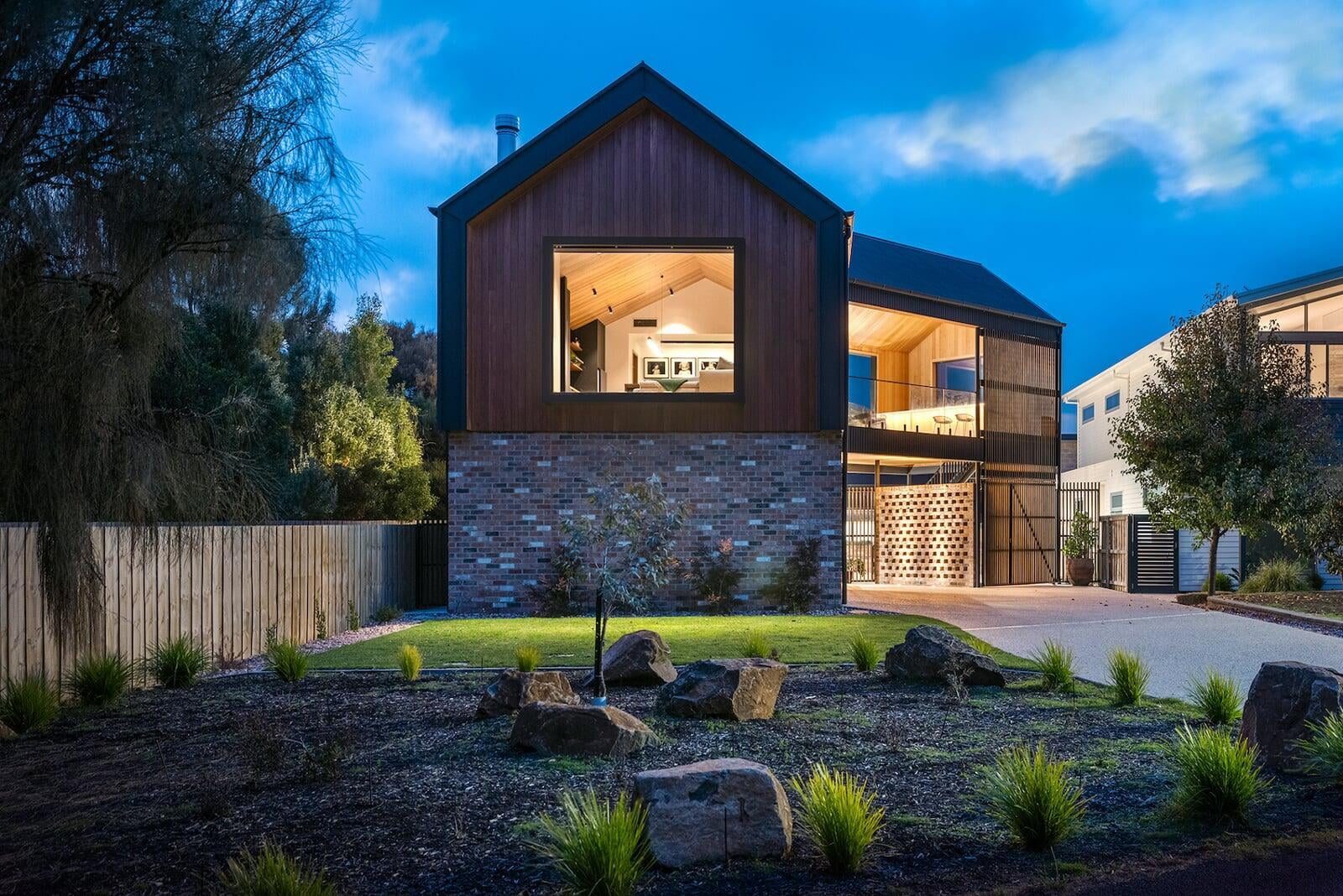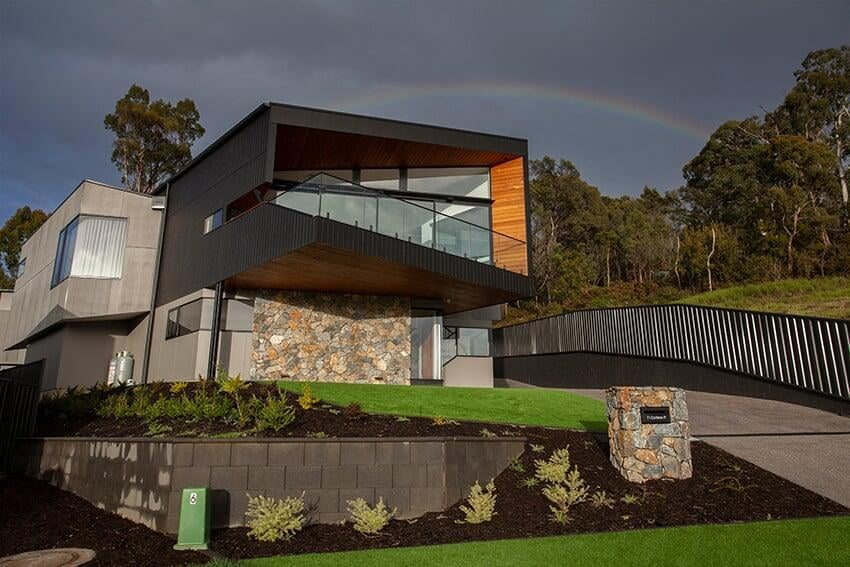
Driveways, paths, and external paving are among the most commonly excluded items in Tasmanian new home contracts — yet they can add $8,000–$35,000 to the cost of a completed home depending on the site. Here's what to expect from external works, how they're typically priced, and what decisions to make before you sign your building contract.
Why External Works Are Often Excluded from Building Contracts
Most new home building contracts in Tasmania include the home itself — the structure, fitout, and connected services — but stop at the building pad. External works: the driveway from the street, paths around the home, paved entertaining areas, boundary fencing, letterbox, and front landscaping are typically excluded and priced separately.
There are practical reasons for this: the extent and specification of external works often isn't finalised when the building contract is signed. The driveway layout depends on the final slab position and finished ground levels, which aren't confirmed until earthworks are complete. And for many clients, the timing is different — external works can proceed in stages after the home is locked up, sometimes managed by the owner directly rather than through the builder.
The risk is that external works get underestimated in an overall project budget because they're not in the contract. Planning for them at the design stage — rather than treating them as an "after" project — produces better outcomes and avoids completion-stage cost pressure.
What Counts as External Works on a New Home Build
External works typically covers:
- Driveway: The paved or sealed surface from the road to your garage or carport. Includes the crossover (the section crossing the road verge from the road to your property boundary, which usually requires council approval and is subject to council specifications).
- Paths and walkways: Concrete or paved paths from the front boundary to the entry, around the perimeter of the home, and to outbuildings.
- Alfresco and entertaining areas: Concrete slabs or paved surfaces to outdoor living areas not covered under the main building permit.
- Boundary fencing: Side and rear boundary fencing, typically Colorbond steel or timber paling in residential areas.
- Landscaping and turf: Topsoil preparation, turf laying, garden bed preparation, and planting.
- Letterbox and house numbering: Typically a minor cost but often owner-arranged after handover.
- External lighting: Driveway, path, and garden lighting beyond what's included in the building's electrical specification.
- Retaining walls (boundary): Retaining walls at property boundaries are typically a separate scope from any internal site retaining — see our guide to retaining walls.
Driveway Costs in Tasmania (2026)
Driveway costs vary significantly depending on the surface material, length, width, and site conditions. For a typical suburban block in northern Tasmania, rough cost ranges as of 2026 are:
| Surface type | Approx. cost (per m²) | Notes |
|---|---|---|
| Plain concrete (broom finish) | $85–$130/m² | Most common residential driveway; durable, low maintenance; cost varies with thickness and reinforcement |
| Exposed aggregate concrete | $120–$175/m² | Better slip resistance; texture finish reveals aggregate; more expensive than broom finish |
| Coloured / pattern-imprinted concrete | $140–$200/m² | Decorative finish; adds visual interest; specialist contractor; ongoing sealing required |
| Asphalt / bitumen | $50–$90/m² | Lower upfront cost; common on rural properties and longer driveways; periodic resurfacing needed |
| Gravel / crushed rock | $20–$50/m² | Lowest cost; common on rural and semi-rural blocks; not suitable for steep driveways without edging; requires top-up over time |
| Paving / brick pavers | $130–$220/m² | Premium aesthetic; used for short driveways, forecourts, entry areas; high individual repair cost if settling occurs |
A standard suburban driveway in northern Tasmania — typically 30–60m² (a double-car width, 6m wide, 5–10m long from boundary to garage slab) — costs approximately $3,000–$10,500 in concrete depending on the specification. A longer rural driveway can cost significantly more.
Crossover construction (the section crossing the road verge) is separately managed through your council. Councils have their own specifications for crossover construction — width, material, drainage, kerb cut — and will issue an approval and may inspect the work. Some councils construct the crossover themselves and charge the owner; others approve owner/contractor works. Budget $2,000–$6,000 for a standard crossover in a northern Tasmanian residential zone, though this varies considerably.
Do You Need a Permit for a Driveway in Tasmania?
For a driveway on private property (the portion inside your boundary), a building permit is generally not required under the Building Act 2016 (Tas), as a standard residential driveway slab is classed as low-risk building work. However:
- Crossover / vehicle access point: Any works within the road reserve — the strip of public land between your property boundary and the kerb — requires council approval. Most councils require a development or vehicle crossing application before the crossover is constructed.
- Drainage: Where a driveway would alter stormwater flow onto public land or neighbouring properties, additional requirements may apply. Council will typically require that stormwater from a new driveway is managed on-site or directed to the approved stormwater system.
- Planning considerations: In some zones or overlays, vehicle access design may be subject to planning scheme requirements — for example, heritage precincts, bushfire-prone areas, or sites close to intersections. Check your council's planning scheme if your site has known constraints.
Always contact your local council before driveway construction begins to confirm what approvals and specifications apply. Requirements differ across Tasmania's 29 councils.
Planning External Works as Part of the Overall Budget
External works are best budgeted as part of your overall project cost from the start, not added on as an afterthought at handover. A realistic overall project budget for a completed and landscaped new home in northern Tasmania should include:
- The building contract sum (including any provisional sums and PC items)
- Driveway and crossover ($3,000–$15,000 depending on length and material)
- External paths and paved areas ($2,000–$8,000 depending on extent)
- Boundary fencing ($3,000–$12,000 depending on perimeter length and fence type)
- Landscaping/turf ($3,000–$15,000+ depending on scope)
- External lighting and letterbox ($500–$2,000)
- Window furnishings ($3,000–$10,000+ depending on home size and product)
Total external works and completion costs in the range of $15,000–$50,000 are realistic for a suburban new home build in northern Tasmania, depending on the site, the scope of landscaping, and the finish level. Including this in your overall project budget from the start avoids the situation of running out of funds after handover, with a new home that lacks its driveway or is surrounded by bare earth.
For more on how site costs affect the overall price of your build, see our guide to site costs and what affects your build price.
Timing of External Works
The driveway slab is typically poured after the frame is erected and the major construction traffic is finished — heavy trucks running over a fresh slab during construction will damage it. In most new home builds, the driveway is one of the last items completed before handover.
Some items can be phased after handover: landscaping and turf can go in once you've moved in and have a better sense of how you'll use the space. Boundary fencing is often completed after handover, particularly if neighbours are involved in shared boundary decisions. The key is to plan the timing — driveway and main paths need to be in place to avoid tracking mud into your new home from day one.
Frequently Asked Questions
Is my driveway included in the building contract?
It depends on your specific contract. For many custom home builds in Tasmania, the driveway is excluded and priced separately. For some house-and-land packages or turnkey contracts, the driveway may be included. Check your contract's scope of works and exclusions schedule — if "driveway" doesn't appear in the inclusions, it's typically excluded. Ask your builder directly if you're unsure.
Who organises the council crossover approval?
Typically the owner or the contractor doing the driveway work organises the crossover approval with council. If the driveway is within your building contract, your builder may handle it. If it's separate, you'll need to contact your council's engineering or works department. Get this in place before construction — some councils have significant lead times for crossover approvals, and you'll want the driveway contractor ready to start promptly after lock-up.
Can I do my own landscaping after moving in?
Yes — landscaping is generally owner-managed and can be done in stages after handover. Many new home owners do initial turf and garden beds themselves and add planting over several seasons. The practical priority is having the immediate areas around the home stabilised (turf or mulch over bare earth) to prevent erosion and mud tracking into the house. Major landscaping features like retaining walls or large trees in proximity to the building should be discussed with your builder or a landscape designer to avoid impacts on the foundation.
How long does a concrete driveway last?
A correctly designed and constructed concrete driveway typically lasts 25–40 years with minimal maintenance. Key factors are the mix design (sufficient cement content for freeze-thaw resistance in Tasmanian winters), reinforcement (mesh or fibres for crack control), adequate thickness (100mm minimum for standard passenger vehicles, 125–150mm under vehicle crossovers or where heavier vehicles are expected), and proper sub-base preparation. Hairline cracking over time is normal and cosmetic; structural cracking that admits water indicates a design or construction issue.
Building in Northern Tasmania?
At Davies, we help clients plan the full project — not just the building contract — from the early design and feasibility stage, so that external works are budgeted for alongside the home itself. If you're planning a new home in northern Tasmania, a feasibility conversation is the right starting point.
Get in touch to talk through your project with the Davies team.
About the Author
Luke Davies
Luke is the founder of Davies Design & Construction and author of Dream Home. He writes about home design philosophy, lean construction, and building businesses that put people first.
0 Comments
Related Articles