"Standard inclusions" in a building contract covers what your builder has priced into the base contract — and what isn't there can cost as much as what is. Knowing the difference between what's included, what's a prime cost allowance, and what's excluded entirely is essential reading before you sign a new home contract in Tasmania.
What Are Standard Inclusions?
Standard inclusions are the items your builder has priced and included in the base contract sum. They define the finished home you're buying — the specification of materials, fixtures, finishes, and systems that are part of the agreed scope. Everything outside that specification is either a prime cost item (an allowance for a product you'll select), a provisional sum (an estimate for work that can't be fully priced yet), or an exclusion (not in the contract at all).
Volume builders typically publish a standard inclusions list — a set specification for their standard house range. With a custom builder, inclusions are defined by the drawings and specifications prepared during the design phase. A custom home contract's "inclusions" are essentially the sum of everything that appears in the construction documentation. The more resolved your design before signing, the more clearly defined your inclusions are, and the fewer surprises there are at handover.
What Is Typically Included in a Tasmanian New Home Contract
While every contract differs, a standard new home contract in Tasmania will typically include:
| Category | Typically included (fixed price) | Typically PC or provisional |
|---|---|---|
| Structure | Frame, roof structure, external walls, internal stud walls to specified layout | Footing type if soil test not done (provisional sum) |
| Roofing | Roofing to specified product and colour; gutters, downpipes, fascia, barge | Roof product upgrade (e.g. specified vs selected profile) |
| External walls | Cladding to specified product and finish; windows and external doors to schedule | Upgraded window specifications, special glazing, or hardware not yet selected |
| Kitchens and bathrooms | Joinery to specified design; benchtops to specified material; fixed appliances and fixtures if selected | Tapware, tiles, appliances, and freestanding items are often PC items if not yet selected |
| Flooring | Floor covering to specified type and product if agreed | Often a PC item if selection hasn't been finalised; carpet, timber, or tile PC allowances are common |
| Electrical and plumbing | Rough-in to plan layout; hot water system to specified type; power points and switches to schedule | Light fittings are typically PC items; feature switches or smart-home wiring may be excluded |
| Insulation | Ceiling and wall insulation to specification (typically R-value driven by NatHERS report) | Upgraded insulation above specification |
| Internal fitout | Internal doors to schedule; door furniture to specification; painting (colours as agreed) | Upgraded door hardware, feature paint finishes, or wallpaper may be excluded or PC |
What Is Typically Excluded from a New Home Contract
The following items are commonly excluded from a base building contract in Tasmania and are typically priced and arranged separately:
- Driveway and paths: The concrete or paved driveway connecting your home to the street, and any internal paths around the home, are often excluded from the base contract. They may be priced separately or treated as a provisional sum if the final layout and specification isn't confirmed.
- Landscaping and turf: Gardens, lawn areas, garden beds, and landscaping are generally excluded unless specifically priced in. Some contracts include a topsoil/turf allowance for immediate erosion control around the building pad; anything beyond that is separate.
- Fencing: Site boundaries are typically excluded. Retaining walls and fencing along side and rear boundaries require separate pricing — and separate approval if they trigger permit thresholds.
- External sheds, garages (detached), and outbuildings: If a separate garage or shed is not part of the same building permit, it will typically be a separate contract item.
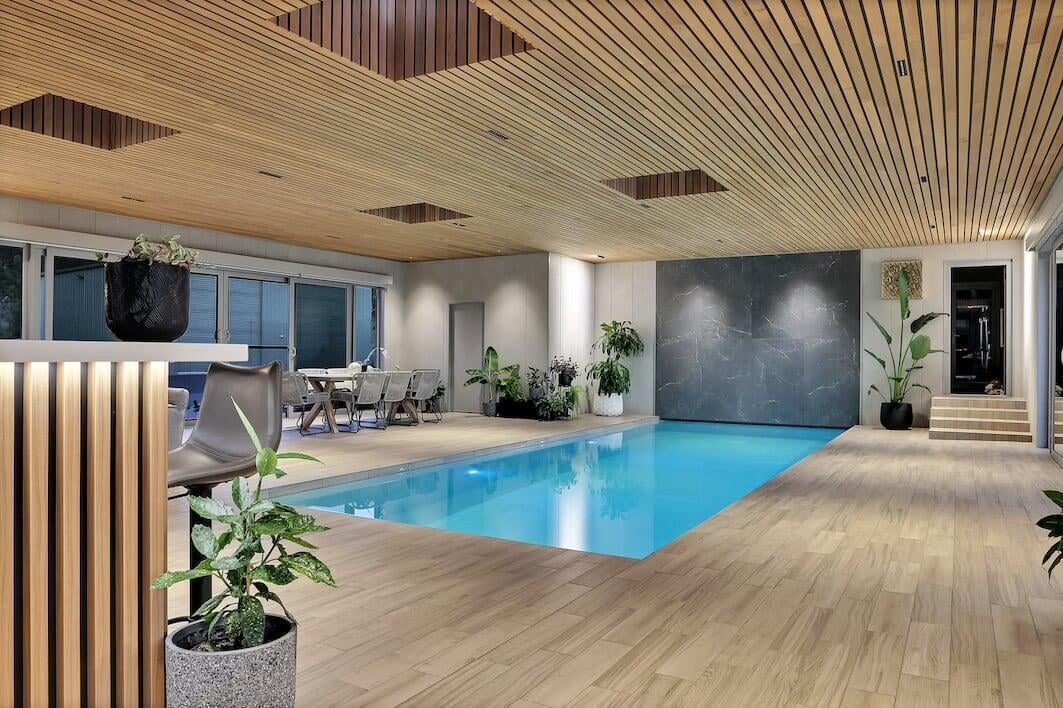
- Swimming pools: Always a separate scope of work requiring its own contractor and permit.
- Service connections beyond the building pad: The connection from the street mains to your meter or first inspection point may be included; the civil works to bring services across a long frontage or rural property are typically provisional sums or excluded.
- Window furnishings: Curtains, blinds, and shutters are almost universally excluded from building contracts. They are owner-supplied and owner-installed after handover.
- Appliances not part of the fixed kitchen spec: Fridges, washing machines, and other freestanding appliances are excluded. Fixed appliances (dishwasher, oven, cooktop) may be PC items or included if selected.
- Solar system: Unless explicitly included in the specification, a solar PV system and battery are owner-arranged items, added to the contract as upgrades or excluded entirely.
A word on contingencies: some builders include a contingency line in their contract sum; others don't. A contingency doesn't extend your inclusions — it's a reserve for minor unspecified items that commonly arise. Understand what, if anything, the contingency covers before signing.
Understanding Prime Cost Items in Your Inclusions
Many items that appear as "included" in a contract are actually prime cost (PC) items — meaning the builder has allowed a dollar amount for the product, but the specific product hasn't been selected yet. The item is "included" in the sense that the installation labour is priced; what isn't fixed is which product you'll choose within (or beyond) that allowance.
Common PC items in Tasmanian new home contracts include light fittings, tapware, tiles, appliances, floor coverings, and door furniture. If your inclusions list shows a line for "floor tiles — $45/m² PC" and you fall in love with $120/m² tiles, the difference is $75/m² across all tiled areas — which can add up quickly. Understanding which items are PC and what the allowance is helps you budget realistically before selections are made.
For more on how PC items and provisional sums work in a Tasmanian building contract, see our guide to provisional sums and prime cost items.
How to Read Your Inclusions Schedule
When you receive a building contract for review, the inclusions schedule (sometimes called a specification schedule or scope of works) should answer these questions for every major item:
- Fixed or allowance? Is this a fixed-price item with a specific product named, or a PC allowance? If it's an allowance, what is the dollar amount and what does it cover — supply only, or supply and install?
- Product specification: What brand, model, or performance specification is named? Vague terms like "standard quality" give you little protection against a downgrade at construction time.
- Scope of works: Where does the builder's scope end? For example, does "electrical" include the switchboard upgrade, or just the internal rough-in?
- Exclusions stated: A well-written contract explicitly lists what's excluded. Anything not listed as included or excluded is subject to interpretation — which is where disputes arise.
If you're unsure whether a specific item is included, ask your builder in writing and get the answer in writing — either as a contract amendment or a confirmed inclusion note before you sign. For more on what a Tasmanian building contract should contain, see our guide to building contracts in Tasmania.
How Davies Handles Inclusions
At Davies Design & Construction, we work through the full specification with clients during the BuildPrint™ pre-contract stage. The goal is to resolve as many selections as possible before the contract is prepared — so that inclusions are defined by specific products and specifications, not vague allowances that can be interpreted differently at construction time.
Where PC items remain (because a product selection genuinely can't be made before contract — for example, tiles that aren't available to inspect until a showroom opens, or a custom joinery piece that needs fabrication lead time), the allowance is set based on realistic current market pricing, and you're advised of the likely range before signing. The goal isn't to eliminate PC items entirely — it's to ensure you go into the contract with a clear understanding of what's fixed and what's still to be decided.
To understand how pricing works across a full Davies build, see our pricing guide.
Frequently Asked Questions
What's the difference between "included" and "allowance" in a building contract?
An included item is fully specified and priced at a fixed amount — you're getting exactly what's described, at the price shown. An allowance (PC or provisional sum) is a budget placeholder for an item that hasn't been fully specified or selected yet. If the actual cost is higher than the allowance, you pay the difference. If it's lower, you receive a credit. Both appear in your contract sum, but only fixed-price inclusions carry no cost risk if the specification is met.
Can I add items to the inclusions after the contract is signed?
Yes — additions after signing are processed as contract variations under Tasmanian residential building law. The builder must price the variation and you must approve it in writing before work proceeds. Changes to inclusions after the contract is signed carry a variation margin (the builder's markup on the additional work), so additions made before signing are generally more cost-effective than the same additions made as variations during construction.
What should I look for in a volume builder's standard inclusions list?
Volume builder inclusions lists often specify products by internal range name rather than brand and model — "Prestige kitchen package" rather than a specific benchtop product and door profile. Before signing, ask for the actual product specifications for the key items you care about: benchtop material, door profiles and hardware, tapware brand and finish, tile products and size, flooring type and range. Compare these to the equivalent products at a showroom to understand the quality level you're signing up for.
Is landscaping ever included in a building contract?
Sometimes. Builders will occasionally include a turf allowance, garden bed preparation, or specified planting as part of the contract — particularly on turnkey or house-and-land packages where the landscaped finish is part of the marketing. But in most custom home contracts, landscaping is excluded and arranged separately by the owner after handover. If landscaping is important to you, ask specifically whether it's in scope, and confirm what's included in writing.
What happens if a specified included product is discontinued during construction?
If a product specified in your contract is discontinued or becomes unavailable, your builder is typically required to supply a comparable substitute at no additional cost — or negotiate a variation if no comparable exists. Well-written contracts address this scenario with a "comparable product" clause. Ask about this before signing if any of your inclusions reference specific products with limited availability.
Planning Your New Home in Tasmania?
At Davies, we walk clients through inclusions, PC items, and the full specification before any contract is prepared — so there are no surprises about what's fixed and what's still to be decided. If you're in the early stages of planning a new home in northern Tasmania, a feasibility conversation is the right place to start.
Get in touch to discuss your project with the Davies team.
About the Author
Luke Davies
Luke is the founder of Davies Design & Construction and author of Dream Home. He writes about home design philosophy, lean construction, and building businesses that put people first.
0 Comments
Related Articles