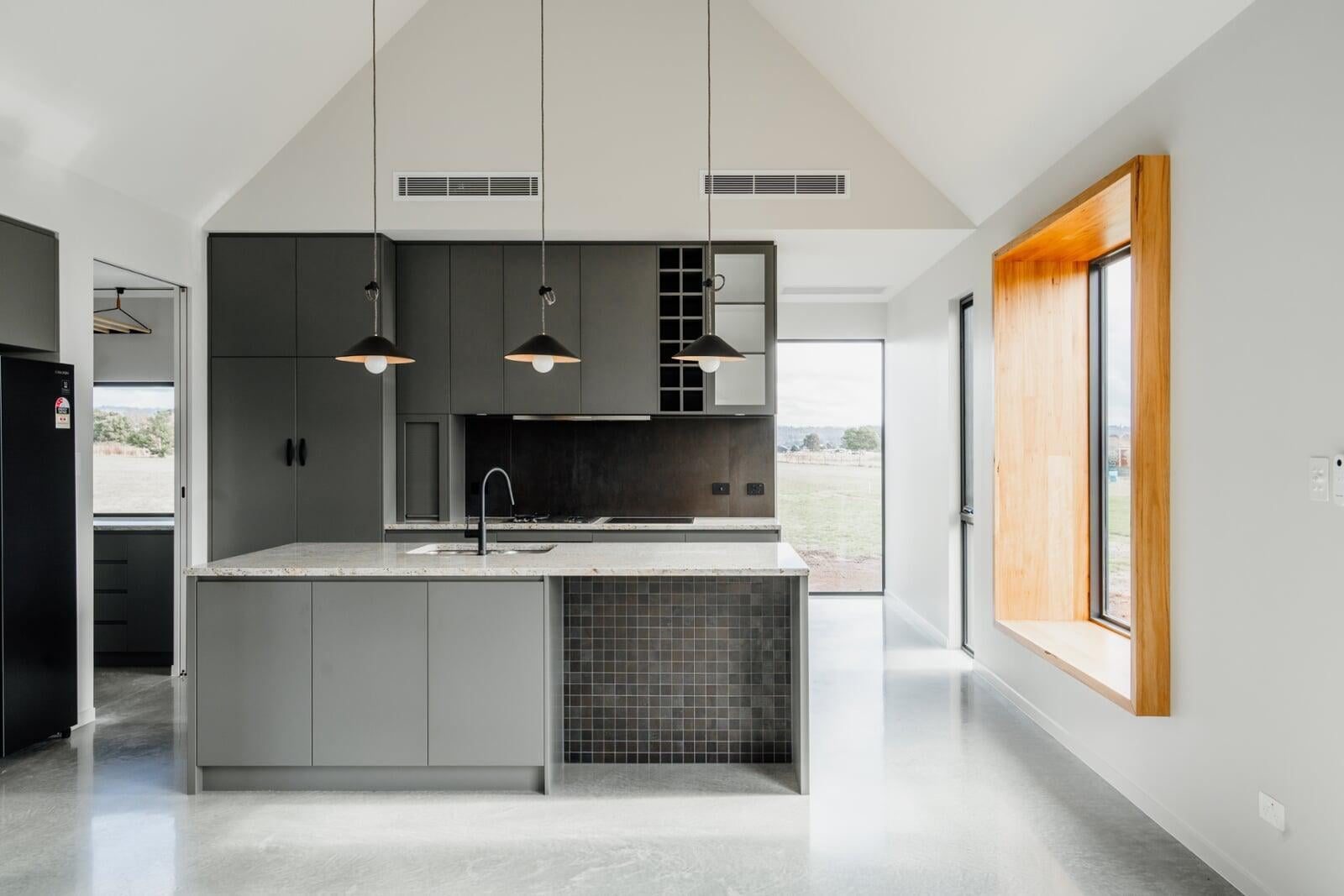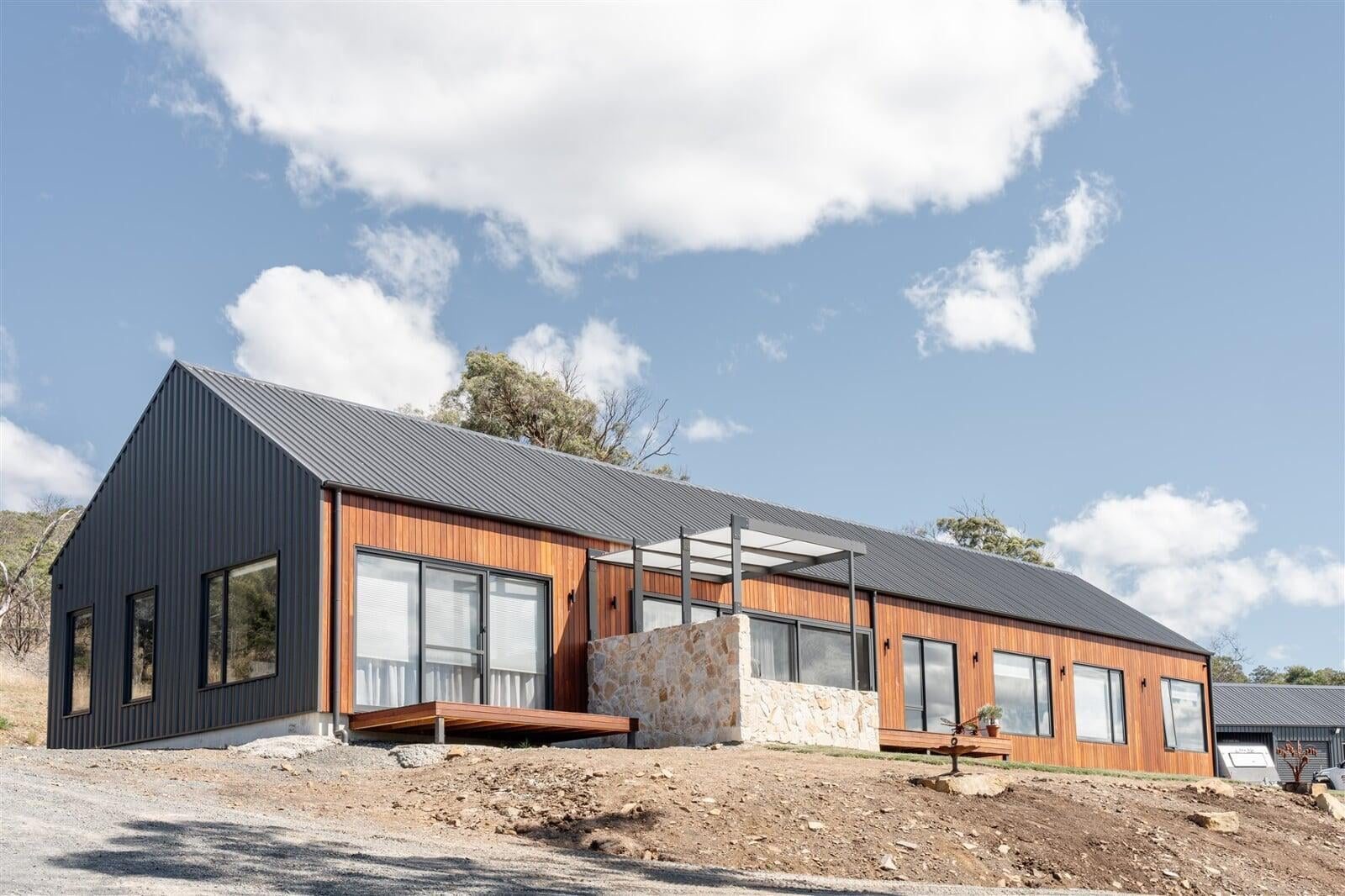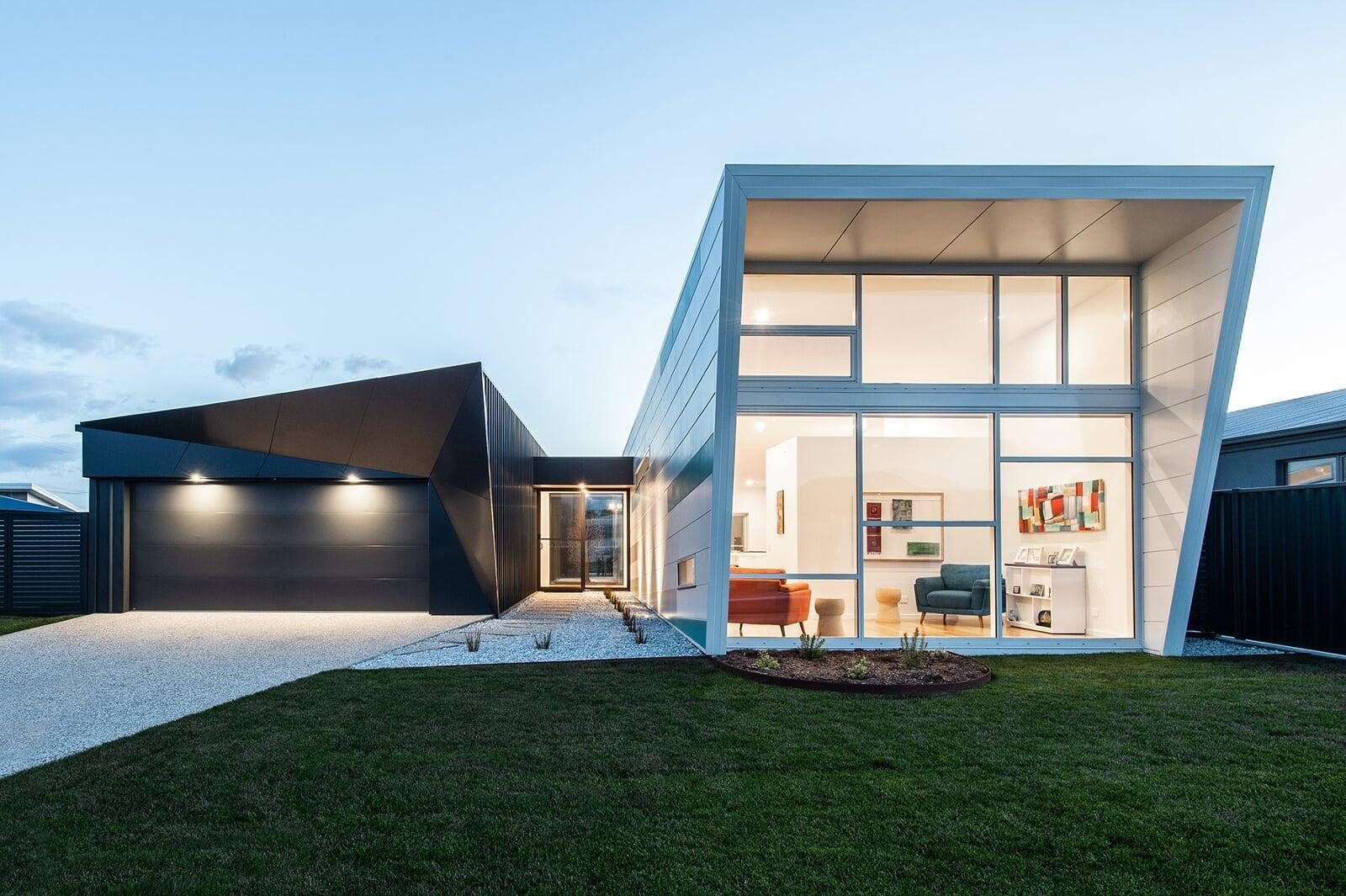
At the 2026 HIA Australian GreenSmart Awards, held on 22 July 2026 in Melbourne, Tasmania's high-performance building community took home four national titles — more than any other state. Davies Design & Construction won the national Energy Efficiency category for Mill Corner Longhaus. Zanetto Builders won the national GreenSmart Home category for Bluebush Passivhaus, along with two further national titles. One cool, wet island had quietly become Australia's leading proving ground for Passive House construction.
What the HIA GreenSmart Awards Recognise
The HIA Australian GreenSmart Awards are the national round of the Housing Industry Association's sustainable building program — one that has been setting benchmarks for environmental design excellence for more than 25 years. State-level GreenSmart finalists from across Australia compete for national titles, and winners are presented at the HIA Future Homes Forum alongside builders, designers, and sustainability leaders from every state and territory.
The Energy Efficiency category recognises the home that best demonstrates measurable, real-world energy performance — not certification on paper, but verified results against a certified standard. To win it nationally in 2026 against projects from Sydney, Melbourne, and Queensland is a meaningful measure.
Mill Corner Longhaus: The Numbers Behind the Win
Mill Corner Longhaus is a 198 m² certified Passive House in the foothills of Sheffield, Tasmania, designed by Align Architecture & Interiors and built by Davies Design & Construction. The home received Passivhaus Institut certification in June 2026, and its airtightness result of 0.18 ACH@50Pa — measured by an independent blower door test — is more than 3.3× better than the 0.6 ACH threshold the standard requires.
After six months of occupancy, the homeowners provided their actual energy data. The results were striking: the home uses 17.5 kWh of total household energy per day — 19% less than the Passivhaus Planning Package (PHPP) certification modelling had predicted — while its 11 kW solar array generates nearly three times what the home consumes. Only 5% of the home's energy has come from the grid in that six-month period.
| Metric | PHPP Model | Actual (6 months) |
|---|---|---|
| Airtightness | ≤0.6 ACH@50Pa | 0.18 ACH@50Pa |
| Total energy use | 21.7 kWh/day | 17.5 kWh/day (−19%) |
| Solar generation (11 kW) | 41 kWh/day | 48 kWh/day |
| Grid draw | — | 5% |
| Peak heating load | ≤10 W/m² | 9 W/m² (1.7 kW peak) |
Inside the home, through Sheffield's below-zero winters, the internal temperature holds at a steady 20–22°C — without underfloor heating, without ducted heating, without a conventional heating system. The high-performance envelope does the work. The full story of the project is on the HIA GreenSmart 2026 award announcement and the Mill Corner Longhaus project page.
Why Tasmania Leads on Passive House
Tasmania's cool-temperate climate, with cold winters and low humidity, is almost perfectly suited to the Passive House standard — which was developed in Darmstadt, Germany and designed for similar conditions. Heating demand is the primary energy load for most Tasmanian homes, and Passive House addresses exactly that through a well-insulated, airtight envelope with mechanical heat recovery ventilation (MVHR) that transfers warmth from exhaust air to incoming fresh air without mixing the airstreams.
The result is a home that requires almost no active heating to maintain comfortable temperatures year-round — a direct contrast to many mainland Australian climates, where the combination of both heating and cooling demand can complicate the performance picture. Tasmania's climate makes the standard's benefits clearer and more immediate.
The island's building community has responded to that opportunity. Tasmanian builders and designers have pursued Passivhaus Institut certification on residential projects at a rate that is disproportionate to the state's population — and the national award results reflect that investment.
What a Passive House Costs to Build in Tasmania
A certified Passive House typically carries a modest construction cost premium over a conventionally-built home to the same specification — primarily driven by the quality of the triple-glazed windows, the MVHR unit, and the airtightness detailing labour. The premium is real but should be understood in the context of the energy savings and the long-term performance benefit.
Rather than quoting a percentage figure here (which varies considerably depending on design, site, and specification), we prefer the honest conversation: a Passive House built in Tasmania by an experienced certified team will cost more upfront and dramatically less to run, and the gap in running costs compounds over a 30–40 year lifespan. The pricing guide covers how to think about the total cost of ownership, and for project-specific numbers, a feasibility estimate is the right first step.
The Team Behind the Results
Passive House performance doesn't happen without a team that understands the standard at every stage of the build. Luke Davies holds Passivhaus Tradesperson certification, and key members of the Davies trades team hold or are working toward Passivhaus Tradesperson (PHT) certification — the trade-level qualification for builders working to the Passivhaus standard. The design side of the Mill Corner Longhaus project was led by Align Architecture & Interiors, whose team includes certified Passive House designers.
"As a builder, that's the part I love — the assurance of knowing we're putting buildings on the planet that are comfortable, healthy and energy-efficient, that will last a long time and won't take much energy to run," said Luke Davies after the July 22 announcement. "For a Tasmanian builder, a national award like this means the world."
Is Passive House Right for Your Tasmania Build?
Not every Tasmania build needs full Passivhaus Institut certification — that's a specific standard with specific requirements, and it adds cost and complexity to the process. But the principles of Passive House design — high-quality insulation, thermal bridge minimisation, triple-glazed windows, mechanical ventilation with heat recovery, and rigorous airtightness — are applicable to any high-performance home in Tasmania's climate.
Davies builds certified Passive Houses for clients who want the full standard and the independent verification, and Passivhaus-informed homes for clients who want the performance benefits without the certification process. Both approaches deliver meaningfully better outcomes than conventional construction in Tasmania's climate.
Five Questions to Ask Your Builder About Energy Performance
- Has any member of your team completed Passivhaus Tradesperson certification?
- Have you built a home that has been independently airtightness tested? What was the result?
- Do you have a relationship with a designer who holds Passive House Designer certification?
- Can you provide actual (not modelled) energy performance data from a recent high-performance project?
- How do you approach thermal bridge mitigation in your standard build detail?
Thinking About a High-Performance Home?
If you're considering a certified Passive House or a Passivhaus-informed home in Tasmania, read about our approach on the Passivhaus page, or explore the high-performance homes section to understand how performance and comfort relate to design. For project discussions, get in touch — a feasibility estimate is typically ready within a couple of days.
We build in north-west and northern Tasmania — Devonport, Sheffield, Burnie, Launceston, and surrounding areas. If you're planning a high-performance home in our service area, we'd welcome the conversation.
Published July 2026. Award details from the HIA Australian GreenSmart Awards, 22 July 2026. Mill Corner Longhaus performance data sourced from the homeowners after six months of occupancy and independently verified via the Passivhaus Institut blower door test. Passivhaus Institut certification: June 2026.
About the Author
Luke Davies
Luke is the founder of Davies Design & Construction and author of Dream Home. He writes about home design philosophy, lean construction, and building businesses that put people first.
0 Comments
Related Articles