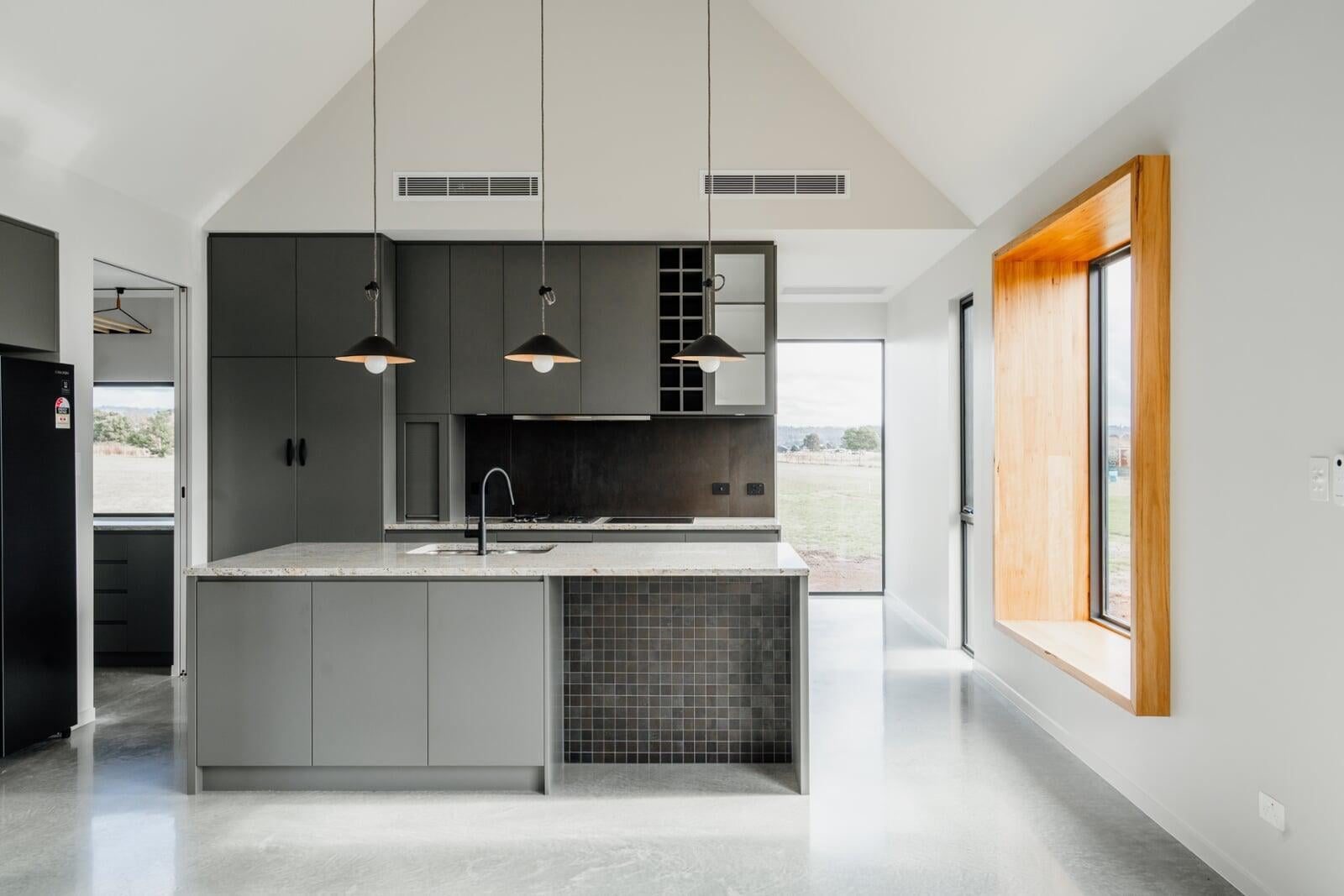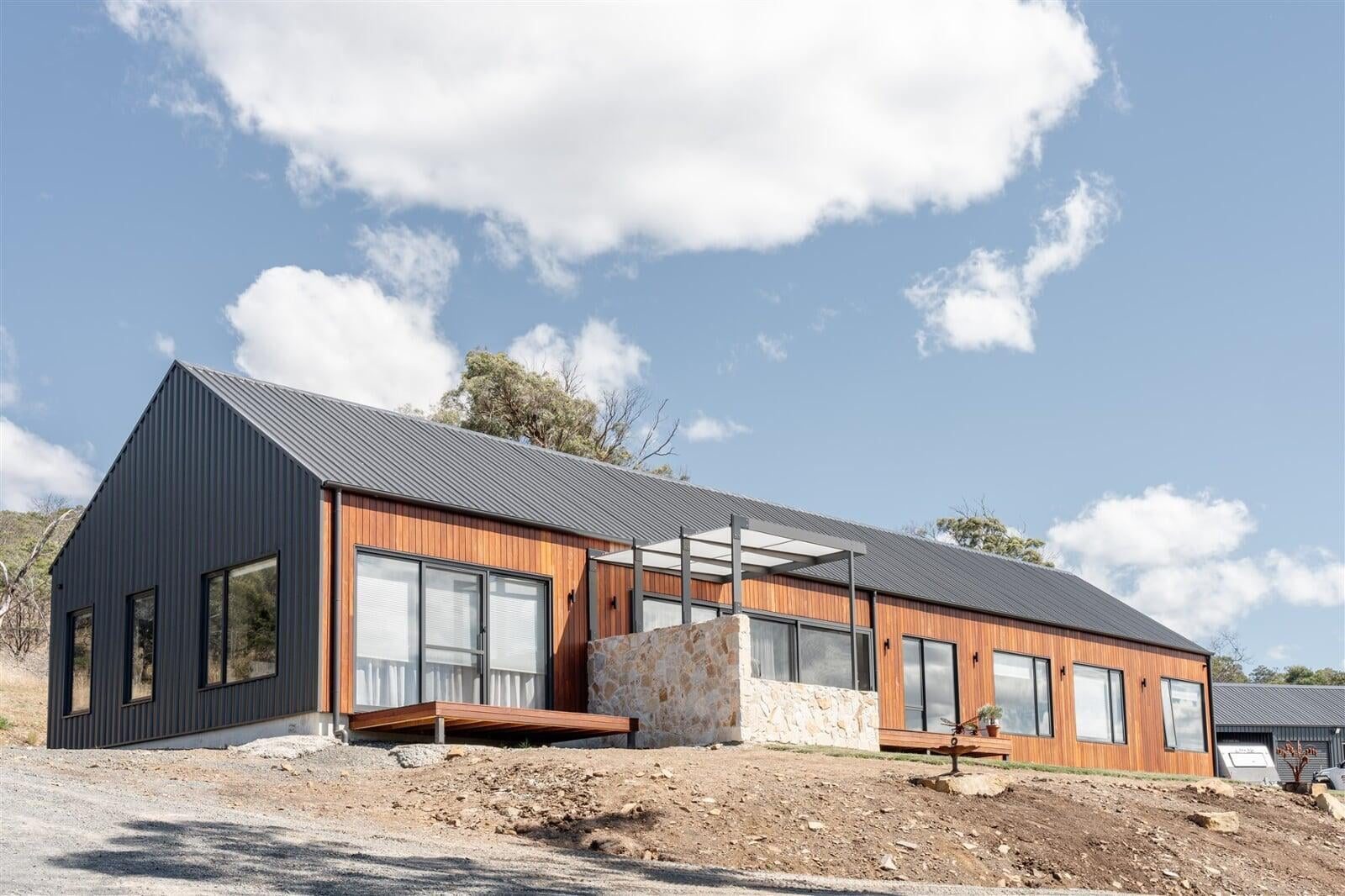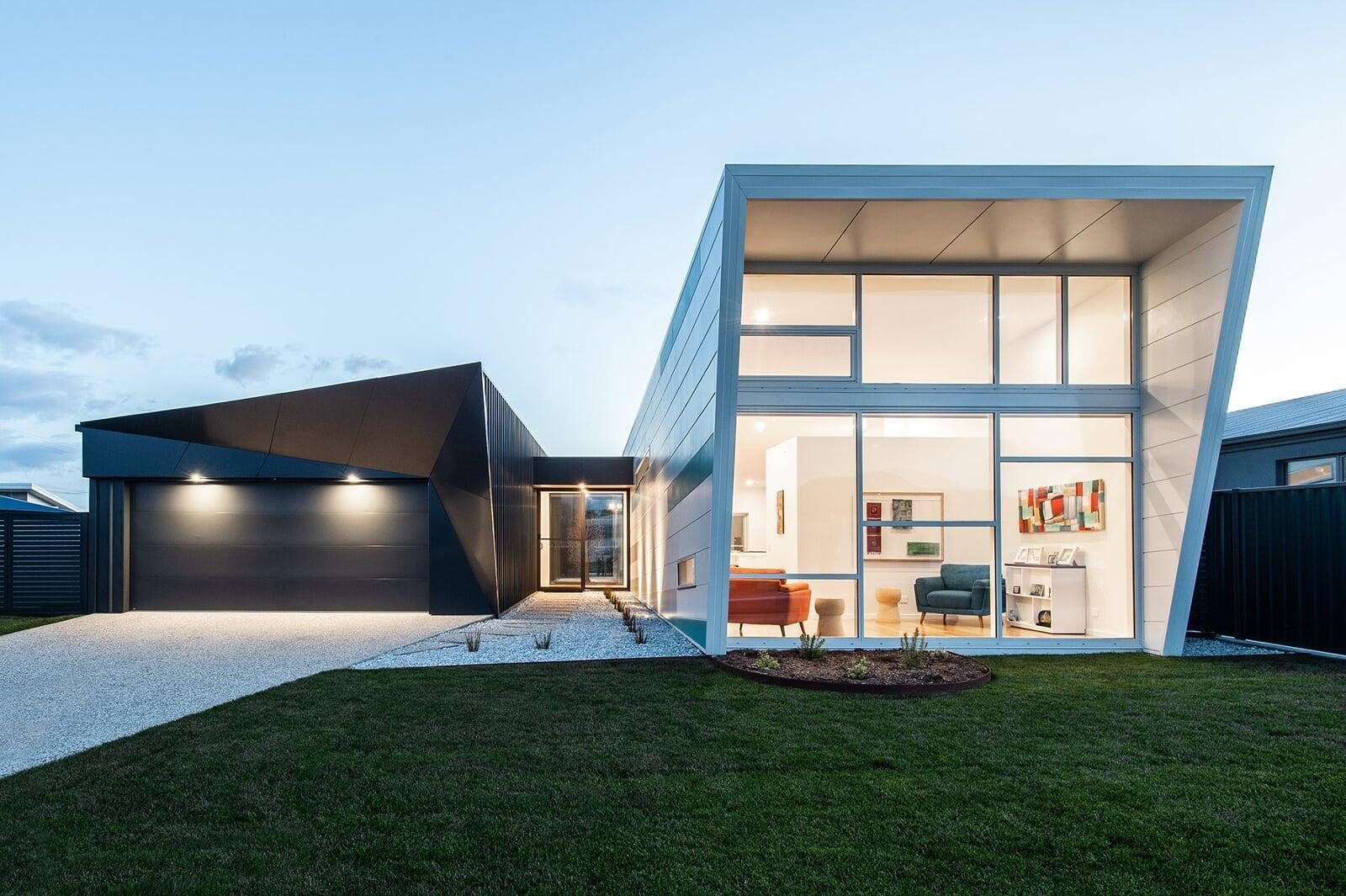
Sloping blocks are one of the most common and most misunderstood site types in Tasmania. People see the slope and immediately think: problem. Complexity, cost, risk. But that's not the full story. Hillside sites in Tasmania are also where some of the state's most extraordinary homes get built — homes with views, with natural separation between living zones, with a relationship to the landscape that flat-block houses can't replicate. Here's what you actually need to know before you buy, before you design, and before you build.
Why So Many Tasmanian Blocks Are Sloping
Tasmania's topography is genuinely varied. The Great Western Tiers, the Tamar Valley, the ridgelines behind Launceston's suburbs, the elevated positions above Devonport and Burnie, the escarpments of the north-west coast — the flat land in Tasmania is largely already taken. The remaining residential land, particularly in established areas with views and amenity, is often on slopes that earlier generations weren't interested in building on. That's changed. The combination of better design thinking, improved construction techniques, and a genuine appetite for homes that respond to their site has made sloping blocks not just viable, but genuinely desirable.
This means if you're searching for land in northern Tasmania — in the suburbs above Launceston, along the Tamar Valley, on the coastal ridges near Devonport or Ulverstone, or in the rural residential areas around Sheffield and Deloraine — you're going to encounter sloping blocks regularly. Understanding how to read them, cost them, and design for them is essential knowledge for any Tasmanian home builder.
The Real Cost of Building on a Slope
The most important thing to understand about sloping sites is that the cost premium is real but variable — and the range is enormous. A gently sloping block in stable soil might add $20,000–$40,000 to your site costs. A steeply sloping block with rock, poor access, and complex retaining requirements can add $100,000–$200,000 or more before a wall goes up.
The factors that drive that range:
- Gradient: Gentle slopes (less than 1:10) add relatively little. Moderate slopes (1:5 to 1:4) require more significant structural response — retaining walls, cut-and-fill, or elevated construction. Steep slopes (steeper than 1:4) are where costs climb rapidly and design approach becomes critical.
- Soil type and stability: Stable, well-drained soil is manageable. Reactive clay, made ground, or poor-bearing soil on a slope is expensive — deeper footings, geotechnical engineering, and sometimes ground treatment. In Tasmania, dolerite bedrock can appear at shallow depths, requiring rock excavation at $200–$400 per cubic metre.
- Access: If site machinery can't access the block easily, every operation — excavation, concrete pours, frame delivery — costs more. Tight access, high retaining walls at the street boundary, or steep driveway grades all add to construction complexity.
- Retaining walls: The volume of retained material drives cost. Timber retaining is cheapest but shorter-lived. Concrete block and engineered concrete retaining walls are durable but expensive — particularly for walls over 1.5 metres, which require engineer certification. In some steep sites, the retaining wall cost alone rivals the cost of the house slab.
- Design approach: This is where the biggest cost lever sits. A well-designed home for a sloping site can dramatically reduce earthworks and retaining costs. A poorly designed home — one that ignores the slope and tries to flatten everything — will be expensive and will likely look wrong on the site regardless.
A site feasibility assessment before you purchase is the most reliable way to understand what a specific sloping block will actually cost to build on. Without one, you're working from guesses.
Design Approaches for Sloping Sites
There is no single right approach to building on a slope — the best solution depends on the gradient, aspect, views, access, and your brief. But there are three broad strategies that cover most Tasmanian situations:
1. Split-Level Design
Split-level is the most common approach for moderate slopes. Rather than fighting the terrain, the house steps with it — typically on two or three levels linked by short stair runs of three to five steps rather than full staircases. This reduces excavation significantly (you're not cutting to a flat platform for the whole footprint), creates natural zone separation between living and sleeping areas, and allows the house to sit in the landscape rather than on it. Split-level homes also tend to have better natural cross-ventilation because the floor levels create different pressure zones. The design challenge is making the transitions feel seamless — good split-level houses don't feel like they have short staircases everywhere; they feel like they flow.
2. Elevated or Pole Construction
For steeply sloping sites — or sites where views are the primary driver — elevated construction (building the house on a structural frame or poles above the natural ground level on the downhill side) can be more cost-effective than cut-and-fill. The structural frame is more expensive than a conventional slab, but you avoid large volumes of earthworks and retaining. Elevated homes also maximise views and create useful under-house space for storage, car accommodation, or utility areas. In coastal Tasmania, elevated construction also lifts the living areas above any flood or inundation risk.
3. Cut-and-Fill with Retaining
Cut-and-fill involves excavating the uphill portion of the site and using that material to fill and level the downhill side. This creates a flat platform for a conventional slab and single-level house, but it requires substantial earthworks and, critically, retaining walls on at least two sides. For gentle to moderate slopes, cut-and-fill is often the most cost-effective approach — particularly when the excavated material is suitable for use as fill and doesn't need to be trucked off site. For steep slopes, the retaining wall requirements can make this approach very expensive and in some cases structurally complex.
Tasmanian-Specific Considerations
Building on a slope in Tasmania has some particular dimensions that mainland conditions don't always share:
- Dolerite bedrock: Tasmania's characteristic dolerite — the dark, column-jointed rock that defines much of the island's highland topography — appears at shallow depths on many hillside sites in northern Tasmania, particularly around Launceston and the Midlands. Dolerite has excellent bearing capacity once reached, which can reduce footing requirements. But if excavation is needed (for a cut-and-fill platform or for deep footings), rock rates at $200–$400 per cubic metre can dramatically increase site costs. An early geotechnical investigation identifies this risk before it becomes a budget shock.
- Frost penetration: In Tasmania's Northern Midlands and inland areas, frost penetration to 600–750mm is possible in severe winters. Footings need to be below the frost line, which affects their depth and cost — relevant for any slab or pad footing on a hillside site in central or elevated Tasmania.
- Drainage: Sloping sites concentrate water flow. Uphill drainage — catching and diverting water before it reaches the building — is critical for foundations, retaining walls, and the longevity of any landscaping. Good drainage design on a sloping Tasmanian site is not optional.
- Bushfire overlays: Elevated and hillside positions in Tasmania can attract BAL (Bushfire Attack Level) assessments under the planning scheme. BAL requirements affect cladding, glazing, and roof specification — and therefore build cost. A BAL assessment is part of every Davies project briefing for rural or peri-urban sites.
- Views and aspect: Tasmania's hillside sites often face north across valleys or water — the orientation that delivers maximum solar gain in a Tasmanian climate. This is a significant advantage. Designing for passive solar on a north-facing slope captures free heating and dramatically reduces winter running costs in Tasmania's cold climate.
The Design Opportunity: Why Sloping Sites Build Better Homes
It's worth being direct about something: the most interesting homes in Tasmania are almost never on flat blocks. The flat block delivers efficiency — easier, cheaper construction, simpler landscaping. But the sloping block delivers something else: a house with a real relationship to its land. Views. Natural separation. A sense of arrival. The kind of connection between inside and outside that's very difficult to achieve when you're building on a level platform.
A well-designed home on a sloping block typically has:
- Views that flat-block homes simply can't access — across valleys, over rooftops, toward water or ranges
- Natural zone separation between living, sleeping, and utility areas that a single-level home achieves awkwardly
- Better cross-ventilation through the house from uphill to downhill pressure differences
- North-facing living areas with passive solar gain, particularly on Tasmania's hillside sites that typically face north
- A stronger visual relationship to the landscape — the house is in the site, not placed on top of it
At Davies, some of our most admired projects are on sloping sites — the Cloudscape, the Field House, the Riverview Barn. Each one uses its gradient to create spaces that wouldn't be possible on flat land. The slope is not the problem to solve; it's the design prompt.
Questions to Ask Before Buying a Sloping Block
If you're evaluating a sloping site in Tasmania, these are the questions worth answering before you commit:
- What is the gradient? A site survey with a contour plan gives you the real gradient across the site — not an impression from walking over it. The difference between a 1:8 and a 1:4 slope is significant in construction terms.
- What's underneath? A geotechnical investigation (soil test) tells you the bearing capacity, depth to rock or groundwater, and any reactive soil conditions. This is a $1,000–$3,000 investment that can save you $50,000 in budget surprises.
- How does water move across the site? Look at the site in rain or shortly after. Where does water collect? Where does it run? Are there signs of erosion or unstable fill?
- What are the planning overlays? Check the PlanBuild Tasmania portal for flood, inundation, heritage, and bushfire overlays. These affect what you can build and how you must build it.
- What does your preliminary build cost look like? Get a builder's view on the site before you buy. At Davies, we offer a site visit and feasibility service that gives you a clear picture of what a specific site will actually cost to build on — before you commit.
The Summary on Sloping Blocks
Sloping blocks in Tasmania add real cost — the range is $20,000 to $200,000+ depending on gradient, soil, and design approach. A geotechnical investigation and a preliminary builder assessment before purchase are the two most important investments you can make. And a builder who understands slope design — who treats the gradient as an opportunity rather than a problem — will build a better home for the same budget than one who doesn't.
The best Tasmanian homes are often on the most challenging sites. That's not a coincidence.
Ready to Start?
We've been building on sloping Tasmanian sites since 2009. If you've found a block with gradient and you're not sure what to do with it — or if you're evaluating sites and want a builder's eye on the question — we'd love to help. Get in touch to start the conversation, or explore our feasibility service to understand what your site will actually cost to build on. You can also read our cost guide for Tasmania in 2026 for a broader picture of what custom home building costs in this state.
About the Author
Luke Davies
Luke is the founder of Davies Design & Construction and author of Dream Home. He writes about home design philosophy, lean construction, and building businesses that put people first.
0 Comments
Related Articles