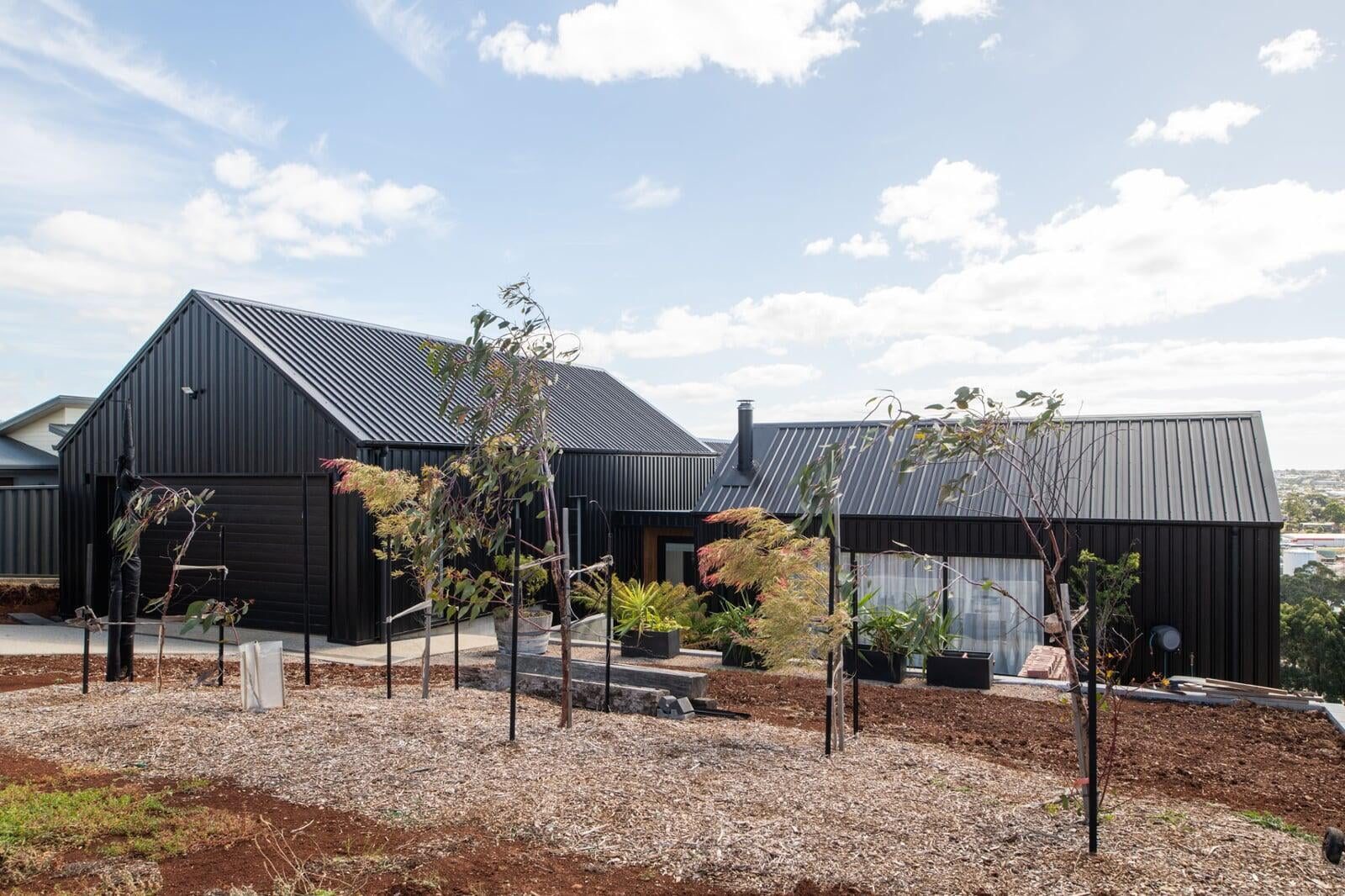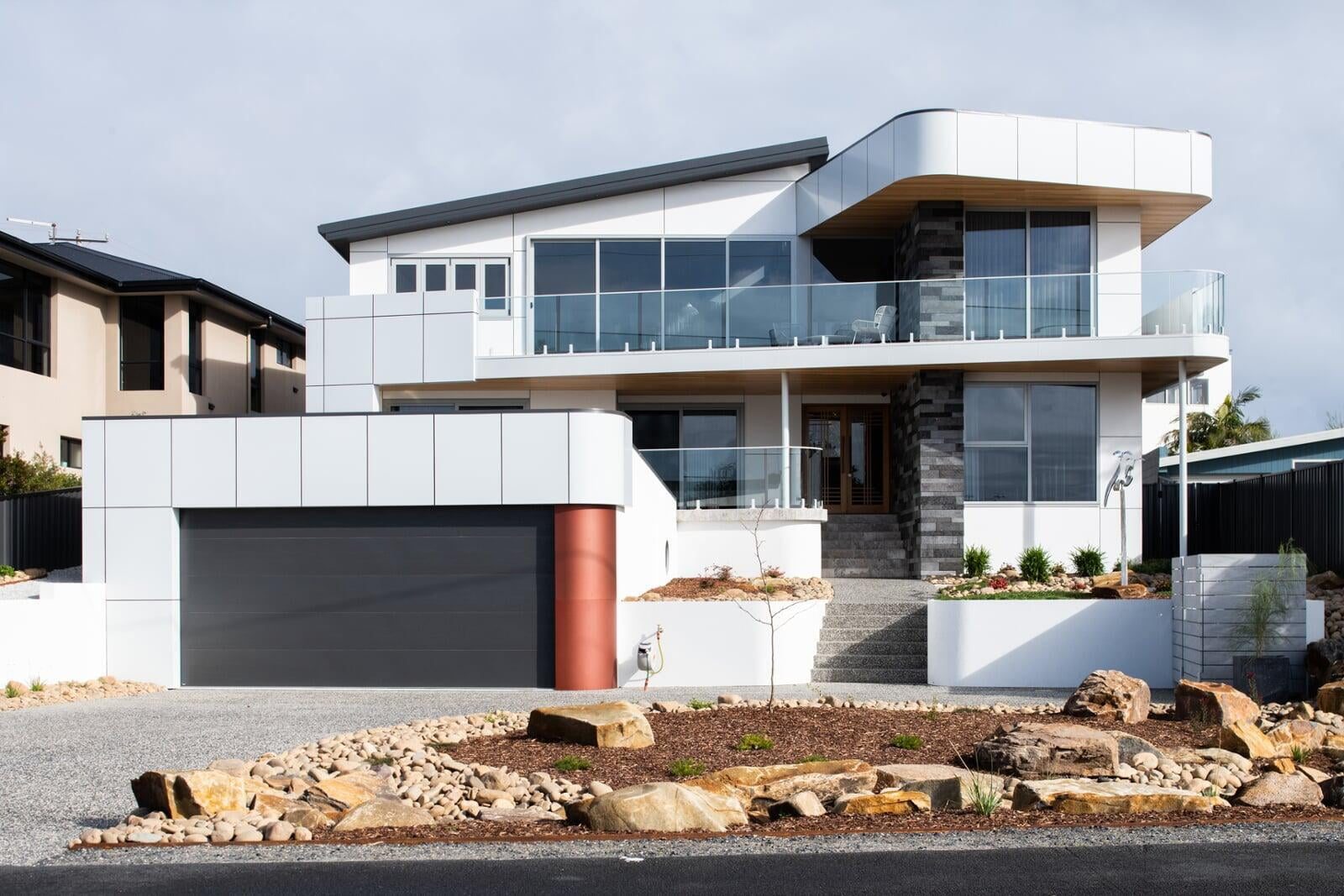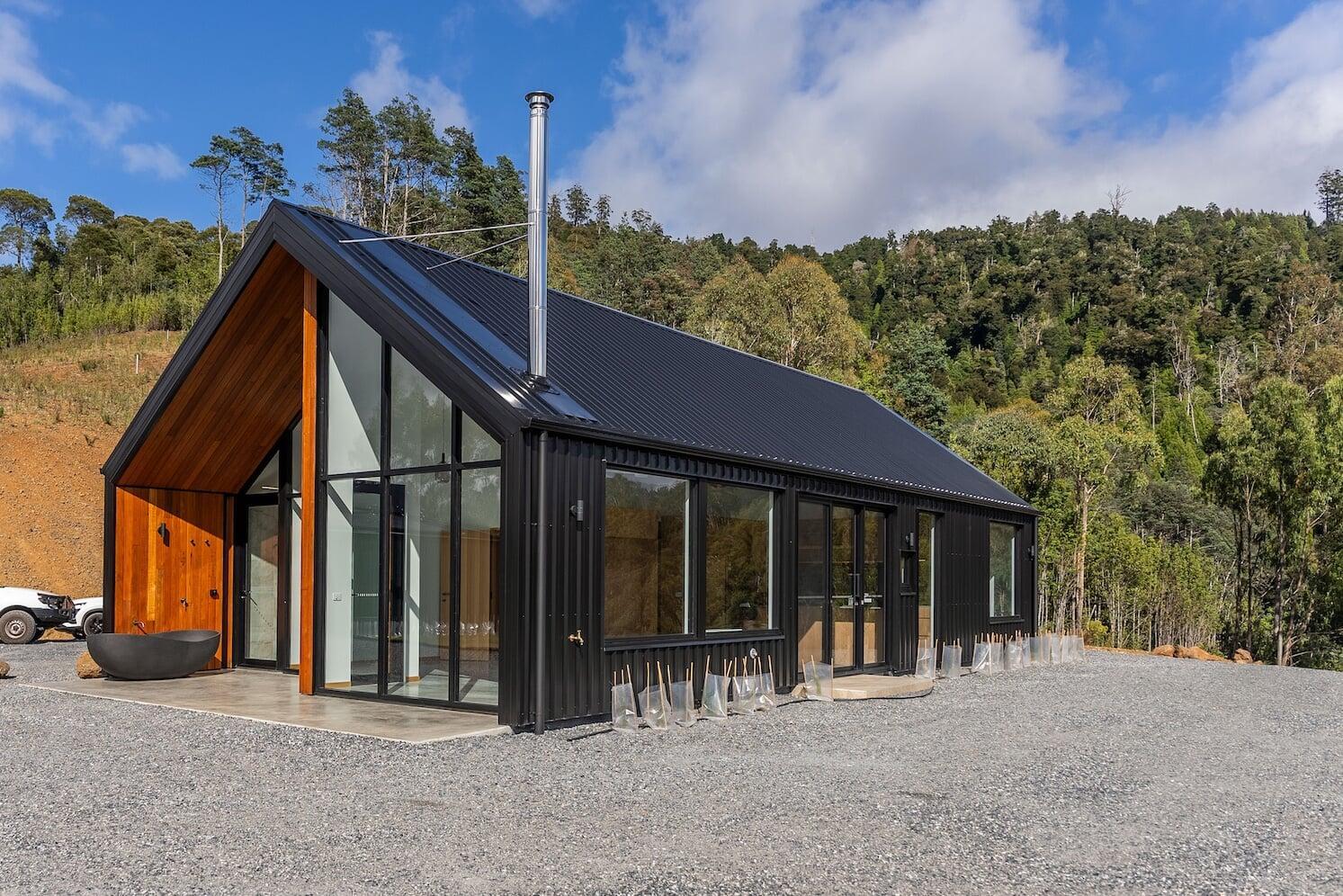
"How much does it cost to build a house in Tasmania?" is the question we answer more than any other. The honest answer is: it depends — but not on vague things you can't control. It depends on decisions you make before a single slab is poured. Here's a clear-eyed breakdown of what's driving costs in Tasmania in 2026, what you can genuinely expect to pay, and how to make your budget work harder.
The Range: What Does a New Home in Tasmania Actually Cost?
In 2026, the realistic range for building a new home in Tasmania runs from roughly $2,500/m² for a simple, project-style build to $6,000/m² or more for a complex custom home with high-end finishes. At Davies, our custom home builds typically sit in the $3,500–$5,500/m² range — a reflection of our integrated design-and-build model, high-performance construction standards, and the genuine complexity that custom architecture involves.
What does that mean in dollar terms? A 200m² Davies home at $4,500/m² represents a $900,000 build contract — before land, before landscaping, before fees. A 250m² home with a more complex brief and premium finishes might land at $1.2M–$1.4M. These are not unusual numbers for a quality custom home; they are, however, substantially less than the equivalent build cost in Sydney, Melbourne, or most major mainland coastal markets.
That gap is one of the most underappreciated facts about building in Tasmania. The same budget that delivers a modest renovation in Melbourne's inner east can fund an award-winning custom home in Launceston or on the north-west coast.
What's Included in the $/m² Rate?
The $/m² figure typically covers the construction of the home itself — structure, roof, external cladding, windows and doors, internal linings, flooring, kitchen, bathrooms, and all fixed fittings. It does not typically include:
- Land: The cost of your block is separate and varies enormously by location. In Launceston's inner suburbs, you might pay $250,000–$450,000 for a cleared, serviced block. In Sheffield or Deloraine, equivalent land might be $100,000–$200,000.
- Site works: Retaining, cut-and-fill, driveway, and connection to services can add $30,000–$150,000+ on complex or sloped sites.
- Design and planning fees: Architectural and interior design fees, council application fees, and engineering. At Davies, our integrated design-and-build model keeps these costs contained — but they're real costs that need to be planned for.
- Landscaping: Budget separately for fencing, driveways, gardens, and outdoor areas — typically $30,000–$100,000 depending on scope.
- Soft furnishings and appliances: Blinds, furniture, and freestanding appliances are almost always excluded from a building contract.
Understanding the all-in number — land + build + site + design + landscaping — is critical for budget planning. Our feasibility service is designed specifically to give you an accurate picture of your total project cost before you commit to anything.
The Five Biggest Cost Drivers in 2026
Not all cost increases are equal, and not all of them are beyond your control. Here are the five factors that most reliably drive build costs up or down:
1. Design Complexity
A home with a simple, regular floor plan — rectangular or L-shaped, with a straightforward roof — costs less per square metre to build than one with multiple rooflines, complex angles, large spans, or significant glazing. This isn't a reason to build a boring house; it's a reason to understand where complexity is adding genuine value (view framing, indoor-outdoor connection, spatial interest) versus where it's adding cost without proportionate benefit.
2. Site Conditions
Flat, well-drained, easily accessible sites cost less to build on. Sloped sites require retaining or stepped footings; reactive soils require deeper or engineered slabs; remote sites add logistics costs; coastal sites require specific material specifications for salt air exposure. A geotechnical report early in the process — before you buy land — is one of the most valuable dollars you can spend.
3. Specification Level
The difference between a functional kitchen and a beautiful one is often $30,000–$80,000. The same is true for bathrooms, flooring, windows, and external cladding. None of this is waste — but it needs to be a deliberate choice, not an accumulation of upgrades that aren't tracked against the overall budget. Our design team works with clients to align specification decisions with budget from the outset.
4. High-Performance Features
Investing in insulation, air-sealing, double or triple glazing, and mechanical ventilation adds cost at the build stage — typically $30,000–$80,000 for a high-performance envelope on a mid-sized home. But these costs are largely recovered over time through dramatically reduced energy bills and, increasingly, through premium resale values as buyers prioritise energy performance. In Tasmania's climate, a high-performance home is genuinely more comfortable and significantly cheaper to run. Our Passivhaus guide covers this in detail.
5. Builder Selection
The cheapest tender is rarely the cheapest outcome. A builder who prices low and makes it up through variations, delays, and substitutions can cost significantly more than one who prices accurately and delivers without surprises. At Davies, we price our builds transparently and aim for zero variations — because our integrated design-and-build model means we know exactly what we're building before we price it.
What's Changed in 2026?
Material and labour costs have stabilised from the 2021–2023 peak, when supply chain disruptions and a construction boom pushed prices to record levels. In 2026, the situation is more settled:
- Timber framing: Prices have moderated from peak levels, though they remain above pre-2020 benchmarks. Structural timber is broadly available without the multi-week delays that characterised 2022.
- Steel and concrete: Prices elevated relative to 2019, but stable. On-site availability is reliable for projects planned with reasonable lead times.
- Labour: Trades remain in strong demand across Tasmania, and quality tradespeople are still booking out 3–6 months in advance. Starting the planning and design process early is more important than ever.
- Energy-efficient products: Double-glazed windows, insulation systems, and heat pump systems have seen meaningful price reductions as supply chains normalised and manufacturing volumes increased. The high-performance upgrade is now more cost-effective than it was two years ago.
The regulatory picture is also relevant: Tasmania's building code environment is in transition following NCC 2025 and the Building Amendment Bill 2026. While the 7-star NatHERS requirement has been delayed for most residential builds in Tasmania, we build to high-performance standards regardless — because our clients expect homes that perform well for decades, not homes built to minimum compliance. Our building regulations guide explains the current code position in detail.
How Much Should I Budget for Land?
Land costs vary significantly across Tasmania's regions. Broad benchmarks for cleared, serviced residential lots in 2026:
- Sheffield / Kentish region: $80,000–$180,000 for residential blocks. Excellent value for the lifestyle quality.
- Devonport: $150,000–$300,000 for established suburb lots; more for foreshore-adjacent land.
- Launceston inner suburbs: $200,000–$450,000 depending on position and views.
- Burnie / Wynyard: $120,000–$250,000 for residential lots; coastal blocks command a premium.
- Hawley Beach / Port Sorell: $200,000–$400,000 for coastal precinct lots — reflecting the strong lifestyle premium in this market.
- George Town / Tamar Valley: $100,000–$220,000 — one of the strongest value-for-money positions in northern Tasmania given the growth trajectory.
Getting an Accurate Budget for Your Build
The most reliable path to an accurate budget is a proper feasibility assessment — not a back-of-envelope $/m² calculation based on a floor plan that doesn't yet exist. At Davies, our feasibility process establishes your total project cost (design + build + site + fees) based on your specific site, your programme, and your brief. It's the foundation of every project we take on.
Our pricing guide provides a more detailed breakdown of cost ranges by home type and finish level. Our cost estimator gives you a quick indicative range based on your size and brief.
The Bottom Line for 2026
Building a quality custom home in Tasmania in 2026 costs more than it did in 2019 — but it remains dramatically better value than the equivalent build in most mainland markets. Material and labour costs have stabilised. The regulatory environment is more settled than it was in early 2026. And the opportunity to build a genuinely high-performance home — one that will be comfortable, efficient, and hold value for decades — has never been more accessible.
The key is starting the process properly: with a clear brief, an honest budget, and a builder who prices accurately from the outset.
Ready to Start?
We've been building custom homes in Tasmania since 2009. If you're trying to understand what your project will actually cost — not a range so wide it's useless, but a genuine number based on your site, your brief, and your budget — we'd love to help. Get in touch to start the conversation, or explore our area guides if you're still working out where in Tasmania to build.
About the Author
Luke Davies
Luke is the founder of Davies Design & Construction and author of Dream Home. He writes about home design philosophy, lean construction, and building businesses that put people first.
0 Comments
Related Articles